Small asteroid becomes closest ever seen passing Earth: NASA
If it had been on collision course with Earth it would have disintegrated in atmosphere
Also In This Package
Washington: An asteroid the size of an SUV passed 2,950km above Earth, the closest asteroid ever observed passing by our planet, NASA said Tuesday.
If it had been on a collision course with Earth, the asteroid - named 2020 QG - would likely not have caused any damage, instead disintegrating in the atmosphere, creating a fireball in the sky, or a meteor, NASA’s Jet Propulsion Laboratory (JPL) said in a statement.
Also Read
SpaceX ship blasts off with 2 NASA astronautsNASA, SpaceX postpone historic astronauts launchMars 2020 Perseverance Rover mission takes offLook: Comet Neowise streaking past Earth, providing spectacular showThe asteroid, which was about 10 to 20 feet (three to six meters) long, passed above the southern Indian Ocean on Sunday at 0408 GMT.
It was moving at nearly 12.3 kilometers per second, well below the geostationary orbit of about 35,405km at which most telecommunication satellites fly.
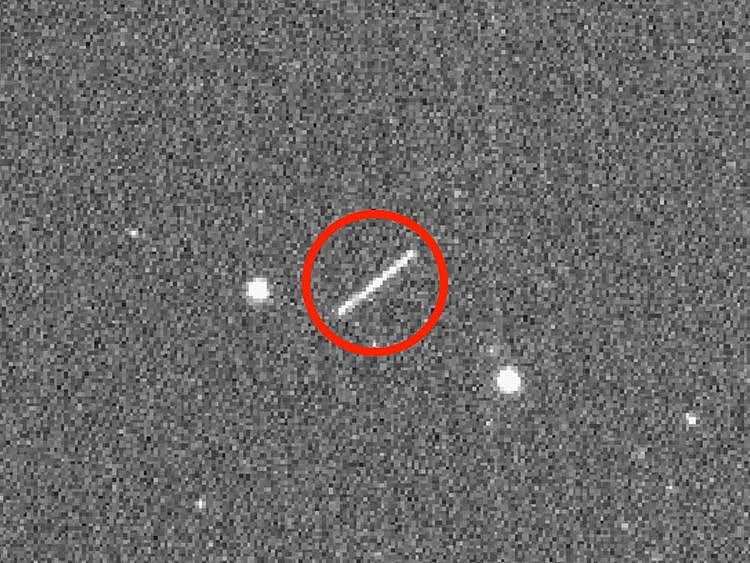
The asteroid was first recorded six hours after its approach by the Zwicky Transient Facility, a telescope at the Palomar Observatory at the California Institute of Technology, as a long trail of light in the sky.
The US space agency said that similarly sized asteroids pass by Earth at a similar distance a few times per year.
But they’re difficult to record, unless they’re heading directly towards the planet, in which case the explosion in the atmosphere is usually noticed - as in Chelyabinsk, Russia in 2013, when the explosion of an object about 66 feet long shattered windows for miles, injuring a thousand people.
One of NASA’s missions is to monitor larger asteroids (460 feet) that could actually pose a threat to Earth, but their equipment also tracks smaller ones.
“It’s really cool to see a small asteroid come by this close, because we can see the Earth’s gravity dramatically bends its trajectory,” said Paul Chodas, the director of the Center for Near-Earth Object Studies at NASA.
According to the JPL’s calculations, the asteroid turned by about 45 degrees due to Earth’s gravitational pull.
Sign up for the Daily Briefing
Get the latest news and updates straight to your inbox
Network Links
GN StoreDownload our app
© Al Nisr Publishing LLC 2026. All rights reserved.