Passport power: Where US stands on world travel freedom list
Slide in passport power comes after Brazil imposes reciprocal visa requirement
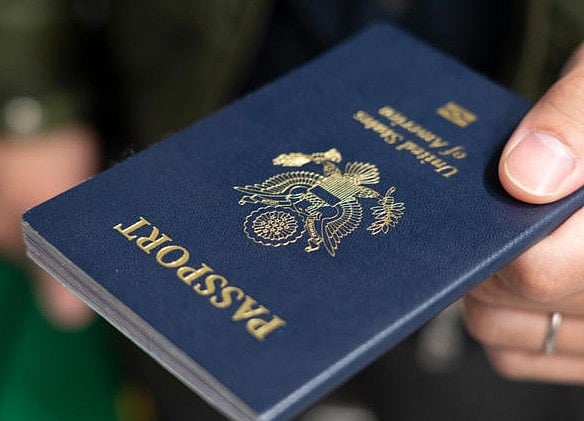
The US passport — long a symbol of global mobility and influence — could be on the verge of falling out of the world’s top 10 most powerful passports.
This comes amid a "long-term decline", dropping from 4th place to 10th over the past 20 years, as noted by Henley & Partners.
The shift is driven, in part, by recent changes in visa policies, including a requirement imposed by Brazil for American travelers.
Brazil officially reinstated the visitor visa requirement for US passport holders on April 10, 2025. After multiple delays from 2023, this policy requires travelers to obtain an eVisa.
According to the latest Henley Passport Index, published by Henley & Partners (H&P) and based on data from the International Air Transport Association (IATA), the US passport ranks 10th globally (as of January 2026).
179 destinations
US passport holders currently have access to 179 destinations through visa-free or visa-on-arrival entry.
The US returned to the top 10 rankings after briefly falling out in late 2025.
Despite the recovery, the US has experienced a long-term decline, dropping from 4th place to 10th over the past 20 years.
Both the United States and the United Kingdom recorded some of the steepest annual declines in mobility, as per H&P.
US: lost access to 7 destinations
UK: lost access to 8 destinations
'Inward looking'
The report highlights an increasingly “inward-looking” U.S. immigration posture: the US ranks 78th on the Henley "Openness Index".
Singapore – 192
UAE, Japan, South Korea – 187
Sweden – 186
Belgium, Denmark, Finland, France, Germany, Ireland, Italy, Luxembourg, Netherlands, Norway, Spain, Switzerland – 185
US is still #10 with 179 visa-free destinations. (Source: Henley Passport Index as of May 2026)
Only 46 nationalities can enter the US without obtaining a visa beforehand.
Analysts say there is a growing gap between:
strong outbound mobility for Americans abroad, and
relatively restrictive inbound access into the U.S.
Experts also link the passport’s declining strength to rising transatlantic tensions, shifting global alliances, and "domestic political developments".
Proposed changes by US Customs and Border Protection to the Visa Waiver Program could require expanded traveler data collection. Critics warn this may further reduce the attractiveness and flexibility of the US passport.
Brazil visa policy shift cited as factor
The decline follows Brazil’s decision in 2025 to require visas for American citizens — a reciprocal response to existing US visa rules for Brazilian nationals.
Under the policy, US passport holders must obtain a visa prior to traveling to Brazil, effectively reducing the number of destinations offering visa-free access to Americans and contributing to the passport’s slide in global rankings.
Brazil’s own passport has remained relatively strong, with visa-free or visa-on-arrival access to 168 countries, placing it ahead of the United States on at least one major mobility index.
Rankings and trends
The Henley Passport Index measures travel freedom based on how many destinations a passport allows its holders to enter without a pre-arranged visa.
Singapore currently holds the top position with visa-free access to 192 destinations, followed by South Korea and Japan.
Singapore, Japan, South Korea and European nations dominate the upper ranks, underscoring a broader trend of shifting mobility power toward Asia and Europe.
What it means for US citizens
For US citizens, the new ranking may result in more visa applications and planning ahead for international trips. Countries that once welcomed US passport holders visa-free may tighten rules, requiring applications before departure.
Such requirements can add cost and complexity to international travel — the US passport’s historic slide out of the top tier signals how reciprocal visa arrangements and diplomatic relations can directly affect citizens’ travel freedoms.
Network Links
GN StoreDownload our app
© Al Nisr Publishing LLC 2026. All rights reserved.