Greenland purchase? How much the US paid for Alaska in 1867, the Philippines in 1898 and the Virgin Islands in 1916
Why Washington paid Moscow, Madrid, and Denmark for these territories
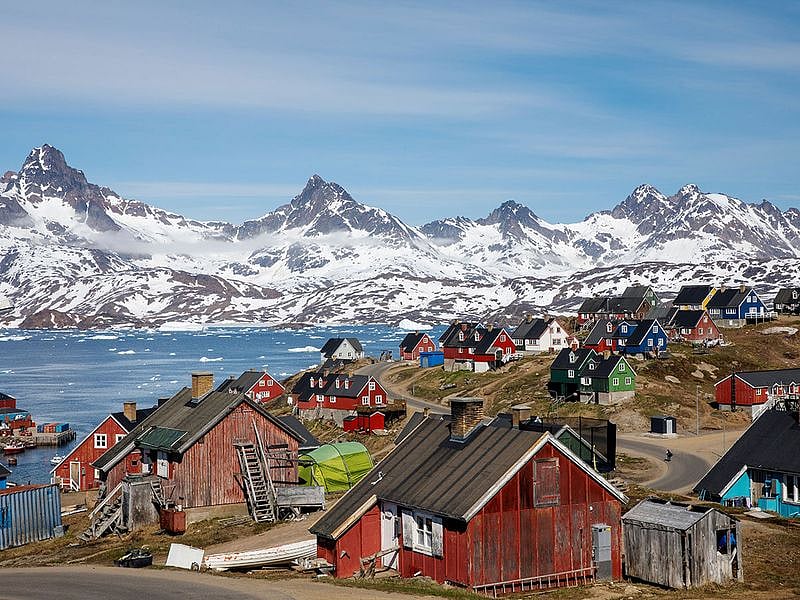
President Donald Trump has now abruptly dialled back his aggressive rhetoric on acquiring Greenland (for $700 billion?), dropping tariff threats against Denmark and Nato allies just days after escalating tensions in the runup to Davos.
Western media reports confirm he abandoned saber-rattling over the Arctic territory, presentung instead a newly formed "framework for a future deal" that hints at "compromise".
BBC noted the "retreat" but warns of lingering diplomatic damage. The Wall Street Journal confirms cancelled tariffs on Europe tied to Danish sovereignty.
Shift in strategy: Purchase, not war
The Guardian highlighted Trump's vague nod to a potential agreement, signalling a pivot from confrontation amid backlash from US lawmakers, polls, and European leaders.
This underscores modern limits on territorial grabs.
The "deal" Trump now dangles echoes the 1917 US Virgin Islands purchase from Denmark and the 1898 purchase of the Philippines by the US from Spain, and the 1867 purchase of Alaska from Russia.
Why the US bought the Virgin Islands from Denmark
Yes, the United States did buy the Virgin Islands — paying $25 million in gold coin to Denmark — in what was seen then as a strategic move, i.e. to help the US secure its defensive perimeter in the region.
What's now the United States Virgin Islands was once part of the Danish West Indies (a Danish colony) consisting mainly of Saint Thomas, Saint John, and Saint Croix, along with some smaller surrounding islands (including the so-called Epstein island).
The treaty was signed on August 4, 1916, during which the US and Denmark agreed on terms in the Treaty of the Danish West Indies.
With World War I underway in Europe, the US was worried that Germany might seize the Danish islands and use them as a naval or submarine base that could threaten the Panama Canal and US interests in the Caribbean.
The US Senate ratified it later in 1916, and formal transfer of sovereignty took place on March 31, 1917, a day now celebrated in the Virgin Islands as Transfer Day.
Adjusted for inflation and gold value, that amount is roughly around half a billion to $600+ million in today’s dollars. This remains the only territory the US has ever acquired by outright purchase from another colonial power (excluding Alaska).
Did the US buy Alaska?
Yes, the United States did, in fact, buy Alaska. In 1867, the US purchased the vast northern territory from the Russian Empire, then ruled by Tsar Alexander II, in a transaction that would later be recognised as one of the most consequential land deals in history.
The agreed price was $7.2 million, which amounted to roughly two cents per acre. By modern standards, this would equal about $160 to $180 million, depending on how inflation is calculated. At the time, however, many Americans struggled to see the value in what appeared to be an immense, frozen wilderness.
The deal was finalised with the signing of a treaty on March 30, 1867, negotiated by US Secretary of State William H. Seward and Russia’s minister to the United States, Eduard de Stoeckl.
The formal transfer of the territory took place later that year on October 18, 1867, a date now commemorated annually as Alaska Day.
Russia’s motivation for selling Alaska was largely strategic. The territory was remote, expensive to administer, and difficult to defend.
Russian leaders feared that in a future conflict — particularly with Britain, which controlled neighbouring Canada — Alaska could be seized without compensation. Selling the land to the United States was seen as a practical way to avoid that outcome while strengthening ties with a friendly power.
Acquiring Alaska expanded American influence in the North Pacific, curtailed further British expansion in North America, and fit within the prevailing belief in territorial growth often described as "Manifest Destiny".
Why did the US buy Alaska?
Seward, in particular, was convinced that Alaska’s natural resources and commercial potential would eventually prove valuable, even if those benefits were not immediately obvious.
Public opinion at the time was far from enthusiastic. Newspapers and political critics ridiculed the acquisition as “Seward’s Folly” or “Seward’s Icebox,” dismissing Alaska as a barren, frozen expanse with little practical worth.
Yet over time, discoveries of gold, oil, and other resources would dramatically vindicate Seward’s vision, transforming Alaska from a mocked purchase into one of the most strategically and economically important territories in the United States.
Did the US "buy" the Philippines?
Yes, the United States paid Spain $20 million for the Philippines under the Treaty of Paris signed on December 10, 1898, which ended the Spanish-American War.
The US sought the Philippines as a strategic naval base in Asia to expand Pacific influence, protect trade routes, and counter European powers amid rising imperialism. Business interests eyed resources like sugar, hemp, and tobacco, while missionary groups aimed to "civilize" the islands.
How much the US paid Spain for the Philippines
The United States paid Spain $20 million as part of the Treaty of Paris (1898), which formally ended the Spanish-American War. Under the treaty, Spain relinquished sovereignty over the Philippines and also ceded Puerto Rico and Guam to the U.S. The $20 million was described as payment for public works and improvements in the islands, though in practice it effectively served as compensation for Spain giving up the territory.
Why the US 'bought' the Philippines?
There were several key reasons behind the U.S. decision: Strategic and economic interests. The Philippines offered a strategic naval and trading foothold in Asia, especially for access to China and the Pacific.
There were imperialist ideas and global influence behind it: Many US decision-makers believed expanding overseas would elevate America as a global power and secure markets for US goods.
There was also fear of another power taking the islands. US leaders worried European powers (and even Japan) might claim the Philippines if the US didn’t. Japan did invade the Philippines during World War II.
President William McKinley and others argued that the U.S. should “uplift,” “civilize,” and prepare Filipinos for eventual self-government, an idea dubbed as "benevolent assimilation".
When the U.S. took control after Spain’s defeat, Filipino leaders were outraged: Filipinos, led by Emilio Aguinaldo, had already declared independence from Spain in 1898 and formed the First Philippine Republic.
The US did not recognise this government and began establishing colonial rule. On February 4, 1899, fighting erupted — launching the Philippine-American War (1899–1902). American military deaths in that conflict totaled around 4,200–4,300.
Filipino military deaths are estimated at 12,000–20,000, and civilian deaths (from war, disease, and famine) around 200,000 or more. The war was long, brutal, and costly — and it marked the beginning of direct US colonial rule over the Philippines.
The U.S. eventually granted independence, though the path to Philippine independence was gradual:
1916 Jones Act: Promised eventual independence and greater self-government.
1935 Commonwealth of the Philippines: The islands became a US commonwealth with its own government, meant as a transitional phase toward full sovereignty.
World War II & Japanese occupation: WWII interrupted but also reinforced US promises of eventual independence.
July 4, 1946: Amid growing Filipino nationalism and pressure for self-rule, the US formally granted full independence to the Republic of the Philippines after the war. One detailed US military analysis gives about 10,380 US dead and 36,550 wounded in the broader campaign against Japan in the Philippines. This includes actions like the Battles of Leyte, Luzon, Manila, and other operations to expel Japanese forces.
Network Links
GN StoreDownload our app
© Al Nisr Publishing LLC 2026. All rights reserved.