This handout image taken by the European Space Agency (ESA) captured by the Copernicus Sentinel-2 satellite shows a view of Iran's Kharg Island, which hosts the country’s main crude export terminal and is responsible for the overwhelming majority of its oil shipments to the world, about 30 kilometres south of the mainland in the north of the Gulf, on March 17, 2026.
Ground war next? US readies Iran options as troops move: What we know
Pentagon weighs limited ground ops as Marines deploy, but no final call yet
Last updated:
3 MIN READ
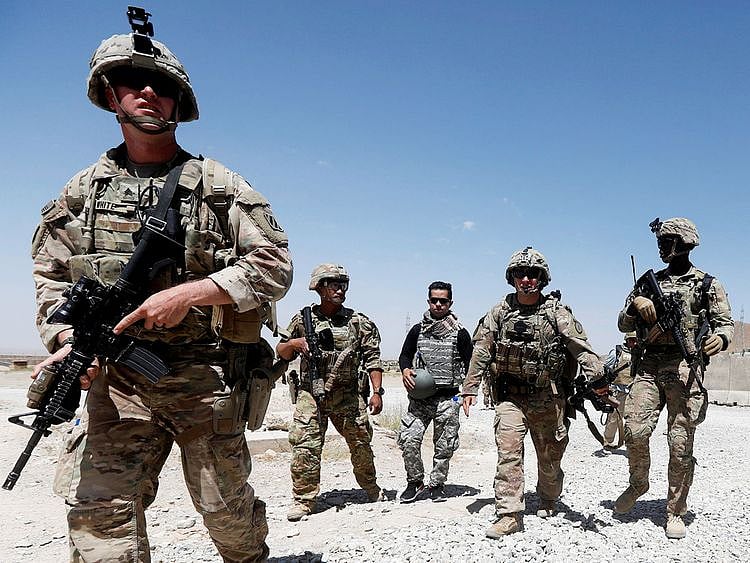
File photo: US troops patrol at an Afghan National Army (ANA) Base in Logar province, Afghanistan, in August 2018. Up to 10,000 more troops could be sent to the Middle East region, reports said.
Gulf News file
Dubai: The United States is actively preparing options for ground operations in Iran — including deploying thousands of troops for coastal raids and potential island seizures — in what could mark a major escalation of the war, according to a report by The Washington Post.
While President Donald Trump has not approved any plan yet, forces are already being positioned in the region, raising fresh questions over whether the conflict is nearing a dangerous new phase.
The White House said the Pentagon provides the president ‘maximum optionality.’
What we know so far
Pentagon preparing limited ground operation options
Could involve thousands of troops
Focus on coastal raids and island seizures
Timeline could stretch weeks to months. Officials differ on timelines, ranging from weeks to several months.
No final approval from Trump yet
What kind of operation is being planned?
US officials say the plans fall short of a full-scale invasion but go far beyond symbolic action.
They include:
Deploying special forces and conventional infantry
Launching extended coastal raids
Seizing and holding strategic positions
The likely focus is Iran’s southern coastline near the Strait of Hormuz — a vital oil chokepoint where disruptions can rattle global markets.
Marines moving into position
A key signal of escalation is the growing US troop presence.
Around 5,000 Marines and sailors are already deployed
Additional forces, including the 82nd Airborne Division, are on standby
Up to 10,000 more troops could be sent to the region
Marines are typically used for rapid coastal assaults and holding contested ground, suggesting any operation would likely begin along Iran’s coastline.
Kharg Island in focus
One possible target is Kharg Island, which handles about 90% of Iran’s oil exports.
US forces have already struck military targets on the island but avoided its oil facilities.
Seizing Kharg could:
Sever Iran’s economic lifeline
Disrupt global oil flows
Increase pressure on Tehran
But it also carries major risks.
Why the risks are high
Experts warn that even limited ground operations could quickly turn deadly. The war has already killed 13 US servicemembers and wounded more than 300
Holding territory — especially small islands — would expose US troops to:
Drone swarms
Missile strikes
Sustained artillery fire
Instead, some analysts argue Washington may prefer continued strikes on Iran’s coastal missile and drone sites, rather than attempting to occupy territory.
US Central Command has already carried out such strikes, including attacks using 5,000-pound bunker-buster bombs on hardened sites near the Strait of Hormuz.
So, is a ground war imminent?
Not yet — but the trajectory is shifting.
Planning is underway
Troops are moving into position
Military options are expanding
Trump has warned Iran to “get serious soon… before it’s too late,” adding there would be “NO TURNING BACK” if diplomacy fails.
The bottom line
This is no longer just an air and naval campaign.
The US is now preparing for a scenario where boots on the ground — likely led by Marines — could be used to seize and hold key positions near the Strait of Hormuz.
Whether that happens may depend on one thing: Can diplomacy move fast enough — or is the war about to enter a far more dangerous phase?

A Senior Associate Editor with more than 30 years in the media, Stephen N.R. curates, edits and publishes impactful stories for Gulf News — both in print and online — focusing on Middle East politics, student issues and explainers on global topics. Stephen has spent most of his career in journalism, working behind the scenes — shaping headlines, editing copy and putting together newspaper pages with precision. For the past many years, he has brought that same dedication to the Gulf News digital team, where he curates stories, crafts explainers and helps keep both the web and print editions sharp and engaging.
Sign up for the Daily Briefing
Get the latest news and updates straight to your inbox
Network Links
GN StoreAbout Gulf NewsTerms & ConditionsReach by GNSitemapContact usPrivacy PolicyGN FocusHave your sayWork with usAdvertise with usGulf News epaperPrinting Services
Download our app
© Al Nisr Publishing LLC 2026. All rights reserved.