Iran’s $2b oil passage via Hormuz a ‘gift’ for Trump, but markets to see no relief
10 tankers pass Hormuz as Trump signals talks, but global supply risks remain high
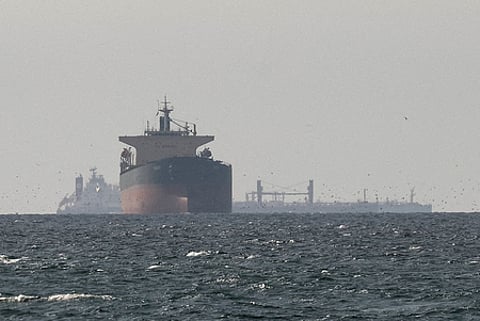
Dubai: Donald Trump described Iran’s decision to allow 10 oil tankers through the Strait of Hormuz as a “gift” and a potential opening for negotiations. Oil markets, however, are measuring the move in scale rather than symbolism.
Get updated faster and for FREE: Download the Gulf News app now - simply click here.
The shipment, estimated at around 20 million barrels and valued near $2 billion, is roughly equivalent to one day of normal oil flow through the strait. Under typical conditions, that volume moves continuously through dozens of tankers, making the release a one-off intervention rather than a restoration of supply.
Oil prices have remained above $100 per barrel despite the gesture, reflecting a market still anchored in disruption. Analysts estimate that roughly 11 million barrels per day have been affected by the conflict, leaving global balances tight even after the tanker passage.
The Strait of Hormuz carries about a fifth of the world’s oil supply, and flows through the route remain far below normal levels. Against that backdrop, the release of 10 tankers is viewed as marginal in addressing the broader supply shock.
Controlled flows
The tanker passage does not signal a broader reopening of the strait. Traffic remains sharply reduced, with flows tightly controlled and selectively allowed.
Analysts at XTB said the move was intended as a diplomatic signal. “Iran has allowed ten oil tankers to pass freely… this is the ‘gift of immense value’ that Trump cryptically referred to earlier this week,” they said.
Reports indicate that vessels linked to specific countries, including Pakistan and Malaysia, were among those allowed to pass, highlighting how Tehran is managing flows to signal flexibility while retaining leverage.
The move could also signal a gradual expansion of controlled transit rather than a one-off release. Pakistan said late Sunday that Iran agreed to allow 20 Pakistani-flagged vessels through the Strait of Hormuz, with two ships crossing daily.
Oil markets have largely looked past the headline impact of the tanker release. Prices have held firm as traders focus on restricted flows and the risk that disruption could persist.
No real relief
Ipek Ozkardeskaya said the latest developments do not point to a meaningful improvement in supply conditions. “The extension of Trump’s ceasefire does not necessarily point to material progress toward peace or an improvement in oil flows,” she said.
With tanker traffic still limited compared with normal levels, markets are treating the situation as unresolved.
Even as it allows limited shipments, Iran continues to benefit from higher prices and improved market positioning.
Based on export estimates from Tankertrackers.com and pricing for its flagship Iranian Light crude, Tehran’s oil revenues have risen to about $139 million per day so far in March, up from roughly $115 million in February.
Revenue, leverage
At the same time, Iran’s crude has become more competitive. Its discount to Brent has narrowed to about $2.10 per barrel at the start of this week, the smallest in almost a year, according to Bloomberg. The differential had been wider than $10 before the conflict.
Exports have also held near pre-conflict levels of around 1.6 million barrels per day, allowing Iran to maintain revenue flows while controlling access to the strait.
The conflict has continued to intensify, with attacks now extending beyond shipping routes into critical infrastructure across the region. Strikes have hit industrial and logistics hubs, including facilities in the UAE, while missile launches and cross-border attacks have raised fears of a wider regional spillover.
The expanding footprint of the conflict has reinforced market concerns that risks are no longer limited to tanker traffic through Hormuz, but could affect energy, industrial and transport infrastructure across the Gulf.
Risks building
The disruption is already feeding into broader economic risks. Higher crude prices are pushing up fuel, freight and electricity costs, raising concerns about inflation at a time when central banks are closely watching price pressures.
Some analysts warn that a prolonged disruption could echo past energy crises, with the scale of current supply constraints drawing comparisons to earlier oil shocks.
The tanker release appears to have been a tactical move rather than a turning point. It signals Iran’s ability to adjust flows, but does not change the broader trajectory of the conflict or the risks facing global supply.
With attacks continuing and flows still constrained, the market remains focused on escalation rather than de-escalation. If disruptions persist or widen further, the risk of additional price spikes remains, with extreme scenarios—including a move toward $200 oil—still part of the broader risk landscape.
Bottom line?
A $2 billion “gift” may signal intent, but it has not altered the fundamentals. Supply remains constrained, risks are expanding, and markets are responding accordingly.
Until flows through the Strait of Hormuz return to normal—and the conflict shows clear signs of resolution—oil markets are likely to remain volatile and biased to the upside.