US/Israel-Iran war: What UAE residents need to know today (Nov. 12, 2026)
UAE residents face travel and safety updates amid US-Israel-Iran tensions
As the US/Israel-Iran conflict enters Day 257, regional tensions remain.
UAE airspace remains operational, but airlines continue to operate under changing conflict-zone advisories even crude oil prices are showing some relief.
Iranian-operated flights to the UAE remain suspended, while Emirates and flydubai flights to Tel Aviv are affected.
UAE-to-Saudi flights remain disrupted.
Etihad has cancelled all Dammam and Riyadh passenger and cargo flights through November 19, while Jeddah services resumed November 6.
Emirates cancelled several Dammam, Riyadh and Jeddah (EK801) flights on November 11, though other Jeddah and Medina services operate.
Get it: Fast, verified news for FREE ... download the Gulf News app — simply click here
flydubai cancelled four Dammam flights; Jeddah, Medina, Tabuk and Taif flights are operational. Riyadh and Abha stay suspended through November 16.
Emirates has partially resumed Dubai–Bahrain service, but its Dubai–Kuwait route remains fully suspended.
The European Union Aviation Safety Agency (EASA) maintains advisories covering Iran, the UAE, Bahrain, Kuwait, Qatar and Oman, listed as valid until November 16, unless revised earlier.
Caution is urged over land territory as the US ramped up its blockade on Iran with "Operation Iron Gate", though the drive ahs reported met resistance from Iran's neighbours.
Oil prices showed some relief and headed towards a two-month low on Thursday as Middle East production climbed and hostilities between Iran and the US stayed muted.
Brent futures for January settlement dropped 1.54% to $91.22 a barrel at 12:28 pm in Singapore. West Texas Intermediate for December delivery slipped 1.5 per cent to $85.26. Brent had gained 1.4% on Wednesday. The global benchmark is still up more than 50% this year.
Murban crude was down 7.16% to $92.07, or $7.10 lower, as of 3.50pm Singapore on Thursday.
November has brought a sharp reversal. Gulf flows are recovering, and traders hope the Democrats’ midterm victory will hasten an end to the Iran conflict, now in its ninth month.
Security
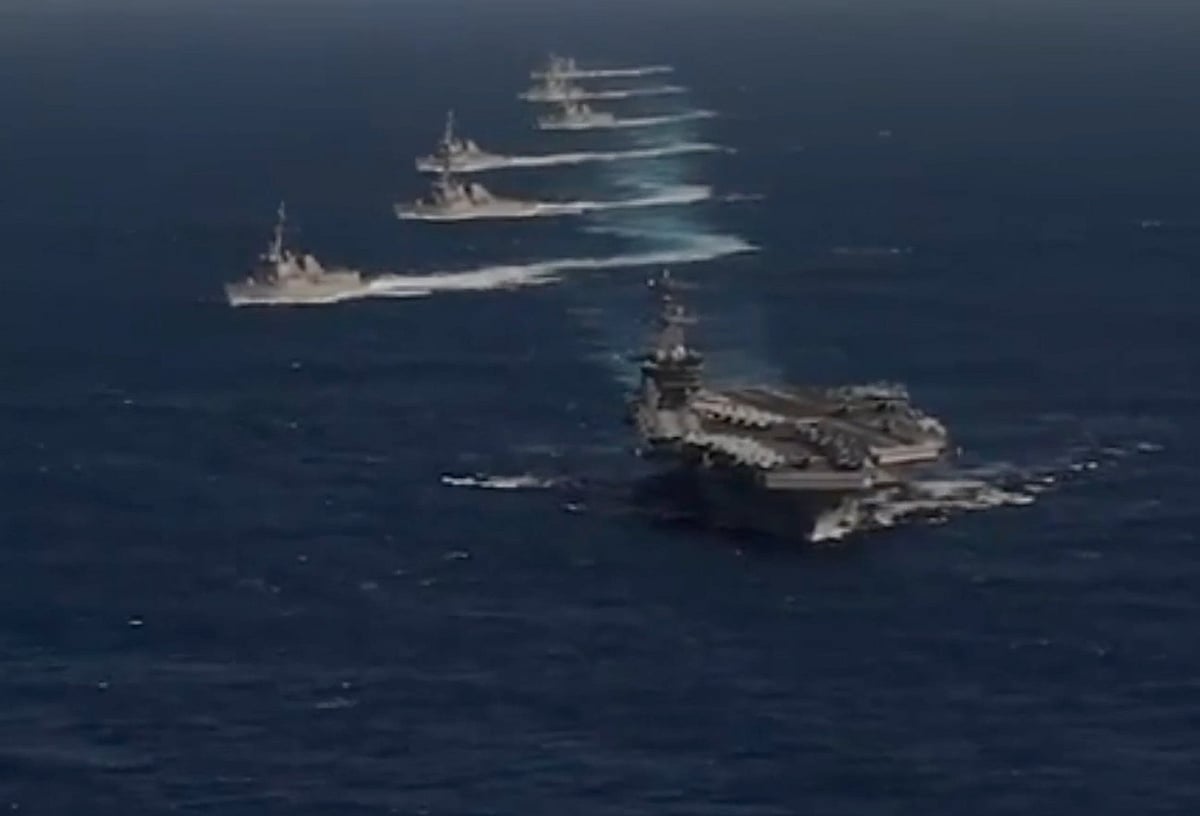
The Strait of Hormuz remains a central pressure point. The USS Theodore Roosevelt carrier strike group, meanwhile, is now heading to the Northern Arabian Sea from the Indian Ocean, towards the Central Command area of responsbiility, bringing carrier groups in the area to three.
The US military says it is enforcing a naval blockade of Iranian ports in the Arabian Gulf and Gulf of Oman, while Iran claims control over the strait and continues to claim attacks on shipping transiting the waterway.
These competing claims are attributed positions, not independently verified facts, and maritime threats are considered "severe".
The UK MTO reported two attacks on commercial vessels on Nov. 10 and another on Nov. 11, as Iran continues attacks in around the Strait of Hormuz.
For shippers and residents, the practical consequence is continued uncertainty around shipping insurance, fuel prices and regional supply chains.
More warnings
Iranian Parliament Speaker Mohammad Bagher Ghalibaf, Tehran’s lead negotiator, told state media that Washington must “make and announce” a decision on Iran’s latest proposal.
Tehran rejected a US proposal to transfer Iran’s stockpile of 60% enriched uranium to a third country.
Iran’s IRGC chief said the country’s missile-development efforts would continue despite threats and sanctions.
Iranian security chief Mohsen Rezaei, meanwhile, warned that Tehran could target US military bases in European countries if aircraft used them to launch strikes on Iran.
The warning highlights the risk of geographic escalation, but it remains a threat rather than confirmation of an imminent attack.
Israel, meanwhile, has ordered its military to step up preparations for a possible attack on Iran, even Israeli politician Gadi Eisenkot has urged caretaker Prime Minister Benjamin Netanyahu to exercise restraint regarding potential military strikes against Iran during Israel's post-election transition.
These are political and military signals, not proof that a new strike has occurred or that negotiations have collapsed.
Check airline apps and official airport channels before leaving for the airport, especially for Saudi, Bahrain and Kuwait routes.
Follow UAE Defence Ministry, Ministry of Foreign Affairs and local emergency authorities for verified instructions.
Do not approach or photograph suspected missile or drone debris; report it to authorities instead.
Keep travel documents, emergency contacts and alternative arrangements ready, particularly for time-sensitive journeys.
Avoid taking/sharing unverified videos or claims about strikes, interceptions or shipping incidents.
Passengers should check bookings, as changes remain possible.
What’s next
Watch for updated EASA and UAE aviation notices, further airline schedule changes and official statements on interceptions.
The key indicators will be whether diplomatic talks advance, whether Hormuz traffic stabilizes and whether air-defense activity remains limited or expands.
Network Links
GN StoreDownload our app
© Al Nisr Publishing LLC 2026. All rights reserved.