Europe warns airlines to avoid UAE, Qatar and Gulf airspace as US-Iran tensions escalate
EASA advises EU airlines to avoid flying over UAE, Qatar, Bahrain, Kuwait until July 29
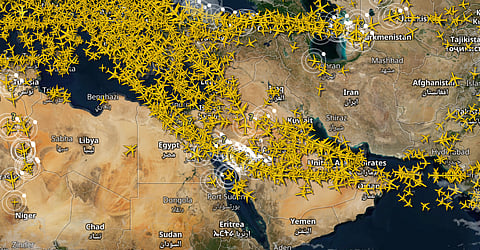
Dubai: The European Union Aviation Safety Agency (EASA) has advised European airlines not to fly through the airspace of the UAE, Bahrain, Kuwait and Qatar, citing a "high risk" to civil aviation following renewed tensions between the United States and Iran.
The latest Conflict Zone Information Bulletin (CZIB), issued on Tuesday, is valid until July 29 unless reviewed earlier. It also covers airspace over the western part of the Gulf of Oman.
The advisory applies to EU airlines operating under European aviation rules, as well as non-European airlines authorised by EASA to operate flights to, from and within the European Union.
The move comes as the security situation in the Gulf remains volatile despite attempts to maintain a ceasefire between the US and Iran. EASA said the continued military activity has increased risks for civilian aircraft operating in the region.
What EASA is telling airlines
EASA has recommended that affected airlines:
Do not operate in the airspace of the UAE, Bahrain, Kuwait and Qatar at any altitude.
Avoid flying over the waters of the Gulf of Oman within Muscat Flight Information Region (FIR) west of longitude 58°E.
Continue monitoring official aviation notices and guidance from national authorities.
The agency said the advisory was issued "to ensure the safety of flights over zones of interest and indicate areas of high risk."
Get updated faster and for FREE: Download the Gulf News app now - simply click here.
Why the warning was issued
According to EASA, the security situation has deteriorated following the repeated violations of a ceasefire between the United States and Iran.
The agency said Iranian efforts to maintain control over the Strait of Hormuz, repeated attacks on commercial vessels and related US military action have significantly increased risks across Gulf airspace.
It also warned that the presence of major US military bases in the region raises the possibility of missile and drone attacks targeting Gulf states.
"The surrounding maritime airspace may also be affected by missile or drone overflights, interception activity, falling debris and the wider consequences of regional military escalation," the bulletin said.
EASA added that heightened military activity and the activation of air defence systems increase the risk of civil aircraft being misidentified or unintentionally caught up in military operations.
It warned that military activity could occur with little or no warning, leaving airlines with limited time to reroute flights or respond to rapidly changing airspace restrictions.
Situation remains unpredictable
While countries in the region have introduced temporary airspace closures and restrictions at different stages of the conflict, EASA said the fast-changing nature of the security situation means these measures may not always be implemented quickly enough.
The agency said missiles, drones, combat aircraft and air defence systems continue to pose "a high risk to civil flights at all altitudes and flight levels" in the affected airspace.
EASA said it will continue to monitor developments with the European Commission and EU member states to assess whether the level of risk for airlines changes.
The latest bulletin follows a series of conflict-zone advisories issued by EASA since fighting between the US and Iran escalated.
Separate advisories advising airlines to avoid the airspace of Iran, Iraq and Lebanon remain in place, while the new notice expands concerns to several Gulf states, including the UAE.
Recently, the UK Foreign Office has updated its travel advice for the UAE, warning that the security situation remains volatile and that attacks could resume at short notice despite a US-Iran memorandum of understanding aimed at ending the conflict.


