UAE travel: Europe holidays face another setback as France wildfire adds to a difficult season
Travel demand remains steady, but many UAE holidaymakers are looking beyond Europe
First came flight disruptions linked to regional conflicts, followed by fewer flight options on some routes, months-long waits for Schengen visa appointments, the rollout of Europe's new biometric Entry/Exit System (EES), and an intense heatwave sweeping across the continent.
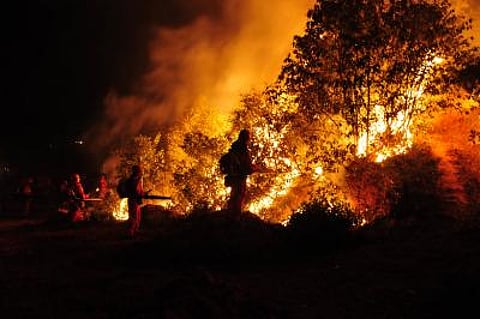
Now, a major wildfire near Paris has added another layer of uncertainty for travellers.
While no flights from the UAE have been cancelled because of the blaze, travel experts say the latest disruption reinforces a broader trend already emerging this summer: holidaymakers are becoming more cautious about Europe and increasingly looking towards destinations in Southeast Asia, Africa and other regions that offer better value, easier travel and, in many cases, cooler weather.
Wildfires in Europe
The wildfire broke out on Sunday in the Fontainebleau forest, about 60km southeast of Paris, and quickly spread across more than 800 hectares. Authorities described it as "very virulent", forcing the evacuation of homes, disrupting rail services and partially closing the A6 motorway, one of France's busiest north-south routes.
Around 400 firefighters, supported by aircraft and helicopters, have been deployed to contain the blaze.
The fire comes as France experiences its third heatwave since May, with soaring temperatures increasing the risk of wildfires across Western Europe. Scientists say climate change is making extreme heat events across the continent more frequent and intense.
Travellers are thinking differently
Despite the wildfire making headlines, travel agents say customers who have already booked their holidays are largely sticking to their plans.
"Most UAE travellers have already committed — visas processed, hotels booked, kids out of school," said Alena Iakina, founder of visarun.ai. "But the conversations at travel agencies right now are different. People are asking about Scandinavia, cooler itineraries, whether September is a smarter window than July."
She added that travelling later in the year can also make it easier to secure Schengen visa appointments, which remain under pressure during the peak summer season. Europe is warming at roughly twice the global average, making Mediterranean destinations less appealing during the hottest months, she said.
Cooler destinations gain ground
Travel companies say Europe remains popular, but booking patterns are changing.
Mohanad Nada, Head of GCC at Tumodo, said travellers are becoming more selective, prioritising destinations with milder weather, simpler visa processes and better value for money.
Demand is growing faster for Northern and Eastern Europe, while many travellers are also choosing destinations in the Caucasus and Asia instead of Southern Europe during the peak summer months.
Outside Europe, destinations such as Georgia, Azerbaijan, Kazakhstan, Uzbekistan, Thailand, Malaysia, Indonesia, Turkey and South Africa are seeing stronger demand from GCC travellers.
Families rethink Europe as costs climb
Travel advisers say affordability is also influencing holiday decisions, particularly for families. Ipshita Sharma of SCN Travel & More said in an earlier interview with Gulf News this year's enquiries have shifted noticeably.
"Usually at this time, I'm overflowing with summer Europe tour requests — group or private. This time, all my requests are Southeast Asia and Africa," she said.
She said one customer who had planned a holiday in Spain eventually opted for Kenya after comparing the total cost of the trip.
Another family abandoned plans to combine Portugal with Bali after return airfares alone reached around Dh5,600 per person, making the overall holiday difficult to justify.
Travellers are booking differently
Travel experts say travellers are no longer following traditional booking patterns.
Some are securing flights and hotels earlier to lock in prices, while others are waiting until closer to departure as they monitor weather conditions, visa processing times and geopolitical developments. Flexible fares and travel insurance are also becoming more popular as travellers seek greater reassurance.
TP Sudheesh, General Manager of Deira Travels, said there is no panic among travellers despite the recent developments.
Demand remains stable, helped by the gradual resumption of flights across the region and additional airline capacity. However, customers are increasingly looking for flexible booking options and reassurance before confirming their holidays.
Expect longer waits at Europe's borders
Travellers heading to Europe this summer should also prepare for additional waiting times at border crossings.
Several countries, including Sweden, Finland, Spain and Croatia, are expanding the use of the European Union's Entry/Exit System (EES), which replaces passport stamps with biometric checks, including fingerprint and facial recognition scans for most non-EU visitors.
Authorities are advising passengers to arrive earlier at airports, allow extra time at ferry terminals and expect longer queues at land border crossings while the new system becomes fully established.
Although the wildfire in France has not resulted in flight cancellations from the UAE, travel experts say it is another reminder that flexibility is becoming an essential part of planning a European holiday.


