UAE truck accidents: New warnings, fines and route changes motorists should know
Deadly UAE crashes spark focus on heavy-vehicle safety measures
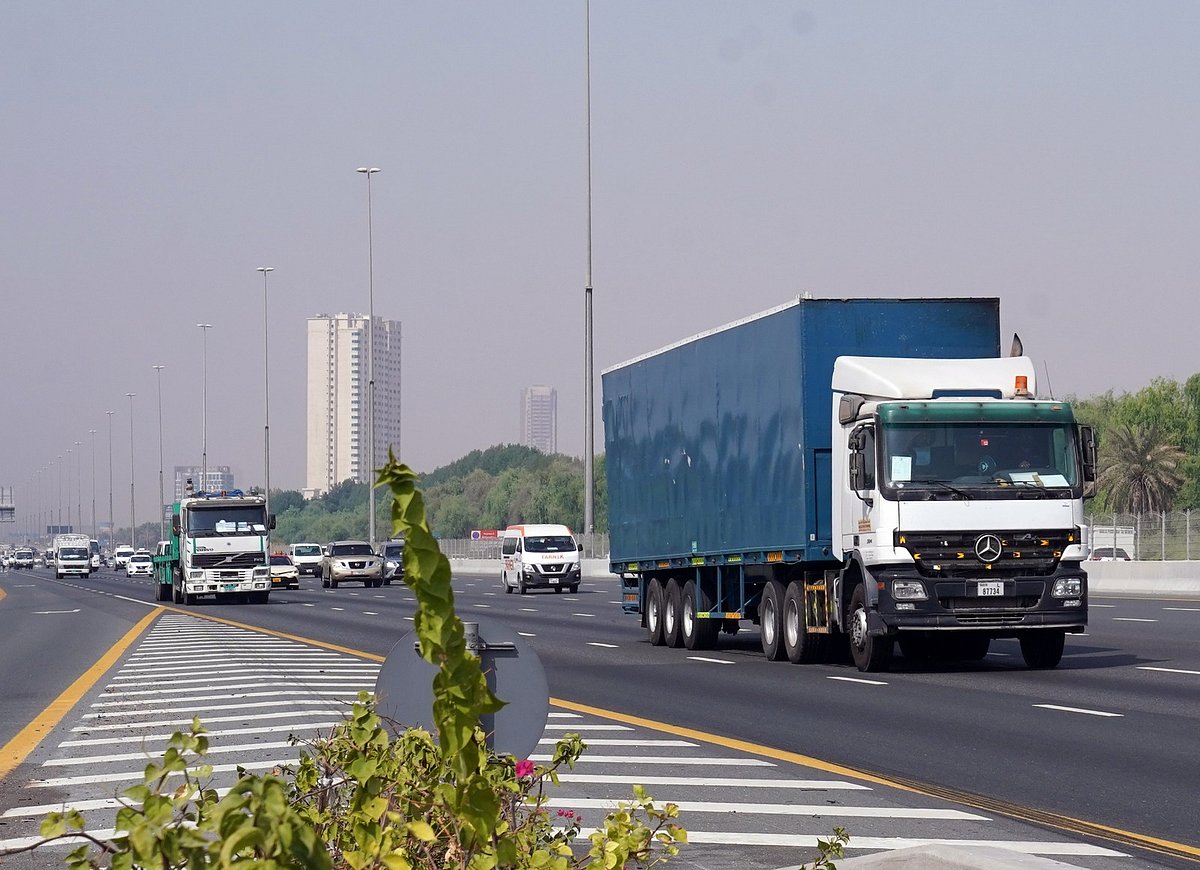
Two deadly road tragedies in the UAE have brought heavy-vehicle safety into sharp focus. A passenger bus and truck collision in Ras Al Khaimah has killed 11 people, following the Fujairah road disaster on November 12, which claimed 14 lives and left around 30 injured.
The incidents come amid renewed safety measures, including a detailed probe into the Fujairah crash, fines of up to Dh3,000 for heavy-vehicle violations and a new mobile alert system warning motorists of truck congestion.
Get updated faster and for FREE: Download the Gulf News app now - simply click here.
Fujairah crash: What happened?
Two collisions on Sheikh Khalifa bin Zayed Road towards Fujairah on November 12 involved 18 vehicles and five trucks, killing 14 people – 10 Emiratis and four Indians – and injuring around 30 others. The crashes occurred near a roadworks site where the right-hand lane was closed. The first collision involved a vehicle hitting a stationary truck, followed by a container truck striking several vehicles and overturning.
The UAE Public Prosecution has ordered the truck driver's pretrial detention as it investigates possible vehicle defects and road safety violations. The probe includes technical inspections of the truck and damaged vehicles, checks of braking systems, analysis of tracking and speed-recording data, and witness statements. The driver's passport and driving licence have also been confiscated while he receives hospital treatment.
Fujairah accident: Who are the 10 Emiratis and four Indians killed, and what we know so far
Heavy-vehicle offences: Fines of up to Dh3,000
Following the Fujairah tragedy, the Ministry of Interior highlighted 11 traffic violations involving heavy vehicles and their corresponding penalties under Ministerial Resolution No. 178 of 2017.
The penalties include:
| Heavy-vehicle violation | Fine and penalty |
|---|---|
| Causing an accident that results in the truck or another vehicle overturning | Dh3,000 fine and one-year driving licence suspension |
| Overtaking where prohibited | Dh3,000 and one-year licence suspension |
| Failing to follow designated heavy-vehicle routes or lanes | Dh1,500 and 12 black points |
| Entering roads or areas where heavy vehicles are prohibited | Dh1,000 and four black points |
| Loading cargo in a way that endangers others or damages roads | Dh2,000 and six black points |
| Cargo falling or spilling from a truck | Dh3,000 and 12 black points |
| Failing to cover truck loads | Dh3,000 fine |
| Not following prescribed loading and unloading procedures | Dh1,000 and four black points |
| Driving with unroadworthy tyres | Dh500, four black points and seven-day vehicle impoundment |
| Failing to install reflective stickers at the rear of trucks | Dh500 fine |
| Operating certain industrial or construction vehicles without the required permit | Dh1,500 fine |
The ministry's advisory outlines existing traffic offences and penalties. It does not establish that any of these violations caused the Fujairah accident.
Fujairah introduces mobile truck congestion alerts
Fujairah Police have introduced a mobile alert system to warn motorists when they are approaching roads experiencing heavy truck congestion.
The system automatically sends notifications to drivers' mobile phones, advising them to slow down and maintain a safe distance.
The alerts appear under the heading 'Warning Alert' and carry the message: “Warning … Truck congestion ahead. Slow down and keep a safe distance for your safety.”
The notifications are being issued in Arabic, English and Urdu.
The system works in a similar way to fog alerts, giving motorists advance warning of potential hazards without requiring them to search for traffic updates.
More traffic patrols on truck routes
Alongside the new alerts, Fujairah Police have increased traffic patrols on internal and external roads used by heavy vehicles.
The patrols are intended to monitor traffic, identify congestion hotspots and regulate truck movements where necessary.
Police have urged motorists to avoid distractions, remain alert and reduce speed when approaching slow-moving or stationary traffic.
UAQ changes truck access from Dec 1
Truck drivers heading to Umm Al Thuoob Industrial Area in Umm Al Quwain will have to follow a designated alternative route from December 1, 2026.
Under the new arrangement announced by Umm Al Quwain Police, heavy vehicles will no longer be allowed to use the entrance opposite Exit 103 on Highway 311.
Instead, drivers must continue to Exit 110, take the return route towards Umm Al Quwain and enter the industrial area through the designated entrance to the Free Trade Zone.
Police have installed a 'No Trucks' sign and a traffic surveillance camera at the closed entrance to monitor compliance.
Drivers who fail to follow the new arrangement will face legal action and penalties under UAE traffic regulations.
The measure is aimed at regulating heavy-vehicle movements and improving traffic flow in the area.
Driving near trucks: Mistakes to avoid
Dubai Police have also used their Aman Roads initiative to remind motorists and motorcyclists about the risks of driving close to heavy vehicles.
Trucks and buses have larger blind spots, longer stopping distances and limited manoeuvrability compared with smaller vehicles. Police have highlighted six common mistakes to avoid:
Overtaking from the right: Avoid passing trucks on the right, where their blind spots are particularly large. Overtake from the left when it is safe to do so.
Driving in blind spots: If you cannot see the truck's side mirrors, its driver may not be able to see you. Avoid lingering alongside heavy vehicles.
Tailgating trucks and buses: Leave extra space behind heavy vehicles, which need longer distances to slow down or stop.
Squeezing past trucks at turns: Large vehicles need additional room to manoeuvre at intersections. Do not attempt to pass them while they are turning.
Taking risks near roundabouts and roadworks: Narrow lanes and construction zones make it harder for trucks to turn. Give them enough space.
Making sudden lane changes: Avoid weaving between trucks or cutting in immediately after overtaking. Signal early and wait for a safe opportunity.
What motorists and truck drivers should remember
Following the deadly accidents, authorities are urging motorists and heavy-vehicle drivers to take extra care, particularly on roads with high truck traffic.
Motorists should maintain a safe following distance, adjust their speed when approaching congestion and avoid distractions. Truck drivers should follow designated routes, secure their loads, check their vehicles and observe traffic regulations.
Staying alert, allowing heavy vehicles enough room to manoeuvre and following road safety rules can help prevent collisions and protect lives.
Network Links
GN StoreDownload our app
© Al Nisr Publishing LLC 2026. All rights reserved.