Driving near trucks in Dubai? 6 dangerous mistakes to avoid
Blind spots to risky overtaking - common driving habits could lead to serious collisions
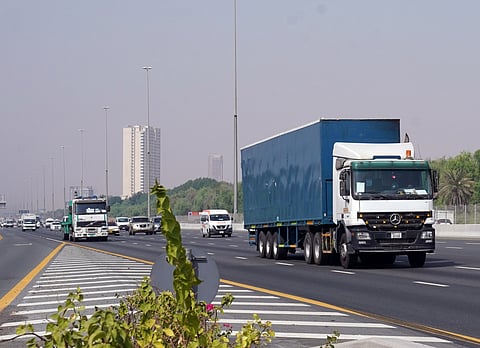
Dubai: Overtaking a truck from the wrong side, driving too close behind a bus or squeezing past a heavy vehicle at an intersection could put motorists at risk of a serious collision.
Dubai Police have highlighted these dangers as part of their Aman Roads initiative, urging motorists and motorcyclists to exercise extra caution when sharing roads with trucks, buses and other heavy vehicles.
Unlike smaller vehicles, heavy vehicles have larger blind spots, longer stopping distances and limited manoeuvrability because of their size and weight. This means drivers may not always be able to see nearby vehicles or react quickly to sudden movements.
Get updated faster and for FREE: Download the Gulf News app now - simply click here.
1. Never overtake a truck from the right
One of the key safety warnings concerns overtaking heavy vehicles.
Trucks have particularly large blind spots on their right-hand side, meaning drivers may not see smaller vehicles travelling alongside them.
Dubai Police advise motorists to:
Always overtake from the left, where visibility is better.
Never attempt to pass a truck from the right.
Avoid remaining alongside a heavy vehicle for extended periods.
Leave sufficient space before merging back into the lane after overtaking.
Cutting in too quickly after passing a truck can also be dangerous, as heavy vehicles require longer distances to slow down or stop.
2. Watch out for blind spots – can the truck driver see you?
A common mistake motorists make is assuming that a truck driver can see everything happening around the vehicle.
However, heavy vehicles have significant blind spots, particularly along their sides and towards the rear.
Dubai Police advise motorists to follow a simple rule: If you cannot see the truck's side mirrors, the driver is unlikely to be able to see you.
Drivers should avoid lingering in these blind spots, maintain a safe distance and use indicators well in advance before changing lanes or overtaking.
Motorcyclists should also avoid riding too close to heavy vehicles or making sudden movements around them.
3. Don't drive too close behind trucks and buses
Tailgating a heavy vehicle creates two major risks: it reduces the motorist's view of the road ahead and leaves less time to react if traffic suddenly slows down.
Because trucks and buses are larger and heavier, they also require longer stopping distances.
Motorists should maintain additional space when following heavy vehicles, rather than driving directly behind them.
Keeping a safe following distance also helps drivers identify hazards ahead and avoid remaining in a truck driver's blind spot.
4. Be careful when trucks make turns at intersections
Large trucks require considerably more room to turn than passenger cars, particularly at intersections.
A truck may need to swing wide when turning left or right, creating a dangerous situation for motorists attempting to squeeze past.
Dubai Police advise drivers to anticipate these movements and avoid trying to overtake or turn alongside a heavy vehicle.
Motorists should also signal their intentions early, allowing truck drivers sufficient time to anticipate lane changes or turning movements.
5. Extra caution at roundabouts and construction zones
Narrow roads, roundabouts and construction areas can make manoeuvring particularly challenging for heavy vehicles.
Long trucks may need additional room to steer, while their rear wheels can cut sharply across corners.
Motorists should be especially careful near kerbs, tight bends and roundabouts, where a truck's movement may differ from that of a smaller vehicle.
Dubai Police recommend leaving sufficient space for heavy vehicles to manoeuvre and avoiding attempts to squeeze through narrow gaps.
6. Avoid sudden lane changes and risky manoeuvres
Patience is essential when driving near trucks and buses.
Sudden lane changes, weaving between heavy vehicles or attempting to rush past a turning truck can create dangerous situations.
Motorists should indicate early, maintain a safe distance and wait for a clear opportunity before overtaking or changing lanes.


