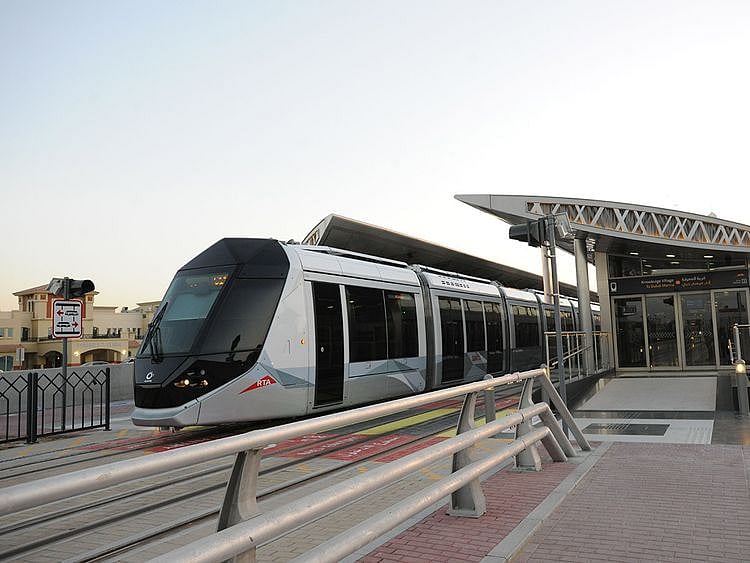
Dubai: By the time the Dubai Tram neared its launch, everything appeared ready for another carefully choreographed milestone in the city’s transport story. Then a fault surfaced during trial operations. What followed, according to those closest to the project, revealed far more about leadership than about trains.
Dubai’s defining infrastructure projects are often remembered for their scale or speed. Less visible are the moments when progress pauses, by choice. One such moment, recalled this week by Mattar Al Tayer is the Director General, Chairman of the Board of Executive Directors of the Roads and Transport Authority (RTA), came during the trial phase of the Dubai Tram.
The issue was technical, discovered during testing before public operations began. Launch schedules were tight, expectations high. Yet when the fault was reported to His Highness Sheikh Mohammed bin Rashid Al Maktoum, Vice President of the UAE, Prime Minister and Ruler of Dubai, his response was unambiguous: stop, fix, and test again.
“There was no pressure to proceed for the sake of timing,” Al Tayer told an audience of emerging leaders. “The instruction was clear: public safety comes first. Nothing moves until we are fully confident.”
The story was shared during a session titled Leadership from the Field, part of the Mohammed bin Rashid Leaders Programme for the 2025–2026 cohort. Over the course of the discussion, Al Tayer, who has worked closely with Sheikh Mohammed for more than two decades, offered a rare behind-the-scenes look at how some of Dubai’s most visible projects are actually led.
The Dubai Tram, which now runs seamlessly through densely populated parts of the city, was at the time one of several complex transport projects reshaping urban mobility. Its construction required coordination across utilities, roads, private developments and live traffic corridors. A fault at the testing stage was not unusual. The decision taken in response, Al Tayer suggested, was what mattered.
“Sheikh Mohammed’s leadership is not about appearances,” he said. “It is about discipline, continuity and accountability, especially under pressure.”
That philosophy, Al Tayer explained, has defined Dubai’s approach to major projects for years. He pointed to the opening of Dubai Metro on September 9, 2009, a date fixed well in advance and maintained despite the global financial crisis of 2008.
Even then, flexibility was paired with realism: only seven stations opened on day one, with the remainder rolled out gradually to ensure quality and safety.
The same thinking applied to the tram. Rather than masking problems or accelerating timelines, the leadership approach was to confront issues early, learn from them and institutionalise the lessons. “Every mistake becomes a documented lesson,” Al Tayer said. “Every success becomes a methodology.”
Speaking to participants of the leadership programme, Al Tayer said the tram incident was an example of what he described as “field leadership”, a style defined by direct engagement, site visits and first-hand understanding of operational realities.
Sheikh Mohammed, he noted, consistently follows projects on the ground, from transport corridors to canals and bridges, ensuring decisions are informed by what is actually happening, not just what appears on paper.
This approach, Al Tayer argued, reinforces discipline across teams. Engineers, contractors and managers know that details matter, that shortcuts will be questioned, and that quality is non-negotiable. Over time, this creates what he called a culture of responsibility rather than compliance.
Al Tayer recalled being tasked, in the early 2000s, with developing the blueprint for what would become the Roads and Transport Authority, an organisation that consolidated transport responsibilities previously spread across multiple entities. The deadline was two months. The work was completed in one.
That sense of urgency, he said, was always matched by clarity of vision. “Speed without direction is chaos,” he told participants. “But clarity enables speed.”
Today, the RTA oversees projects worth more than Dh175 billion, and has spun off companies whose combined market value exceeds Dh80 billion. Yet Al Tayer insisted that numbers are not the true measure of success. Systems, succession planning and empowered teams matter more.
In moments of crisis, from the global financial downturn to Covid-19 and extreme weather events, he said the same leadership principles applied: calm decision-making, visible presence, and a focus on people before processes.
Network Links
GN StoreDownload our app
© Al Nisr Publishing LLC 2026. All rights reserved.