Sharjah-Dubai traffic: New tunnel could cut waiting times by 85%
First phase opens in November as Al Taawun project targets one of Sharjah’s busiest routes
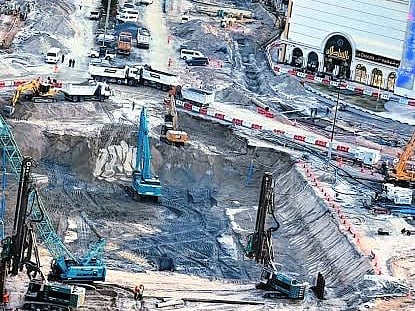
Sharjah: Sharjah is preparing to open the first phase of the Al Taawun Tunnel in November 2026, part of a wider push to ease one of the emirate’s busiest routes towards Dubai and cut waiting times for motorists by as much as 85 per cent.
The tunnel, being built at Al Taawun Square, will have three lanes in each direction and capacity for about 4,000 vehicles an hour during peak periods. The project is expected to be fully completed in February 2027, according to Al Khaleej newspaper.
Get updated faster and for FREE: Download the Gulf News app now - simply click here.
Sharjah’s Roads and Transport Authority says the development is intended to improve traffic flow between Sharjah and Dubai, reduce congestion and create a more direct connection through Al Taawun towards Al Nahda and Dubai. The authority said in July that construction had reached 20 per cent, with work continuing around the clock.
The tunnel is part of a programme to upgrade major traffic corridors between the two emirates. Sharjah has previously said the scheme includes work around Al Taawun, Al Khan and a series of major intersections leading towards Sheikh Mohammed bin Zayed Road.
The first phase of the wider programme is also scheduled to open in November.
Another major road project under way is the upgrade of the intersection between Sheikh Khalifa bin Zayed Street and Mleiha Road, where a three-lane bridge is being built at a cost of Dh140 million.
The project is intended to improve traffic towards Sheikh Mohammed bin Zayed Road and shorten journeys from central Sharjah towards Mleiha.
Yousif Khamis Al Othmani, Chairman of the Sharjah Roads and Transport Authority, said the emirate was pursuing an integrated transport strategy combining road development, smart systems and more sustainable public transport, with quality of life placed at the centre of infrastructure planning. His official English title and spelling are used by SRTA.
The authority is also expanding its use of recycled asphalt, a technique introduced in 2021 to treat damaged road layers and reuse recovered material rather than relying entirely on new asphalt. The approach is intended to reduce construction time and limit the consumption of raw materials.
Public transport is undergoing a parallel shift. Sharjah’s fleet now includes electric, hybrid and natural-gas vehicles, while electric buses are being equipped with artificial-intelligence systems to analyse operational data and improve safety.
The emirate is also expanding its Bus on Demand service, allowing passengers to request journeys through an app rather than relying only on fixed routes. The service covers areas including Muwaileh Commercial, Aljada, University City, Al Juraina, Al Qarain and Al Nouf, and is intended to improve access in neighbourhoods that are not directly served by conventional bus routes.
AI is also being used inside buses and taxis. Intercity buses are fitted with cameras that monitor the road and vehicle interior, including systems designed to detect driver fatigue or distraction, while taxi cameras can monitor driving behaviour, passenger numbers, incidents and forgotten belongings.
Network Links
GN StoreDownload our app
© Al Nisr Publishing LLC 2026. All rights reserved.