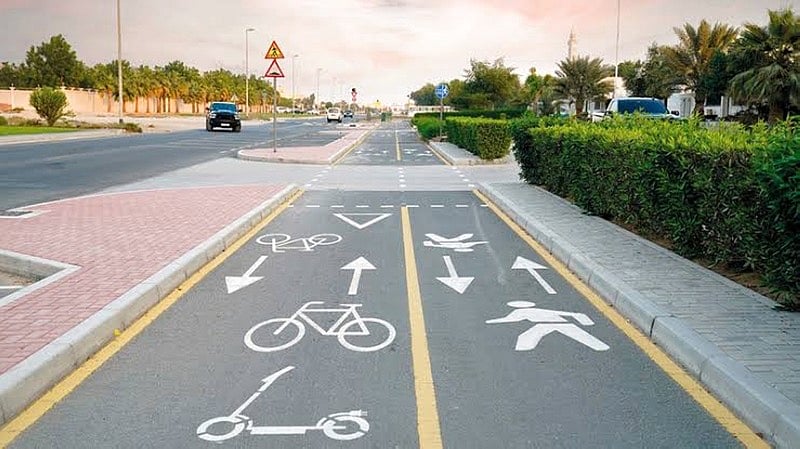
The Department of Municipalities and Transport (DMT) is continuing to roll out new cycling track projects across Abu Dhabi Island and surrounding mainland areas, reinforcing its push for sustainable mobility and integrated transport infrastructure.
The expansion aims to encourage residents to adopt active, eco-friendly transport options while ensuring safe and accessible routes for both recreational and daily commuting.
New cycling tracks along Abu Dhabi–Al Ain Road
As part of the latest phase, DMT is completing additional cycling tracks along Sheikh Rashid bin Saeed Street on the Abu Dhabi–Al Ain Road. These routes will serve areas outside Abu Dhabi Island and connect seamlessly with existing tracks within the island, creating continuous cycling corridors.
The works include the construction of new tracks built to high safety standards, along with directional signage and supporting user facilities to enhance the overall cycling experience.
Improving connectivity and traffic flow
The expanded network is designed to improve connectivity between residential, commercial and service areas, linking them to major roads through an integrated urban cycling system. Officials say the initiative will support smoother traffic flow while offering cyclists a safe and convenient mobility option.
Part of Abu Dhabi’s sustainable city strategy
DMT said the cycling network expansion is a core component of its sustainable and smart city plans. Promoting non-motorised transport helps cut carbon emissions, reduce reliance on private vehicles and support Abu Dhabi’s broader environmental and public health goals.
Boosting sports, lifestyle and urban appeal
The new tracks are expected to enhance Abu Dhabi’s sports and urban appeal by offering flexible mobility choices and encouraging active lifestyles. The projects also focus on user comfort, with shaded sections and well-equipped facilities integrated into the urban landscape.
Expansion continues within Abu Dhabi Island
Within Abu Dhabi Island, DMT is also advancing cycling track development along key corridors, including Mubarak bin Mohammed Street and Shakhbout bin Sultan Street. Large portions of the network have already been completed, with further expansion under way.
Built to the highest safety standards
All new cycling tracks are being developed in line with approved road safety and urban planning standards. They are integrated into the existing road network and linked to neighbourhoods, commercial hubs and service facilities, ensuring safe access for families, youth and cycling enthusiasts.
More phases planned
DMT confirmed that cycling infrastructure remains a key pillar of its transport development plans. In coordination with relevant authorities, the department will continue to assess demand and expand the network in future phases, in line with government priorities on sustainability, quality of life and active mobility.
Where e-scooters and e-bikes can operate
Permitted areas: E-bikes and e-scooters are allowed on internal roads with speed limits below 40 km/h, dedicated cycling and e-bike tracks, and shared pedestrian–cycling paths.
Prohibited areas: Use is banned on highways, pedestrian-only paths, and roads outside the city with speed limits of 60 km/h or more.
Safety-first planning: The Department of Municipalities and Transport says clear regulation supports road safety, smoother traffic flow, and efficient urban mobility.
Connected cycling network: Authorities are working to expand a safe, integrated cycling and e-bike network linked with land use and public transport.
Rider responsibilities: Cyclists must give priority to pedestrians, follow traffic laws and signage, ride in the direction of traffic, keep safe distances, and use designated lanes where available.
Special permits: Cycling on roads exceeding 60 km/h requires prior authorisation from relevant authorities.
Where lanes are unavailable: Cyclists may ride on the right-hand side of roads with speed limits of 60 km/h or less.
Parking rules: Bicycles must be parked only in designated areas and must not obstruct vehicles or pedestrians.
Network Links
GN StoreDownload our app
© Al Nisr Publishing LLC 2026. All rights reserved.