Nobel laureates in Dubai: AI can speed up science, but can’t replace human discovery
From AlphaFold breakthroughs to classroom risks, Nobel voices weigh AI’s real limits
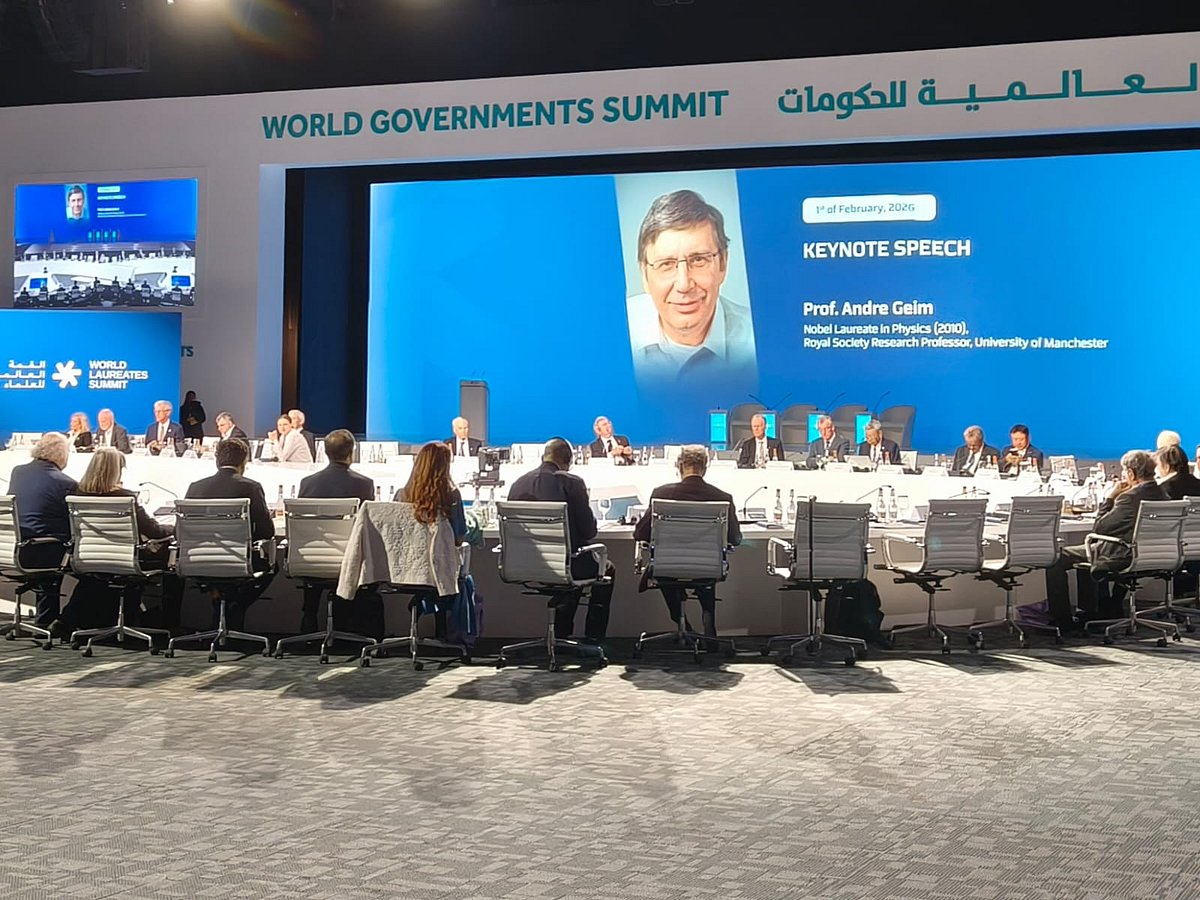
Artificial intelligence is already reshaping how science is done but Nobel Prize laureates meeting in Dubai have warned that human creativity, ethics and funding will ultimately decide whether the technology accelerates discovery or merely repackages what is already known.
AI’s promise and peril
Talking to Gulf News at the World Laureates Summit, held alongside the World Governments Summit 2026, leading scientists said AI’s growing role in laboratories, classrooms and research institutions presents both unprecedented opportunity and serious risks that governments cannot afford to ignore.
“AI is getting integrated into every part of society and every part of science,” said Ardem Patapoutian, the 2021 Nobel laureate in Physiology or Medicine and professor at the Scripps Research Institute. “Any new technology has great uses and also dangers, and it’s very important that we control this in a very coordinated way,” said the Lebanese-American molecular biologist and neuroscientist.
The summit brought together more than 150 scientists, including Nobel Prize winners and recipients of the world’s top scientific awards, creating a rare platform where science and policy converged amid accelerating global interest in AI-led innovation.
How AI is transforming research labs
Patapoutian said AI is already transforming biological research in ways that were unthinkable just a few years ago. Tasks that once consumed entire doctoral programmes can now be completed in minutes.
“The structure of proteins, for example, was something that graduate students used to work five or six years to solve,” he said. “Now, through AI, something called AlphaFold, it’s there within minutes.”
Can machines discover?
While the impact on productivity is undeniable, Patapoutian said the bigger question remains whether AI can truly discover rather than simply process existing knowledge.
“There’s a lot of people who think AI is mainly about gathering what’s known and giving the best past opinion,” he said. “But many people think that in the future it will be able to generate and create ideas.”
‘Will AI make me redundant?’
That question – whether machines can rival human insight – divided opinion among laureates.
Duncan Haldane, the 2016 Nobel laureate in Physics and a professor at Princeton University, expressed scepticism that today’s AI systems can replicate the unpredictable nature of scientific breakthroughs.
“The question is: ‘Is AI going to make me redundant?’ I don’t know,” he laughed.
“The current AI – the large language models – are basically just telling you about stuff that’s already known, because it’s based on what’s been published in the past.”
Haldane said many of history’s most important discoveries were not the result of planned optimisation, but chance.
“The best discoveries are often unexpected, accidental discoveries,” he said. “Whether AI can do anything like that is not at all clear.”
Haldane also warned that the rapid spread of AI tools in education could undermine learning if not handled carefully.
Classrooms at risk?
“If students can get AI to do their homework for them, then they won’t learn anything. We may have to adapt the way we teach because of these influences of AI,” Haldane underlined.
Despite technological shifts, he stressed the enduring importance of human mentors in shaping future scientists, noting that many top researchers trace their careers back to a single inspiring schoolteacher.
Science’s future is vast
Echoing the view that human creativity remains central to discovery, Roger Kornberg, the 2006 Nobel laureate in Chemistry and professor of medicine at Stanford University, said AI’s limitations are fundamental.
“AI is limited by existing knowledge,” said Kornberg, Chairman of the World Laureates Association. “Discovery often relates to something new, which is not part of what is already known today.”
Kornberg said claims that science has already harvested its “low-hanging fruit” were deeply misleading.
“We understand less than one per cent of what there is to know about human biology,” he said. “The most important discoveries remain to be made, and the future of science will be even more exciting than what has been done so far.”
Funding remains hurdle
However, he warned that ambition alone would not be enough.
“Funds are far fewer than really needed to advance science in a way that will benefit humanity,” Kornberg said.
As governments increasingly look to AI-driven solutions for healthcare, climate change and economic growth, the laureates’ message from Dubai was clear: while machines may accelerate research, the responsibility for discovery and its consequences will remain firmly human.
Sign up for the Daily Briefing
Get the latest news and updates straight to your inbox
Network Links
GN StoreDownload our app
© Al Nisr Publishing LLC 2026. All rights reserved.