Meta employee Kristine Mariz-Ursua (L) demonstrates the Ray-Ban Smart Glasses for CNET reporter Queenie Wong (R) during a media preview of the new Meta Store on May 04, 2022 in Burlingame, California.
Meta smart glasses in the UAE: When does hands-free recording become a privacy concern?
Experts examine the risks of discreet recording and the importance of responsible use
Last updated:
5 MIN READ
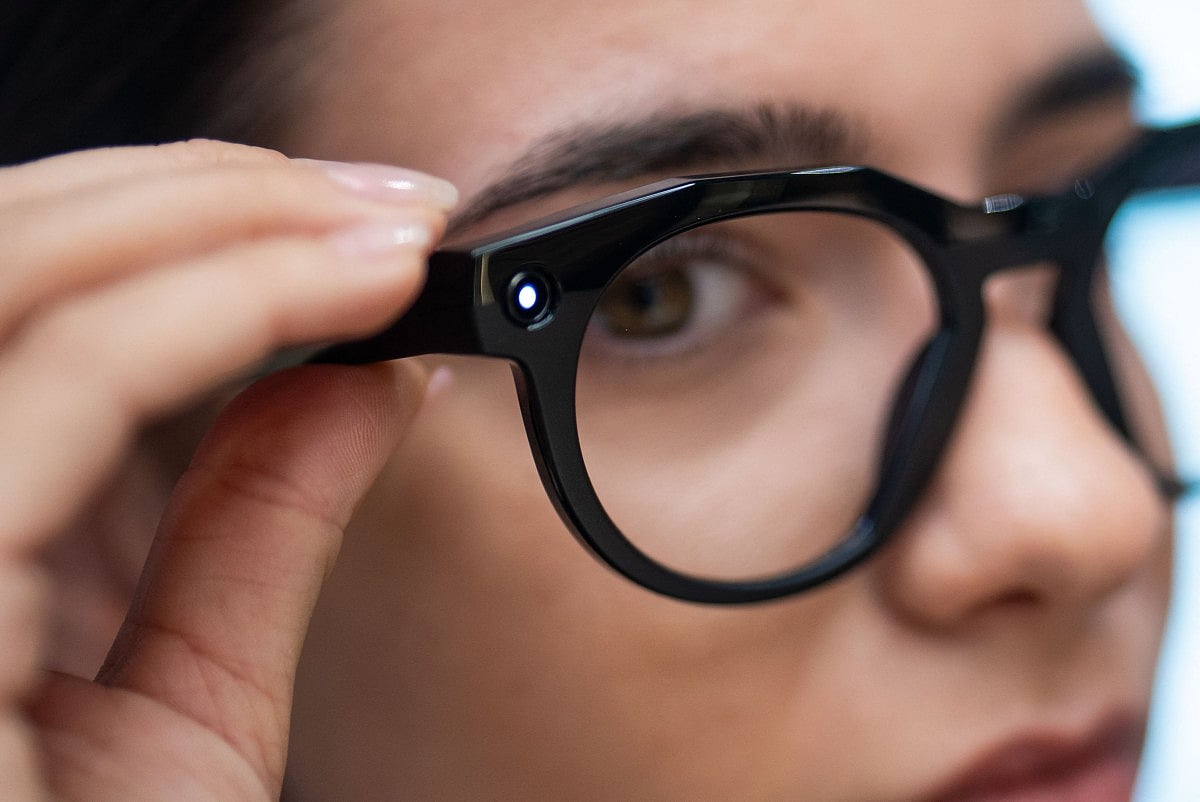
Picture taken on November 3, 2026 at an optician's shop in Vienna, Austria, shows a woman wearing smart glasses with an activated video recording feature.
AFP-GEORG HOCHMUTH
Dubai: When someone holds up a smartphone to take a photo or video, it is usually obvious. But with a camera built into everyday glasses, it becomes harder to tell whether someone is looking at you or recording you.
As Meta's AI-powered smart glasses become more accessible to UAE consumers through etisalat, their growing availability raises questions about how wearable technology could change expectations of privacy in everyday settings, from shopping malls and cafés to workplaces.
While the glasses offer the convenience of hands-free photography, video recording and artificial intelligence (AI) assistance, their capabilities also raise questions about consent, the security of recorded information and how existing privacy laws apply to wearable devices.
The issue is not simply whether consumers can own smart glasses in the UAE, but whether they understand their responsibilities when using them around others.
When a pair of glasses becomes a recording device
Meta's smart glasses combine cameras, microphones, speakers and AI capabilities, allowing wearers to capture photographs and videos, translate speech, identify objects and ask questions about their surroundings without reaching for a smartphone.
However, the ability to capture information discreetly raises concerns about how the technology could be misused, particularly if recordings are combined with AI-powered facial recognition tools to identify, profile or harass individuals without their knowledge.
Internationally, concerns over wearable recording devices have already prompted restrictions in certain settings. According to Reuters, courts in jurisdictions including Australia, England and New York have introduced restrictions on smart glasses to prevent unauthorised recordings and protect the integrity of legal proceedings.
In September 2026, Meta also introduced Ray-Ban Meta Audio, a camera-free version of its smart glasses that retains audio capabilities without allowing users to capture photographs or videos, following months of scrutiny over the privacy implications of its camera-equipped eyewear.
The privacy risks that extend beyond the camera
Beyond the immediate concerns surrounding filming in public, cybersecurity experts warn that users should also consider what happens to the information once it has been captured.
Maher Yamout, lead security researcher at Kaspersky, explained that AI-powered smart glasses introduce a new set of cybersecurity and privacy risks by combining cameras, microphones, internet connectivity and AI capabilities in a single wearable device.
Unlike smartphones, which are typically used consciously and visibly, smart glasses can capture images, conversations and sensitive information in everyday situations without those around the wearer necessarily being aware.
“One key concern is the potential exposure of recordings and personal data. If an account linked to the glasses is compromised, or the device is connected to an unsecured network, cybercriminals could potentially gain access to sensitive information, including stored photos, videos, voice recordings and associated account data. Weak passwords, reused credentials and insufficient account protection can further increase this risk,” Yamout said.
The risks also extend beyond the device itself to how AI features process and interpret information.
“For example, features that analyse surroundings, identify objects, transcribe conversations or potentially recognise faces could be misused to profile individuals, identify strangers, gather information about their routines or facilitate targeted scams.”
Among the concerns highlighted by Yamout was Meta's proposed NameTag facial recognition feature. References to the unreleased feature were discovered in the Meta AI companion application's code in June 2026 and subsequently removed following privacy scrutiny.
The proposed feature illustrates how combining wearable cameras with AI could potentially allow someone to connect a stranger's physical identity with their digital footprint.
“Another concern is the possibility of cybercriminals exploiting vulnerabilities in the glasses' software, Bluetooth connectivity or companion mobile applications to intercept data or gain unauthorised access. Users shouldn't assume that because the glasses are a consumer product, their recordings and interactions are automatically secure,” he added.
Ray-Ban Smart Glasses are displayed during a media preview at the new Meta Store on May 04, 2022 in Burlingame, California.
Does being in a public place mean consenting to being filmed?
Being in a public space does not automatically mean an individual has consented to being recorded. Article 44 expressly extends to photographs taken in public places, meaning that recording someone in a shopping mall, café or other public setting could give rise to legal liability, depending on the circumstances, according to Samuel Moore, senior paralegal at BSA Law
Nor does a recording necessarily have to be published online for an offence to occur.
“Similarly, footage does not need to be shared online for a privacy violation to occur. Article 44 covers the act of recording and retaining electronic images, provided the relevant elements of the offence are established. Even where footage remains on a user's device and is never shared publicly, there may still be a breach of the law,” Moore said.
For smart glasses users in the UAE, the convenience of hands-free recording does not override existing privacy protections. Moore explained that while UAE legislation does not specifically address smart glasses, existing laws are broad enough to cover such devices.
Under Article 44 of Federal Decree-Law No. 34 of 2021 on Combatting Rumours and Cybercrimes, using information technology for the purpose of breaching another individual's privacy without consent is a criminal offence.
The provisions cover acts including:
Recording conversations or audiovisual material without consent.
Photographing individuals in public or private settings.
Sharing, copying or retaining electronic images of others.
Additional protections exist under Federal Decree-Law No. 31 of 2021, which addresses unauthorised recording of private conversations and photographing individuals in private circumstances, and Federal Decree-Law No. 45 of 2021 on the Protection of Personal Data, which regulates the collection, storage and processing of personal information.
According to Moore, individuals convicted of breaching another person's privacy under Article 44 of the Cybercrime Law could face imprisonment of at least six months and/or fines ranging from Dh150,000 to Dh500,000.
Where photographs or recordings are electronically altered for the purpose of defaming or abusing another individual, the penalties increase to a minimum of one year's imprisonment and/or fines ranging from Dh250,000 to Dh500,000.
Article 56 of the Cybercrime Law also provides for the confiscation of devices used to commit an offence and the deletion of relevant data following a conviction. This could potentially include the smart glasses themselves.
Picture taken on November 3, 2026 at an optician's shop in Vienna, Austria, shows a woman presenting smart glasses equipped with a video recording feature.
Balancing technological innovation with the right to privacy
Professor Fehmida Hussain, head of Computer Engineering and Informatics at Middlesex University Dubai, said smart technology is likely to become increasingly common in everyday life, with wearable devices such as smart glasses representing the next step in its evolution.
“Manufacturers are building in features such as visible recording lights, privacy-by-default settings and on-device processing. Regulators and industry are shaping standards that can begin to build public trust.”
Hussain stressed that while manufacturers and regulators have a role in developing safeguards, the responsible and ethical use of smart glasses also depends on the wearer.
“Responsible use starts with understanding what your device captures, where that data is stored and who it is shared with. Wearers should review their privacy settings, keep their accounts secure and update their software regularly. Most importantly, they should respect the people around them by asking permission before recording.”
Technological innovation and personal privacy, Hussain added, are not in competition.
Network Links
GN StoreAbout Gulf NewsTerms & ConditionsReach by GNSitemapContact usPrivacy PolicyGN FocusHave your sayWork with usAdvertise with usGulf News epaperPrinting Services
Download our app
© Al Nisr Publishing LLC 2026. All rights reserved.