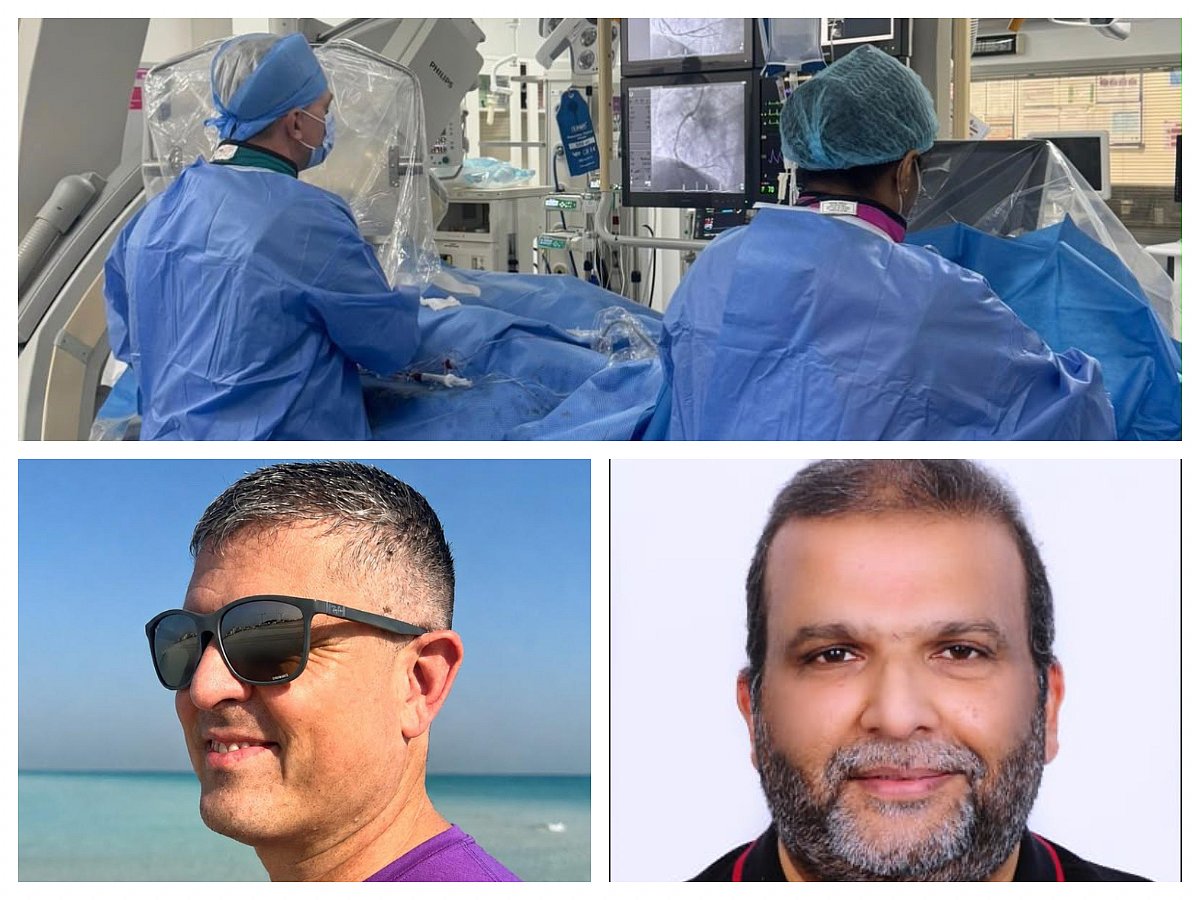
Marco Giovannoli
Dubai: A stroke can change a person’s life in seconds. Recovery, however, can take months or years, bringing physical challenges, emotional struggles, and the task of rediscovering a sense of normality.
For these UAE residents, the experience came without warning. Their stories highlight the importance of recognising symptoms, investigating underlying causes, and understanding that recovery extends beyond hospital treatment.
Get updated faster and for FREE: Download the Gulf News app now - simply click here.
‘Life is still worth chasing’
In 2022, Marco Giovannoli, an airline engineering senior manager, was 46 and an enthusiastic ultrarunner. After completing a 10km desert run with friends in Abu Dhabi, he suddenly collapsed.
“I remember asking, ‘Where is my right arm?’ I could no longer feel it or control it,” recalled Giovannoli.
Initially, he has suspected exhaustion or the September heat. But his running companions have recognised the seriousness of his condition and called an ambulance. Doctors have diagnosed an acute ischaemic stroke caused by a dissection and blockage of his left carotid artery.
The stroke has left him unable to move the right side of his body normally. He had to relearn basic activities, including standing, walking, and dressing, and continues to experience weakness and impaired coordination.
The emotional toll has been equally difficult. About six months after the stroke, he has experienced depression as he struggled with losing his independence and the active life he had known.
“I eventually realised that I could spend the rest of my life mourning the person I used to be, or I could start discovering the person I was becoming.”
Support from his partner, friends, colleagues, and the running community has helped him rebuild his confidence. He has returned to work after about five months and later wrote his own book about his journey of self-discovery after a atroke.
Today, Giovannoli, now 50, continues to work and run with an ankle-foot orthosis supporting his affected leg. He is preparing for a 20km trail race at Oman in December this year. His ambitions have changed, but his determination remains.
“I don't run to get my old life back. I run because life is still worth chasing.”
He wants greater awareness of the long-term challenges stroke survivors face, including mental health struggles, disability, and the need for accessible sporting opportunities.
Simple act of kindness
For 56-year-old public relations officer Shabir Ahamed, the emergency has begun while he was driving to work.
At around 10am one February morning, he has suddenly developed double vision. The road and cars have appeared duplicated, prompting him to pull over immediately.
Unable to reach anyone by phone, he has started honking to attract attention. A Pakistani passer-by has noticed his distress and came to help.
Hospital examinations have confirmed that Ahamed had suffered a mild stroke. He has been admitted to the intensive care unit for treatment and monitoring.
Shabir Ahamed
Further scans have revealed a tumour near his kidney. Doctors have told him that surgery was needed as soon as possible and that removal of the kidney might be necessary, depending on the circumstances during the operation.
The unexpected findings has left him and his family facing a frightening period of uncertainty.
“It reminded me how unpredictable life can be and how much a simple act of kindness can mean to someone in a moment of crisis,” shared Ahamed.
His experience has demonstrated how sudden visual disturbances can accompany a stroke and how assistance from a stranger can make a critical difference during a medical emergency.
‘The UAE gave me a second chance at life’
Tarek, a 40-year-old hospitality professional who has lived in the UAE for 18 years, has never expected to suffer a stroke.
He has developed severe dizziness and temporarily lost the ability to speak for about 15 minutes, without experiencing arm or leg weakness. Although his routine blood tests and general health indicators have been reassuring, brain imaging confirmed a small ischaemic stroke.
Further investigations have revealed a patent foramen ovale (PFO), a small opening between the heart’s upper chambers that can remain undetected from birth. In some people, it can allow a blood clot to reach the brain.
After discussing treatment options with his medical team, Tarek has underwent a procedure to close the opening.
Tarek undergoing a patent foramen ovale procedure
He has recovered physically and returned to work, driving, and everyday activities. However, regaining confidence took longer. Ordinary sensations such as dizziness or tiredness sometimes made him fear another stroke.
“Recovery is not only about good scans or taking medication. It is also about learning to trust your body again,” explained Tarek.
He has credited the UAE’s access to specialist care and coordination between medical teams with helping identify the possible cause of his stroke and guide his treatment.
“I genuinely feel that the UAE gave me a second chance at life.”
His experience, he hopes, will remind younger adults that stroke is not exclusively an illness of old age and that unusual neurological symptoms should never be ignored.
Prevention starts early
According to Dr. Jan Niclas Strickling, consultant cardiologist at Medcare Hospital Al Safa, managing individual risk factors is central to stroke prevention.
High blood pressure, elevated cholesterol, diabetes, smoking, and physical inactivity are among the key risks people should address. Stroke can also affect younger people who appear healthy.
Strickling has urged people to monitor their blood pressure, take cardiovascular health seriously, and seek emergency help for sudden neurological symptoms.
Dr. Jan Niclas Strickling, consultant cardiologist at Medcare Hospital Al Safa
The “BE FAST” warning signs include balance difficulties, eyesight changes, facial drooping, arm weakness, speech difficulties, and time to call emergency services. Anyone experiencing possible stroke symptoms should call 998 for an ambulance in the UAE without delay.
“A stroke can happen in seconds, but prevention starts years earlier,” Strickling told Gulf News.
Finding a new normal
A stroke can leave lasting changes and recovery rarely follows the same path for everyone. Yet the experiences of these UAE residents show that life afterwards can still include ambition, independence, and meaningful everyday moments.
Their journeys are not about pretending life has returned to normal. They are about finding a new normal and making the most of it.
Network Links
GN StoreAbout Gulf NewsTerms & ConditionsReach by GNSitemapContact usPrivacy PolicyGN FocusHave your sayWork with usAdvertise with usGulf News epaperPrinting Services
Download our app
© Al Nisr Publishing LLC 2026. All rights reserved.