UAE calls for immediate reopening of Strait of Hormuz at UN Security Council
UAE urges global action to hold Iran accountable for maritime disruptions
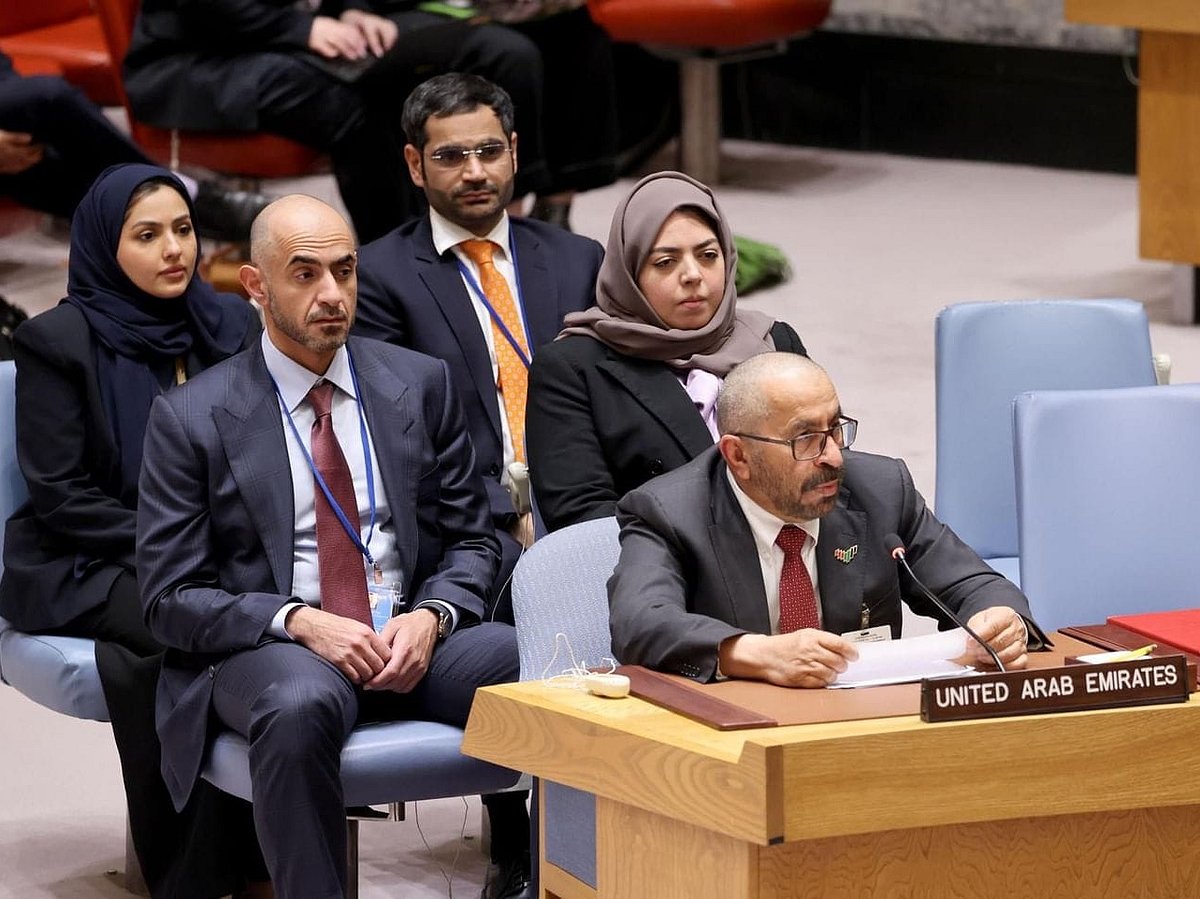
New York: The UAE has called for the immediate and unconditional reopening of the Strait of Hormuz, urging the international community to hold Iran fully accountable for the unlawful interference with global maritime navigation.
Speaking at a high-level open debate of the United Nations Security Council on maritime security, chaired by Bahrain, Sheikh Khalifa Shaheen Al Marar, Minister of State, said recent developments posed a serious threat to the safety of international shipping lanes and global trade.
Get updated faster and for FREE: Download the Gulf News app now - simply click here.
“The Council has taken important steps in recent years to address threats to maritime security,” he said, pointing in particular to the Iranian attacks on Gulf states and Jordan, as well as Tehran’s deliberate obstruction of navigation through the Strait of Hormuz.
He cited Security Council Resolution 2817, which condemns any attempts by Iran to close or disrupt maritime traffic through the vital waterway.
Al Marar added that recent resolutions by the International Maritime Organization, its legal committee, and the UN Human Rights Council reflected a unified international position calling on Iran to halt its actions and ensure that the strait remains open, with the right of transit passage upheld in accordance with international law.
He warned that allowing Iran to use the strait as a tool of political pressure would undermine both global stability and the functioning of international trade. “If such actions are allowed to continue, they risk setting a dangerous precedent that could erode freedom of navigation in critical waterways worldwide,” he said.
Addressing the Council, the minister outlined a pattern of violations, including the imposition of illegal fees on passing vessels, attacks and threats against shipping, the laying of mines, and discriminatory practices against foreign ships, in breach of international resolutions, particularly Resolution 2817.
“In the face of this economic coercion and these clear violations of international law, my country holds Iran responsible,” he said, adding that Tehran must provide compensation for damages resulting from its actions, including their impact on marine environments.
Al Marar stressed the global consequences of any disruption to the strait, noting that its closure was already having visible effects and could have far-reaching implications for energy security, supply chains, and food and fertiliser availability, particularly in developing nations. “The consequences for the global economy would be severe,” he said.
He called for collective international action to reach a lasting solution that guarantees freedom of navigation and the right of transit passage through the Strait of Hormuz without conditions. The UAE, he added, stands ready to support efforts to ensure the waterway remains open in line with international law.
Ahead of the session, Al Marar took part in a press briefing chaired by Bahrain’s Foreign Minister, Dr Abdullatif bin Rashid Al Zayani, alongside representatives from more than 90 countries. Participating states delivered a unified message urging Iran to immediately cease its unlawful actions in and around the strait and to guarantee unimpeded passage in accordance with international law.
The countries also warned that any continued closure of the strait, or attacks on shipping, would constitute a serious threat to international security and the principle of free navigation, with significant global repercussions.
Network Links
GN StoreDownload our app
© Al Nisr Publishing LLC 2026. All rights reserved.