Dubai plans two waste bins per home to replace communal containers
Barcodes will track bin collections and waste, with honours planned for lower waste levels
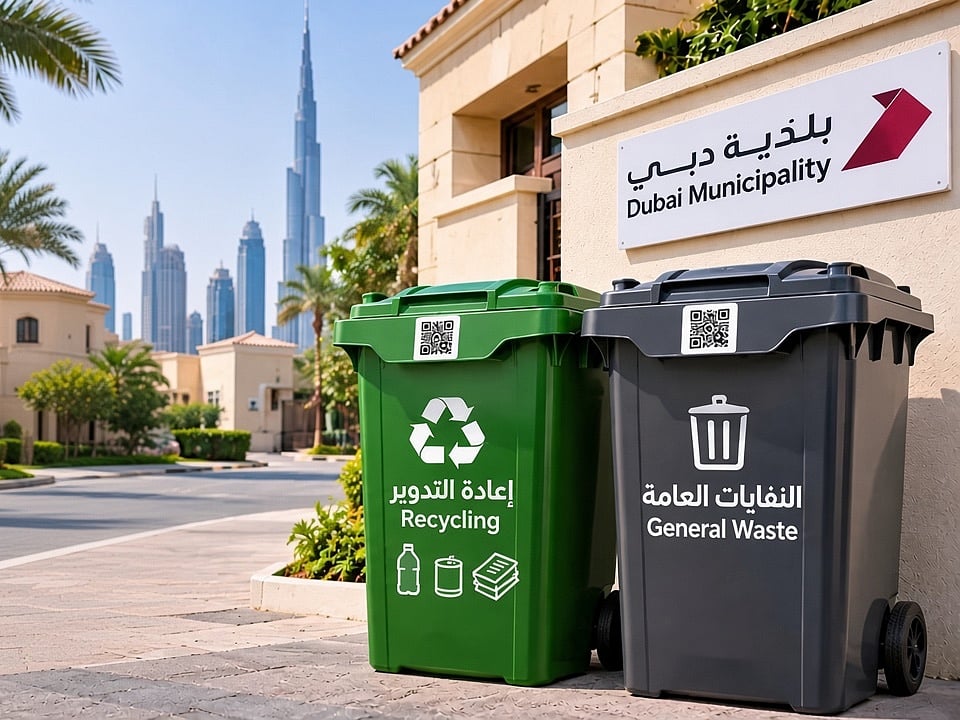
Dubai: Dubai Municipality plans to replace large communal waste containers in residential neighbourhoods with two bins for each home, one for general rubbish and another for recyclable materials, as part of efforts to improve recycling and address complaints over shared waste facilities.
The initiative, part of the municipality's My City, My Environment project, will also introduce barcodes on household bins to track waste collection and monitor the amount of rubbish generated by individual homes.
Get updated faster and for FREE: Download the Gulf News app now - simply click here.
Households that achieve the greatest reductions in waste are expected to be recognised under a programme whose details will be announced later.
Adel Al Marzouqi, Chief Executive of the Waste and Sewerage Agency at Dubai Municipality, said the new approach would encourage residents to separate recyclable materials from general household waste before disposal.
Speaking during a live broadcast on Noor Dubai Radio, Al Marzouqi explained that the municipality had begun distributing the new bins in Al Mizhar 4, building on a similar collection system already in place in areas including Jumeirah, Al Barsha North and Al Mizhar 1 and 2.
He noted that the move was intended to address several challenges associated with communal waste containers, including complaints from residents about their locations.
Some households objected to large containers being placed outside their properties, while others complained that the nearest bins were too far from their homes.
Shared containers were also being used by people from outside the neighbourhoods, adding to the volume of waste and potentially affecting the cleanliness and appearance of residential areas.
Under the new system, each household will have two designated containers, allowing residents to separate general waste from recyclable materials at source.
The bins will carry barcodes that waste collection operators will scan when emptying them. Each collection will also be documented through photographs, enabling the municipality to monitor collection operations and track changes in the amount of waste generated by households.
Al Marzouqi explained that the data would help the municipality assess the effectiveness of efforts to reduce household waste and identify homes that had achieved significant reductions.
The municipality also plans to recognise households that are particularly successful in cutting waste, with further details of the recognition programme and its implementation to be announced at a later stage.
Residents will be able to request larger containers if the standard capacity is insufficient for their household needs, he added.
The municipality is also coordinating with Tadbeer centres and the Ministry of Human Resources and Emiratisation to train domestic workers in separating waste and placing recyclable materials in the appropriate containers.
Al Marzouqi highlighted the importance of domestic workers in ensuring that waste is properly sorted in homes, particularly given the number of households in Dubai that employ them.
Meanwhile, Dubai Municipality is working with Furjan Dubai to organise awareness programmes and neighbourhood visits to explain the new collection system, demonstrate proper waste segregation and help residents understand how to access related municipal services.
Network Links
GN StoreDownload our app
© Al Nisr Publishing LLC 2026. All rights reserved.