Dubai wishes motorists Eid Mubarak on the occasion of Eid Al Adha in 2021.
Eid Al Fitr and Eid Al Adha explained: the meaning behind the two Eids
Why Muslims celebrate two Eids and what each one represents in Islam
Last updated:
3 MIN READ
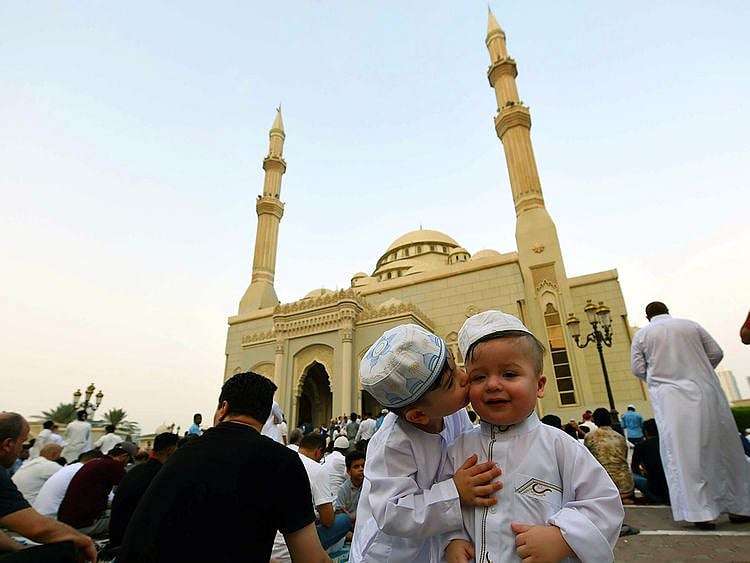
Maan Al Shaar kissing his brother Omer Al Al Shaar after Eid Al Adha prayers at Al Noor Masjid in Sharjah on Eid
Atiq Ur Rehman /Gulf News
Dubai: For many, the word 'Eid' conjures images of new clothes, family gatherings and tables full of food. But not all Eids are the same.
While the celebrations may look similar on the surface, the two festivals Muslims observe each year carry distinct meanings, different rituals and separate places in the Islamic calendar.
Here is everything you need to know.
What does Eid actually mean?
The word "Eid" means "feast" or "festival" in Arabic. There are two Eids celebrated each year: Eid Al Fitr and Eid Al Adha. Because the Islamic calendar follows the lunar cycle, which is around 11 days shorter than the solar calendar most of the world uses, the dates of both Eids shift each year.
Eid Al Adha always falls just over two months after Eid al-Fitr.
On both occasions, Muslims attend special prayers at their mosque, gather with family and friends, and exchange the greeting "Eid Mubarak," which means "blessed Eid."
Eid Al Fitr: the festival of breaking the fast
Eid al-Fitr is the first of the two Eids and marks the joyful end of Ramadan, the holy month of fasting, prayer and reflection. It falls on the first day of Shawwal, the tenth month of the Islamic lunar calendar, beginning the morning after the new crescent moon is sighted.
The day begins early, with Muslims performing ghusl, dressing in new clothes, eating something sweet such as a date, and heading to the mosque for Eid prayers. Before prayers, it is obligatory to pay Zakat al-Fitr, a charitable donation intended to purify one's fast and ensure those in need can also celebrate.
Celebrating Eid Al Fitr: Residents greet each other after prayers at Al Noor Mosque, Sharjah.
Get updated faster and for FREE: Download the Gulf News app now - simply click here.
The rest of the day is spent feasting, visiting family and friends, and giving gifts. Eid Al Fitr typically lasts one day, though celebrations can stretch across two to three days depending on the country.
At its heart, Eid Al Fitr is a day of gratitude. It honours the spiritual discipline of Ramadan and celebrates the strength Allah gave Muslims to complete the fast.
Eid Al Adha: the festival of sacrifice
Eid Al Adha, known as the "Greater Eid," holds particular religious significance in Islam. It commemorates one of the most profound acts of faith in Islamic tradition: the Prophet Ibrahim's willingness to sacrifice his son Ismail in obedience to God's command. At the last moment, God intervened and replaced Ismail with a ram, revealing it had been a test of devotion.
Eid Al Adha falls on the 10th of Dhu al-Hijjah, the final month of the Islamic calendar, and coincides with the Hajj pilgrimage to Mecca, one of the five pillars of Islam. Every year, approximately three million Muslims travel to Saudi Arabia for Hajj, making this period one of the most significant in the entire Islamic year.
Customers at the cattle market in Dubai, ahead of Eid Al Adha.
The central ritual of Eid Al Adha is Qurbani, the sacrifice of an animal, typically a sheep, goat or cow, performed after Eid prayers. The meat is divided into three equal parts: one for the family, one for relatives and one for those living in poverty. This act of giving is central to the spirit of the occasion.
Eid Al Adha lasts three days, making it longer than Eid Al Fitr, and is generally considered the holier of the two festivals.
What do the two Eids have in common?
Despite their different meanings, both Eids are united by the same values: faith, community and charity. Both involve gathering for prayer, feasting with loved ones and giving to those in need. Together, they represent two sides of Islam's call to balance personal devotion with care for others, one through fasting and reflection, the other through sacrifice and service.
Network Links
GN StoreAbout Gulf NewsTerms & ConditionsReach by GNSitemapContact usPrivacy PolicyGN FocusHave your sayWork with usAdvertise with usGulf News epaperPrinting Services
Download our app
© Al Nisr Publishing LLC 2026. All rights reserved.