Photo used for illustrative purposes
EXCLUSIVE
Dubai’s KHDA issues distance learning guidelines, asks schools to review system in two weeks
Private schools must meet minimum standards set in Quality Expectations Framework
Last updated:
5 MIN READ
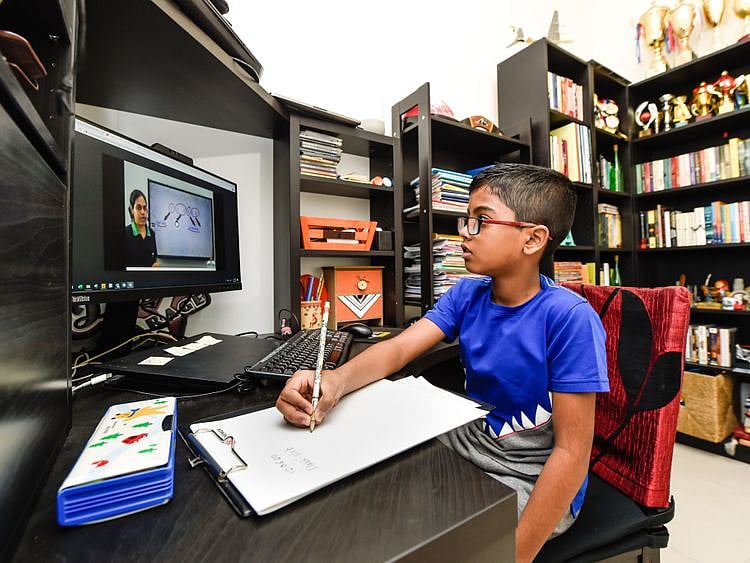
Photo used for illustrative purposes
Virendra Saklani/Gulf News Archives
Dubai: Dubai's Knowledge and Human Development Authority (KHDA) has published a comprehensive framework setting out minimum quality standards that private K-12 schools must meet during periods of distance and online learning.
The guidelines, titled Quality Expectations for Effective Distance Learning, come in response to regional circumstances requiring schools to shift temporarily to online delivery.
However, KHDA has clarified that the framework is intended as a standing reference that schools can draw on whenever continuity arrangements are needed, not simply a short-term response measure.
"Schools will benefit from a clear and practical framework that helps them build resilience, sustain learning, preserve quality, and support students across changing modes of delivery," the document seen by Gulf News states.
Initial review in 2 weeks
The expectations are organised into three core areas: students' access, participation, wellbeing, and safeguarding; teaching, learning, assessment, and feedback; and leadership, communication, and readiness for flexible delivery.
Schools have been asked to review their current arrangements against these expectations and strengthen them where necessary.
“Schools are encouraged to complete this initial review within two weeks of receiving this document,” KHDA stated.
Get updated faster and for FREE: Download the Gulf News app now - simply click here.
Student access and safeguarding
One of the framework's central concerns is ensuring no student is left behind during a shift to online learning. KHDA expects schools to maintain up-to-date registers of students who may face barriers to participation, including those with limited device access, unreliable internet connectivity, shared home technology, or insufficient adult support at home.
Schools are required to monitor attendance and engagement beyond simply logging whether a student has signed in to a platform. "Presence online does not necessarily mean meaningful participation," the document notes, calling on schools to track whether students are completing work, responding to feedback, and remaining genuinely connected to their learning.
Wellbeing and safeguarding responsibilities are given particular emphasis. Schools are expected to ensure that students and families can access pastoral and counselling support during disrupted learning periods, and to communicate age-appropriate guidance on safe online conduct, privacy, and supervision.
Crucially, KHDA makes clear that safeguarding reporting procedures must remain active and visible in remote settings, and that staff should stay alert to signs that students may need additional protection. These include risks such as cyberbullying, social exclusion, or emotional distress that can intensify in online environments.
Teaching quality and assessment
On the teaching side, KHDA is asking schools to move well beyond task-setting. The framework calls for structured learning models that include an appropriate balance of live teaching, guided tasks, and independent work, supported by clear timetables shared with students and families.
A key theme running through this section is the prioritisation of quality over quantity. "More content or more hours do not necessarily lead to better learning," the document states, cautioning schools against excessive screen time, passive activity, or high volumes of repetitive tasks.
Teachers are expected to communicate clear learning intentions, deliver purposeful and age-appropriate tasks, and use interactive strategies that encourage genuine student participation. Assessment arrangements should remain in place, but KHDA warns against over-reliance on testing, stating that assessment during online provision should "primarily support learning, identify misconceptions, and help guide next steps."
Workload management
Workload management is also highlighted as a shared responsibility. Schools are expected to coordinate across subjects to ensure that the total volume of sessions, assignments, and independent tasks remains manageable for both students and staff.
KHDA also pointed out that parents should be supported but not overburdened. “Parents play an important supporting role, especially for younger students, but online provision should not depend on unreasonable levels of parental supervision, teaching, or troubleshooting. Schools should clearly communicate what support is helpful and what remains the school’s responsibility.”
Leadership and operational readiness
The framework places significant responsibility on school leaders to ensure that continuity plans are practical, current, and actually used, not simply kept as reference documents. Leaders are expected to clarify staff roles and responsibilities, oversee implementation, and respond promptly when gaps or inconsistencies emerge.
Parent communication is identified as a critical area. Schools should provide families with timely, clear, and consolidated information about schedules, expectations, and available support.
Importantly, the guidelines explicitly state that communication should "avoid placing unreasonable expectations on parents to act as substitute teachers.”
Digital readiness, data privacy, and staff wellbeing also feature in this section. Schools must ensure their platforms are operational and accessible, that student data is handled in line with privacy standards, and that staff are given manageable workloads and appropriate support during periods of adjusted delivery.
Guidance for vulnerable learners
Accompanying the main framework is a detailed appendix on supporting vulnerable learners, which KHDA identifies as a group requiring closer attention during distance learning.
For students of determination, schools are asked to review whether existing Individual Education Plan targets, accommodations, and support arrangements remain suitable in an online context, and to make temporary adjustments, such as adapted pacing, visual supports, or simplified instructions, where necessary.
For early years learners, the framework calls for shorter, more interactive, and play-based experiences, with realistic expectations communicated clearly to families. "Younger children might benefit more from short, interactive, and play-based experiences than long periods online," the document notes.
The appendix also addresses students experiencing examination pressure, difficult family circumstances, or transitions between year groups or schools, noting that financial stress or domestic instability can affect both access and engagement in ways that are less visible during remote learning.
A set of illustrative scenarios is included to help schools interpret the guidance practically, covering situations such as siblings sharing a single device, students showing signs of withdrawal or disengagement, and learners with significant support needs who cannot participate meaningfully in whole-class online sessions.
Regulatory implications
KHDA has been clear that these expectations represent the minimum standard for private schools in Dubai during periods of adjusted delivery. The authority has indicated it may seek information from schools on how they are implementing the framework and, where appropriate, conduct virtual review visits or discussions with school leaders.
"Any such follow-up would be intended to support schools, identify common themes, and provide a clearer understanding of how continuity arrangements are working in practice," the document states, adding that the approach would remain proportionate and avoid placing unnecessary burden on schools.
Key principles at a glance
Among the guiding principles set out by KHDA, several stand out as particularly instructive for schools planning or reviewing their online provision:
Equity of access must be actively addressed, not assumed
Session design should reflect students' age and developmental stage
Safeguarding and data protection must remain visible in online environments
Internal review should inform timely adjustment, not fixed delivery alone
Flexibility should be used to preserve participation and quality, not to lower expectations
Schools are encouraged to approach implementation not as a compliance exercise, but as an opportunity to strengthen their capacity for flexible, high-quality learning delivery across all circumstances. Schools are currently pursuing remote learning till April 17 with authorities expected to periodically review the situation.
Network Links
GN StoreAbout Gulf NewsTerms & ConditionsReach by GNSitemapContact usPrivacy PolicyGN FocusHave your sayWork with usAdvertise with usGulf News epaperPrinting Services
Download our app
© Al Nisr Publishing LLC 2026. All rights reserved.