The season may be packed with variety, but retailers say getting mangoes onto shelves this year has been more complicated than usual.
Decoding the UAE mango craze: Retailers reveal Alphonso vs Badami battle, top picks and price shifts
Retailers break down the supply chain hurdles, logistics costs and a growing appetite.
Last updated:
4 MIN READ
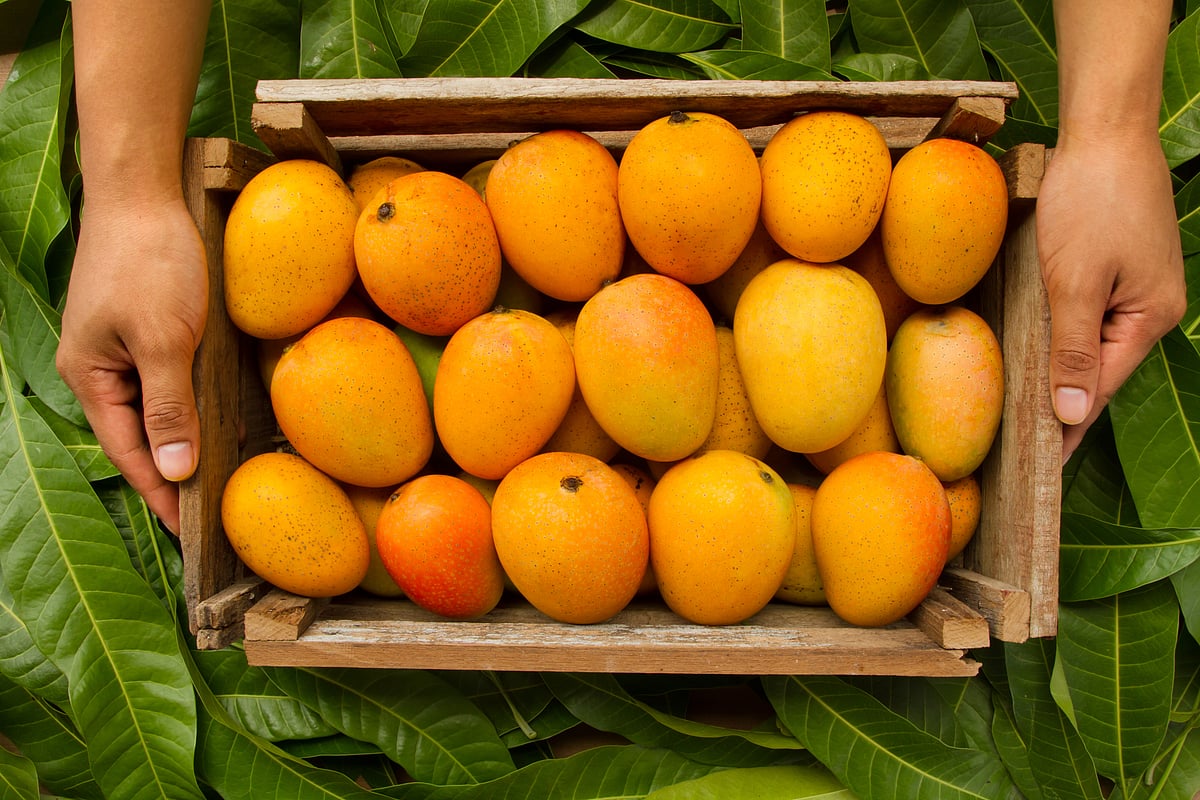
As the mango season heats up, retailers break down the supply chain hurdles, rising logistics costs and a growing appetite.
Shutterstock
For mango lovers, few things signal summer quite like that first bite of a perfectly ripe mango, and in the UAE, the choices are endless.
Ranging from Indian Alphonsos and Pakistani Sindiris to Yemeni Kalabathoor and Colombian Baby Mangoes, retailers across the country say shoppers are treating mango season quite like a fully-fledged sport, with different varieties flying off shelves depending on flavour loyalties, cultural preferences and even delivery speed.
As the mango season heats up, retailers break down the supply chain hurdles, rising logistics costs and a growing appetite.
The reigning favourites
At discount grocery chain VIVA Supermarket, this season’s line-up includes Taimoor, Badami, Kent, Alphonso and Cultbustar mangoes, with Taimoor, Badami and Kent currently leading customer demand. However, the retailer says mango preferences in the UAE vary widely across customers. “European customers generally lean toward mangoes that are less floral and tangier in taste, which is why Egyptian and Yemeni varieties tend to meet their expectations well,” the company explains to us.
Customers of Indian origin, meanwhile, show a strong preference for traditional varieties such as Badami mango and Alphonso mango, valued for their rich flavour, distinctive aroma, and sweetness, as VIVA tells us.
Moreover, according to VIVA, Indian varieties dominate during peak season, but the idea is to strike a balance between different flavour profiles to match the UAE’s diverse customer base.
Over at Noon Minutes, the current mango roster includes Alphonso, Naomi, Badami and Yemeni Kalabathoor, with Ewais, Sindiri and Tommy mangoes expected later in the season. Furthermore, Alphonso, Taimoor, Badami and Sindiri consistently rank among its most popular varieties, while Alphonso and Badami are currently ‘moving particularly fast’. Yemeni Kalabathoor, meanwhile, remains “a strong customer favourite”.
Then there’s Careem, which appears to be treating mango season like an international draft league. Through Careem Quik, the company says it is offering more than 20 mango varieties sourced from India, Pakistan, Thailand, Vietnam, Brazil, Colombia, Australia and Yemen, and what it describes as “one of the broadest selections available on any quick-commerce platform in the UAE.”
According to Hanaa Mallak, General Manager of Groceries, UAE at Careem, Alphonso and Badami from India, Sindhri and Chaunsa from Pakistan, Baby Mango from Colombia, and R2E2 from Australia and Vietnam are among this season’s biggest hits. And while Alphonso and Chaunsa continue to dominate, Mallak says that vibrant Western varieties like the Baby Mango Colombia & R2E2 Mangoes fly off the shelves just as fast.
[The current geopolitical situation] created a more complex logistics environment industrywide; longer transit times and tighter airfreight capacity. We've responded by diversifying our sourcing and working closely with supply chain partners to keep shelves stocked...
Hanaa Mallak General Manager of Groceries – UAE at Careem.
Why this year’s mango season started late
The season may be packed with variety, but retailers say getting mangoes onto shelves this year has been more complicated than usual.
According to Noon, the season started slightly later than usual due to production challenges at source and some supply chains constrains impacting availability. VIVA, meanwhile, says the peak season has only just begun, making it too early to fully gauge long-term buying trends.
Mallak has noticed another shift: Shoppers are becoming far more careful about how they buy mangoes. “Customers are shopping more intentionally, buying closer to consumption and prioritising freshness,” Mallak said, adding that the trend aligns naturally with on-demand delivery platforms.
Prices have increased slightly compared to previous years, mainly due to higher logistics costs
The logistics drama behind your mango box
Behind every perfectly ripened mango is a surprisingly complicated supply chain.
VIVA says it is currently sourcing mainly from Yemen and India, with Pakistan expected to join shortly as the season progresses. The company follows a ‘hybrid sourcing approach’, combining direct procurement from origin countries with local sourcing through UAE-based fruit specialists to maintain “optimal ripeness, consistent quality, and reliable availability”.
On the other hand, Noon says it is sourcing mangoes from India, Yemen and Pakistan using a combination of air, sea and land freight depending on the variety and origin. Egyptian mangoes are also expected later in the season.
Mallak says ongoing geopolitical disruptions have made imports a lot more difficult, across the industry. “It has created a more complex logistics environment industrywide; longer transit times and tighter airfreight capacity,” she adds.
To manage that, the company says it has diversified sourcing and strengthened coordination with supply chain partners to keep availability stable.
Why mangoes are getting pricier
If your mango bill feels slightly higher this year, retailers say there’s a reason. Noon explains prices have “increased slightly compared to previous years”, largely because many suppliers are relying more heavily on air freight to maintain freshness amid supply chain disruptions.
However, VIVA points to the usual volatility of fresh produce pricing, driven by supply-demand shifts, labour costs and fuel prices. The retailer also says Indian mango production is expected to be lower this year, although a stronger Pakistani season and stable Yemeni supply could help balance the market.
Still, retailers insist they are trying to keep mangoes affordable despite the added pressure. “Our focus remains on offering the most competitive prices across all varieties,” VIVA said.
Noon says it is continuing to work closely with suppliers and vendors to maintain strong availability throughout the season while delivering mangoes within 15 minutes.
Yes, there is now a ‘Mango World Cup’
Apparently mango season now needs its own tournament arc. Careem says it will launch a “Mango World Cup” in the second week of June, a global showdown between “South Asian classics and vibrant Western favourites”.
And with Alphonsos battling Colombian Baby Mangoes and Chaunsas competing against Australian R2E2s, the UAE’s mango season already feels competitive enough.
Network Links
GN StoreAbout Gulf NewsTerms & ConditionsReach by GNSitemapContact usPrivacy PolicyGN FocusHave your sayWork with usAdvertise with usGulf News epaperPrinting Services
Download our app
© Al Nisr Publishing LLC 2026. All rights reserved.