Abu Dhabi captures something spectacular 4,700 light-years away
Two telescopes reveal the nebula’s structure and delicate gas filaments in greater detail
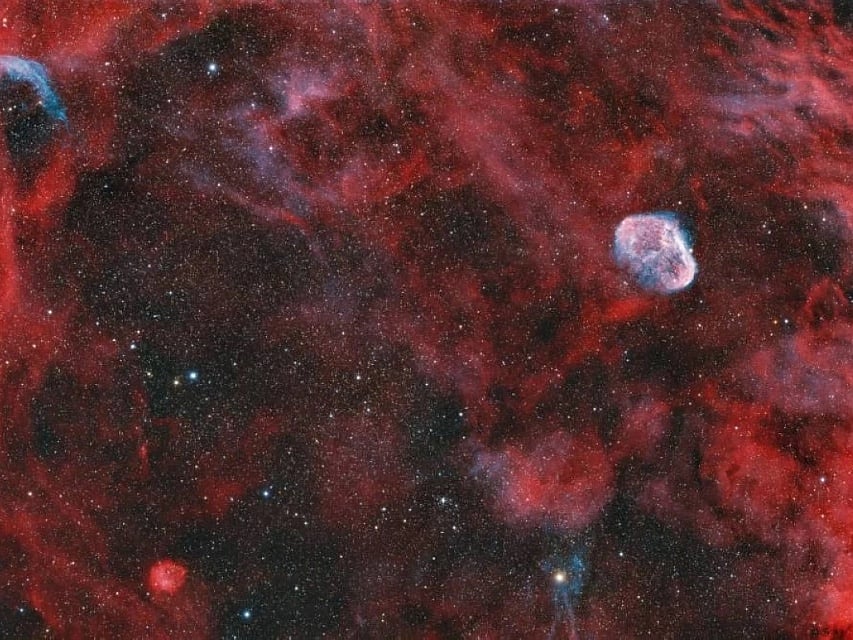
Abu Dhabi: Al Khatim Astronomical Observatory, operated by the International Astronomy Center in the Abu Dhabi desert, has captured detailed images of the Crescent Nebula after 14 nights of observations using two different telescopes.
The smaller telescope produced a wide-field image showing the Crescent Nebula surrounded by a dense region of stars and gas. Other objects visible in the image included the ring nebula around the star WR 134, the Sh2-104 nebula and the extremely faint Soap Bubble Nebula.
Get updated faster and for FREE: Download the Gulf News app now - simply click here.
A second telescope was used to photograph the Crescent Nebula at greater magnification, revealing its structure and delicate strands of gas in greater detail.
Known as NGC 6888, the Crescent Nebula lies about 4,700 light-years from Earth and measures roughly 25 light-years across. At its centre is WR 136, a massive Wolf-Rayet star, part of a class of extremely large and hot stars that have reached an advanced stage of their lives.
Such stars lose large amounts of material through powerful, fast-moving stellar winds. The Crescent Nebula’s complex structure is formed when the star’s current high-speed winds collide with gas expelled during an earlier stage of its life, pushing the material into interwoven shells and filaments of gas.
Network Links
GN StoreDownload our app
© Al Nisr Publishing LLC 2026. All rights reserved.