Abu Dhabi: An in-house AI learning platform has cut professors' administrative workload by 60 per cent, according to the president of Khalifa University, freeing academics to focus on research and on teaching students to apply what they learn.
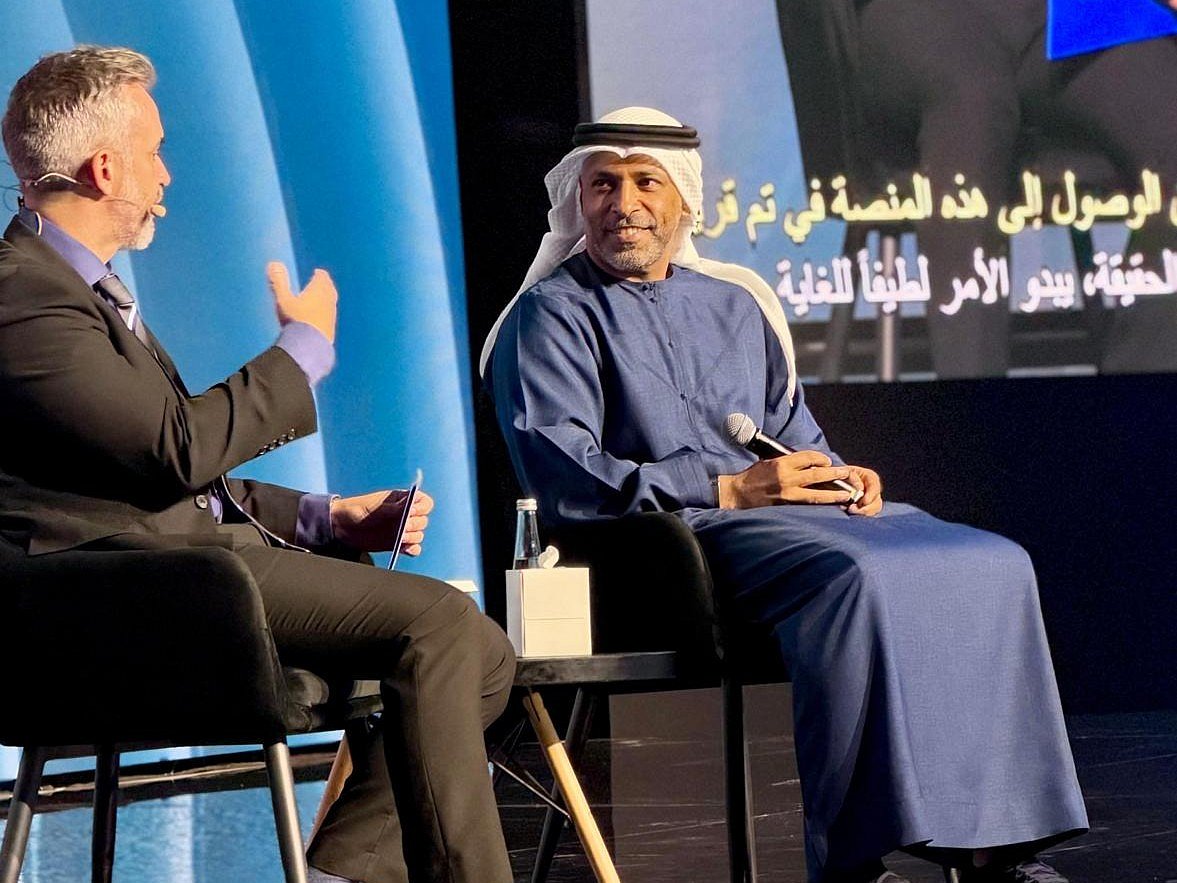
Speaking at Ai Everything, Abu Dhabi, Prof. Ebrahim Al Hajri told Mark Thompson, Editor-in-Chief of Gulf News, that the platform has reduced the time spent on class preparation, exam setting and grading.
"We reduce the professors' administration time, class preparation, exam setting, grading by 60 per cent," he said. "So now they have 60 per cent more time to do something much more beneficial or useful to the society."
He noted that the university's research ultimately feeds into society and the economy.
A connected learning path
The platform gives each student an agentic AI assistant loaded with course material from first year through to senior year. It links early skills to later use, so a student can see why they are studying differentiation, or English 101 for a future career in media or writing. The university can also spot talent from how students interact with the platform.
Prof. Al Hajri said the platform deployed at Khalifa University has also been rolled out to private schools in Abu Dhabi, where more than 220 teachers have been trained.
"Instead of saying what content we're going to teach the students, we look at what the market wants the graduates to be, and then we reverse engineer the curriculum from there," he added.
It is now being extended through the TAMM government services platform, which would give about 220,000 private school students access.
Instructors as orchestrators
Prof. Al Hajri said that with AI making content abundant, instructors will no longer be the sole source of knowledge. He envisions students spending around half their time learning theory and fundamentals on the platform, while instructors become "orchestrators" who bring industry experience and real-life challenges into the classroom.
Within two years, he said, the platform could prepare lessons for instructors and recommend how to split students into groups of five or more based on leadership, technical and other skills.
Instructors would then set collaborative or individual projects and show how theory applies in practice. He argued this addresses the common industry complaint that graduates are not job-ready.
Universities also have a unique role, in bringing new research findings, which are not yet in any AI platform, into the classroom, according to him.
Curriculum built backwards from the graduate
Prof. Al Hajri said universities contribute knowledge creation, talent, and trusted testing grounds for governing and evaluating AI, since they sit between business and government. “Neural networks,” he noted, “began in university research and then it took some researchers at different universities across the world to develop that idea, and then it took an entrepreneur to make ChatGPT,”
The University designs its curriculum by starting with defined "graduate attributes", then layering AI and entrepreneurship on top before building subject content. He used the example of a cellular biology class, where students might construct a digital twin of a cell with AI and test it against different drugs, rather than simply describing what a cell consists of.
"The job market always tells universities, your graduates are not ready," he said, emphasising that the aim is to have graduates who create jobs rather than look for them.
Human skills alongside AI
Beyond technical depth, Prof. Al Hajri said that ethics is at the top of the list of skills he wants students to develop alongside leadership, curiosity, agility, lifelong learning and but empathy, humility, interpersonal communication are the most important.
Sign up for the Daily Briefing
Get the latest news and updates straight to your inbox
Network Links
GN StoreDownload our app
© Al Nisr Publishing LLC 2026. All rights reserved.