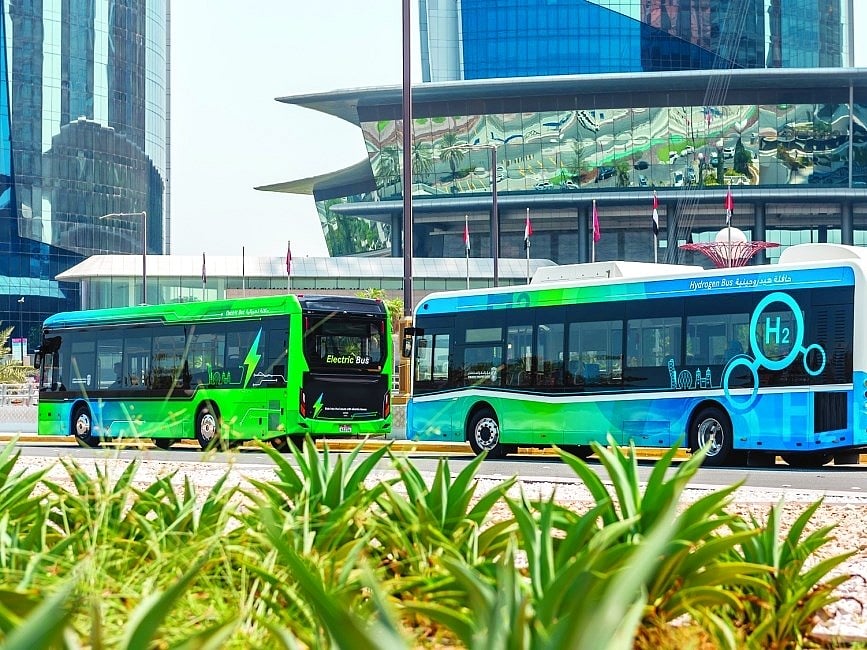
In a move reflecting Abu Dhabi’s firm commitment to environmental sustainability and the adoption of smart, low-emission mobility solutions, data released by the Integrated Transport Centre (Abu Dhabi Mobility) has revealed that the emirate’s green bus fleet successfully reduced carbon emissions by an estimated 1,332 tonnes of carbon dioxide in 2025.
The achievement underscores the effectiveness of operational plans aimed at advancing climate neutrality and enhancing quality of life across the emirate.
Major leap
Reducing emissions by this amount within a single year represents a tangible indicator of the significant transformation taking place in Abu Dhabi’s road transport sector.
The reduction of 1,332 tonnes of carbon emissions is equivalent to removing hundreds of conventional fossil-fuel-powered vehicles from the roads for an entire year, or planting tens of thousands of trees to absorb the same volume of greenhouse gases.
This achievement has been made possible through the efficient operation of environmentally friendly buses powered by clean energy technologies, including electricity and green hydrogen. These buses have been integrated into key routes across Abu Dhabi Island and its surrounding areas, providing safe, quiet and zero-direct-emission mobility options without compromising operational efficiency or adherence to scheduled services.
Key drivers of success
This progress is the result of the Green Bus Programme launched by the Integrated Transport Centre, which is built around several strategic pillars, most notably:
1. Diversifying clean energy sources: Testing, evaluating and operating electric buses and hydrogen fuel-cell buses under various climatic conditions to ensure their suitability for the region’s hot weather.
2. Developing supporting infrastructure: Establishing ultra-fast electric vehicle charging stations and providing hydrogen refuelling facilities in cooperation with strategic partners in the energy sector.
3. Enhancing operational efficiency and reliability: Continuously monitoring the fleet’s technical and operational performance, while training technical personnel and drivers to operate the latest sustainable mobility technologies.
Aligned with the UAE’s Strategic Vision
This environmental achievement supports the objectives of the UAE Net Zero by 2050 Strategic Initiative and Abu Dhabi’s Low-Emission Mobility Strategy, while also directly contributing to the targets of the National Hydrogen Strategy.
It further strengthens Abu Dhabi’s position as a leading global destination for the adoption of clean technologies in infrastructure and public transport.
The initiative also encourages members of the community to increasingly rely on sustainable public transport instead of private vehicles, helping to ease traffic congestion and reduce individual carbon footprints.
Looking Ahead
Following these tangible results recorded by the end of 2025, the Integrated Transport Centre continues to pursue its plans to gradually expand the replacement of conventional buses with environmentally friendly alternatives and extend the scope of the Green Zone in central Abu Dhabi.
These efforts aim to establish an integrated urban transport model that combines smoother traffic movement with environmental protection for future generations.
Key figures
● Responsible entity: Integrated Transport Centre (Abu Dhabi Mobility).
● Environmental impact in 2025: Reduction of 1,332 tonnes of carbon emissions.
● Technologies adopted: Electric buses and green hydrogen-powered buses.
● Strategic objectives: Supporting climate neutrality, improving air quality and enhancing the appeal of public transport.
*. Green Bus Fleet Delivers First-Phase Environmental Centennial 2071 Targets
According to data published in the executive summary of the first phase of the Environmental Centennial 2071 on the official website of the Integrated Transport Centre (Abu Dhabi Mobility), the operation of green buses within Abu Dhabi’s public transport network reduced carbon dioxide emissions by 1,332 tonnes in 2025.
The data also showed that the energy costs of operating these buses were 40% lower than those of conventional fleets.
The findings demonstrated that introducing electric and hydrogen-powered buses into public transport routes generates operational energy cost savings while reducing the carbon footprint of daily journeys.
Green fleet covers 1.3 million kilometres since September 2024
The green bus fleet has covered more than 1.3 million kilometres since the service was launched in September 2024 until April 2026, according to the Integrated Transport Centre (Abu Dhabi Mobility), an affiliate of the Department of Municipalities and Transport.
Prior to the launch, the Centre conducted performance assessments of electric buses and hydrogen fuel-cell buses under local climatic conditions and within the urban environment to identify the most suitable technologies for operation in the emirate.
Target: Transforming Abu Dhabi Island into a Green Public Transport Zone by 2030
The plan aims to transform Abu Dhabi Island into a Green Public Transport Zone by 2030 and convert half of the emirate’s public transport fleet to electric and hydrogen-powered buses.
This expansion is being accompanied by the development of the necessary infrastructure for charging electric buses and refuelling hydrogen-powered buses, as well as training Emirati talent in both technologies. These efforts will prepare the network for the introduction of green buses on additional routes.
In March last year, the Integrated Transport Centre converted Route 65, connecting Marina Mall with Al Reem Island, to operate entirely with green buses.
At the time the transition was announced, the route served approximately 6,000 passengers daily and covered more than 2,000 kilometres a day.
The service also includes Route 184, which connects the Central Bus Station with Yas Island, enabling passengers to use these environmentally friendly buses for their regular journeys across the public transport network.
Network Links
GN StoreDownload our app
© Al Nisr Publishing LLC 2026. All rights reserved.