What the US–China race for AI dominance means for energy security and markets
Hyper competition in AI puts capital, chips and energy at the centre of global power shift
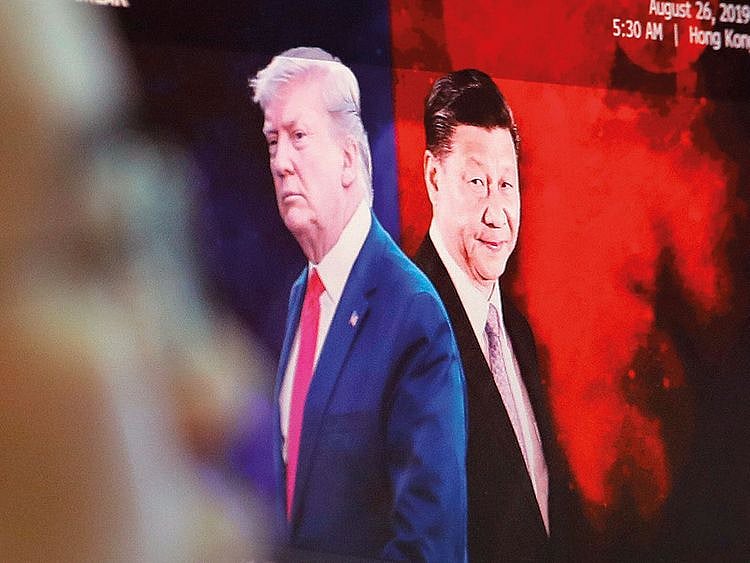
Abu Dhabi: The race between the US and China to lead in artificial intelligence is hardening into a broader contest over capital markets, energy systems and critical infrastructure, with knock-on risks for smaller states and developing economies, speakers at TRENDS Research and Advisory dialogue in Abu Dhabi warned.
Professor Sophia Kalantzakos, Global Distinguished Professor of Public Policy at NYU Abu Dhabi, emphasised the importance of not losing sight of the strategic backdrop. “We are living in an age of hyper competition between the US and China,” she said. “It is a race. It is a race to lead, it is a race to generate the greatest wealth possible, to innovate, to leapfrog, to really have a big say in the future.”
She linked that race directly to capital and energy. The Paris 2015 consensus set two parallel tracks, she noted. “The world would green the global economy, which meant electrified transport and deploy renewables in order to respond to the climate crisis. But the second part was the fourth industrial revolution, the global digitalisation, the dematerialisation of the global economy.” Today, AI sits at the intersection of those ambitions and the intensifying rivalry over who controls the “tech imperium”.
Different races within the same race
From Washington, the AI race looks very different depending on which capital you sit in, said Henrietta Levin, Senior Fellow at the Center for Strategic and International Studies.
“In both Washington and Beijing, there is increasing agreement that success in AI will provide quite significant military, economic, even societal advantages that could be the dominant factor in the overall global competition between the US and China,” she said.
“But if we are in an AI race, what are we racing to? In the US, you see a race towards AGI, towards artificial general intelligence, and we have the depth of capital markets in the US to support that, to chase after a very ambitious, abstract idea. Whereas in China, the AI race has been much more focused on the application of existing AI technology to every facet of life, of the economy and of the military as well. It is integrating AI into everything, and doing it as quickly as possible.”
China, she said, has less access to global capital than it did in the past, but compensates with strong state backing. President Xi Jinping’s concept of “new productive forces” frames AI as central to lifting China out of the middle-income trap and underpinning national rejuvenation.
Levin compared the landscape to a drawn-out space race, with successive milestones rather than a single finish line. However, she noted that some in Washington still worry about a possible “lock-in” moment if one actor reaches a decisive breakthrough first.
Europe as regulator
Kalantzakos and Levin both pointed to Europe’s emerging role as a regulatory power, which could complicate efforts to establish common rules.
“Europe has a big role to play, but it is also very much a regulatory power,” Kalantzakos said. “It keeps saying, one second. We need guardrails, we need rules. We need to guarantee privacy. We need to make sure the citizens are not feeling victims of the scams and the fake news.” At the same time, she said, Europe has its own financial and technological ambitions across Eurasia and Africa.
Levin said digital sovereignty debates were already “one of the most significant irritants in the transatlantic alliance”, even though, in theory, the US and Europe should be natural partners on AI governance. She warned of a “balkanisation of AI standards and regulation” as political systems diverge on values and acceptable use.
She also underlined how dependent the entire ecosystem remains on a single, fragile chokepoint. “The AI revolution rests on Taiwan’s TSMC producing high end chips,” she said. “Peace and stability across the Taiwan Strait is actually a necessary condition for AI development.”
Middle East looks for agency in a multipolar AI order
Abdulla Al Khaja, Researcher at TRENDS Research and Advisory, said that Gulf states are trying to utilise AI to enhance their position in the international system, rather than simply choosing sides.
“The UAE is already at the forefront and is a proactive adopter of artificial intelligence,” he said, pointing to the National AI Strategy 2031, education reforms and long-term plans linked to the country’s centennial vision. He said Saudi Arabia, Qatar and others were pursuing parallel initiatives around smart cities, digital government, and AI-enabled governance.
Also Read
The next global crisis? Billions may lose out on the AI boom unless key gaps closeSam Altman and Peng Xiao say the real AI divide is about access, not algorithmsIndustry leaders push back on ‘AI bubble’ talk, say growth still grounded in real demandAI is national sovereignty like defence or cybersecurity, says UAE minister at GitexAt the same time, he warned of a “part two of the digital divide” if lower-income countries cannot secure basic connectivity and computing. He noted that while the developing world is resource-rich in critical minerals, it still lacks access to the necessary infrastructure and capital to convert that into AI capacity.
On the broader question of governance, Levin said the world is likely heading toward “a little bit of both” bipolar and multipolar structures. The US and China will anchor the leading edge of capability and standard-setting, she said. Still, many other states and blocs will have room to shape how that technology is deployed, financed, and regulated.
She argued that there is still a narrow opening for great power cooperation on AI safety, even if values make agreement on day-to-day governance difficult. “There is space to have at least a dialog between the US, Europe, China, other powers around the world, about how we deal with extreme downside risk,” she said, likening it to Cold War arms control talks. “We should not allow the intensity of the competition to preclude doing what is right to ensure those basic protections on such an important technology.”
Sign up for the Daily Briefing
Get the latest news and updates straight to your inbox
Network Links
GN StoreDownload our app
© Al Nisr Publishing LLC 2026. All rights reserved.