Techie Tonic: PwC cybersecurity incident raises alarm over vendor data risks
Cybersecurity threats are entering a new and increasingly complex phase
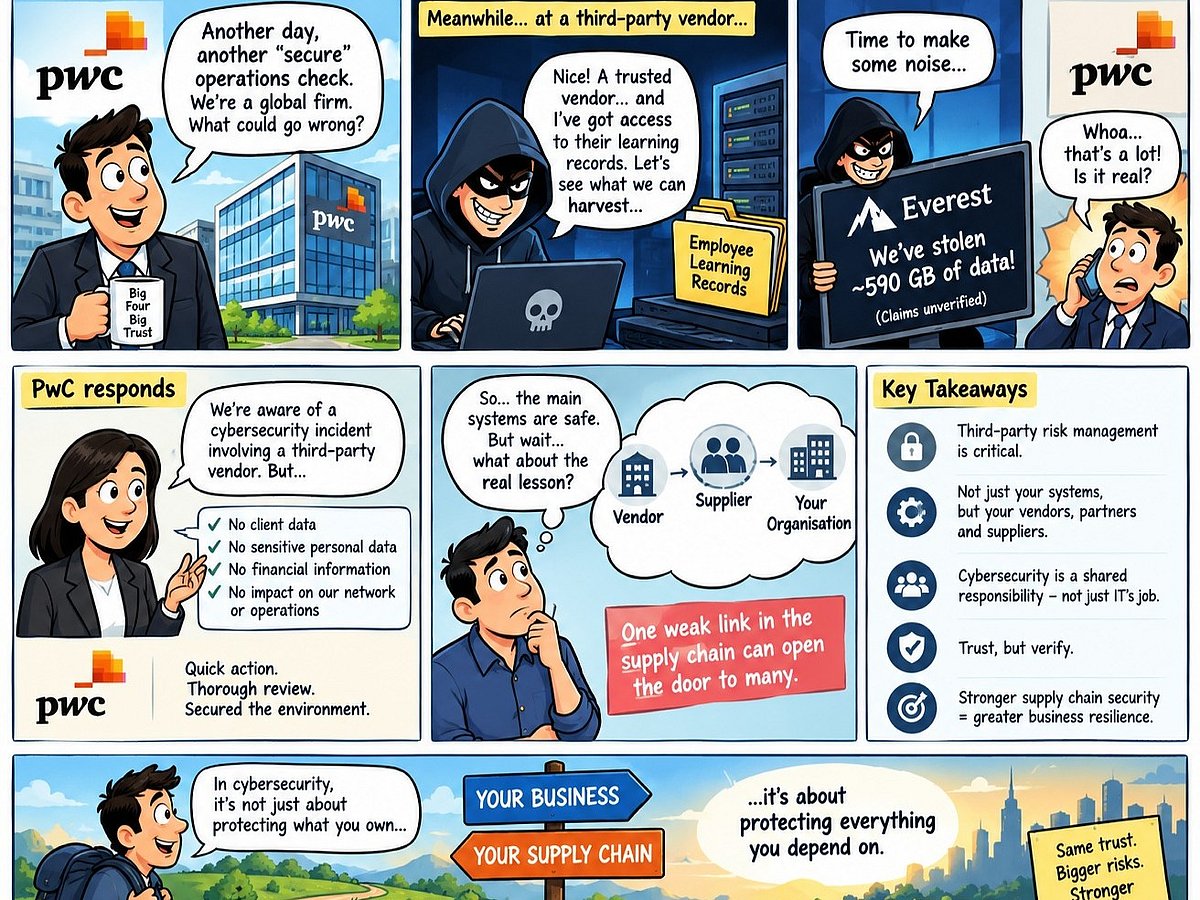
Another weekend discussion in our Many CXO community in light of PWC cybersecurity incident. As cybercriminals increasingly target third-party technology providers, organisations must rethink how they protect data beyond their own networks.
Cybersecurity threats are entering a new and increasingly complex phase. Instead of attacking an organisation directly, cybercriminals are exploiting the trusted suppliers, software platforms and service providers on which businesses depend. The recent cybersecurity incident involving PricewaterhouseCoopers (PwC), one of the world's leading professional services firms, offers a timely reminder of the risks hidden within digital supply chains.
On October 23, 2026, PwC confirmed that it was aware of a cybersecurity incident involving a third-party vendor responsible for hosting employee learning records. The announcement followed claims by a cyber-extortion group known as Everest, which alleged that it had stolen approximately 590 gigabytes of company data. The volume and contents of the alleged stolen data have not been independently verified.
PwC stated that the affected website did not house client data, sensitive personal data or financial information. The firm also said the incident had not affected its own network or business operations and that it had acted promptly to secure the environment and conduct a thorough review.
Although these assurances are important, the incident raises a wider question: How secure is an organisation when some of its data is managed by an external provider?
Modern businesses rely on an extensive ecosystem of cloud platforms, software developers, consultants, outsourcing partners and specialist technology providers. These relationships improve efficiency, but they also expand the potential attack surface.
A supplier may have access to employee records, business documents, software components or systems connected to a customer's environment. If that supplier is compromised, information may be exposed even when the customer's primary network remains unaffected.
The PwC incident illustrates this distinction. A security event involving a vendor-hosted platform does not automatically mean that the organisation's core systems or client information have been breached. Nevertheless, it demonstrates why third-party environments deserve the same seriousness of risk assessment as internal systems.
The potential consequences extend beyond the immediate loss of information. If attackers obtain authentic employee names, contact details or professional histories, they may use those details to craft convincing phishing emails, impersonate colleagues or exploit business relationships.
Messages appearing to originate from human resources departments, technology support teams or senior executives can be particularly persuasive when they contain genuine organisational information.
Such possibilities should not be confused with confirmed outcomes of the PwC incident. However, they illustrate how information held outside an organisation could potentially be used in subsequent attacks.
The fact is “Nobody can operate alone anymore”
For Chief Information Security Officers (CISOs), the lesson is clear and loud that “cybersecurity cannot stop at the corporate firewall”.
Organisations should maintain an accurate inventory of third-party relationships, assess vendors before onboarding and continuously monitor their security posture. Access privileges should follow the principle of least privilege, while multi-factor authentication, network segmentation and regular access reviews should be enforced wherever appropriate.
Contracts should clearly define breach-notification obligations, incident-response cooperation, data-handling responsibilities and security requirements for subcontractors. Organisations must also test whether they can identify, contain and recover from a supplier-related incident.
Boards and executive leadership should treat supply chain cyber risk as a business resilience issue, not merely an IT concern.
The PwC incident remains under investigation, and the cybercriminal group's claims about the scale and nature of the alleged data theft remain unverified. PwC's statement that its network and operations were unaffected is an important distinction.
Yet the broader message is unmistakable. In a connected economy, an organisation's security depends partly on the systems, people and partners beyond its direct control.
The question for every business is no longer simply, “Are our systems secure?” It is also, “Do we know how securely our partners protect the information and access we entrust to them?”
In cybersecurity, trust is essential for business, but trust without verification can become a vulnerability.
Sources: Reuters' report on PwC's confirmation of the incident and its statement about the affected vendor-hosted environment; additional reporting on the Everest group's unverified data-theft claims.
Network Links
GN StoreDownload our app
© Al Nisr Publishing LLC 2026. All rights reserved.