Muse is available through a dedicated app on iOS and Android, on the web at muse.ai, and inside WhatsApp.
Mark Zuckerberg unveils Tamagotchi-like Muse Charm AI Keychain: What they do and what they cost
The keychain device ships in December, but Meta has not announced a price or full specs
Last updated:
4 MIN READ
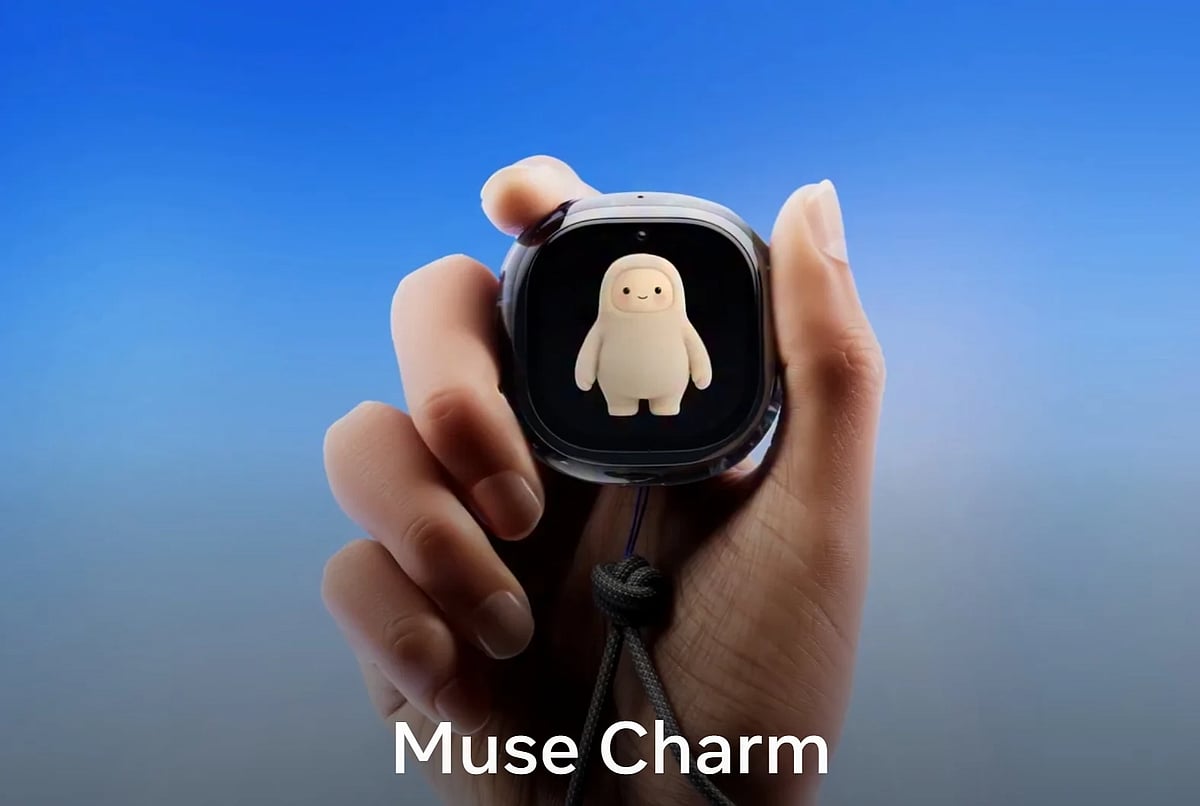
Meta has given its AI agent a body
Dubai: Meta has given its AI agent a body. At its Connect conference in Menlo Park, which streamed at 3am UAE time on Thursday, Mark Zuckerberg unveiled Muse Charm, a keychain-sized gadget built to carry the company's Muse assistant around with you.
It ships in December. Meta has not said what it will cost.
Here is what Muse actually is, and what the Charm adds.
First, what is Muse?
Muse is Meta's personal AI agent, launched on 8 September 2026. The pitch is that it does not simply answer questions, it carries out tasks.
It can read and send email, book travel, fill in web forms, negotiate on your behalf and complete purchases. A user sets a goal, Muse builds a plan, then works through it, opening its own browser and using websites the way a person would. Tasks keep running after you close the app, and it remembers your preferences between sessions.
Zuckerberg has described using it to organise activities with his daughters, from ordering baking ingredients to arranging climbing permits, as well as tracking his training and health.
It runs on Meta's Muse Spark model family, and it can connect to email, calendar, payments, health, shopping and smart home apps.
How you use it
Muse is available through a dedicated app on iOS and Android, on the web at muse.ai, and inside WhatsApp.
The WhatsApp route is the one Meta is betting on. Rather than asking people to change how they browse, it wants them to message an agent the way they message a person.
Setting it up means downloading the app or opening Muse in WhatsApp, signing in with a Meta account, then naming your Muse and choosing its avatar. Support for Meta's AI glasses is promised later.
What it costs
Muse is free for most everyday use, with a weekly usage cap. Zuckerberg has put the free allowance at up to 100 million tokens a week.
Beyond that, there are two paid plans. Power costs $20 a month, roughly Dh73, and Maximum costs $100 a month, around Dh367. Meta's help centre describes the tiers as usage buckets, with 500 million and three billion tokens a week respectively, rather than unlocking extra features. Reports say a payment card is required even for the free tier.
Now, the Charm
Muse Charm is the hardware. It is a small square device, roughly the size of an AirPods case, that clips to a keychain or sits in a pocket.
Reports describe a silver body with a front-facing touchscreen of about two inches, thick black bezels and a wrist strap. It has its own 5G connection and a microphone on top for voice prompts, and deliberately no camera, unlike several rival AI wearables.
Zuckerberg framed it as the fastest route to the agent when you are not wearing smart glasses, saying that if you are not wearing glasses, the Charm will be by far the quickest way to talk to your Muse and show it what is going on around you.
It was not ready to ship at announcement. The device had originally been planned for 2027, and Zuckerberg brought the timeline forward to get it out by the end of this year.
What we still do not know
Quite a lot, which is unusual for a product due within three months.
Meta has not announced a price. It has not confirmed battery life, final connectivity details, or whether the Charm needs a paired smartphone to work. Some outlets have published a specific price and launch date, but those figures are not confirmed by Meta and should be treated cautiously.
There is also the question of what it does that the Muse app on your phone cannot.
Can you use it in the UAE?
Not yet.
Muse launched in the United States only, for adults aged 18 and over. Meta has said more countries will be added over time, but has not named them or given a timeline, and has said nothing about a European launch either.
Without Muse, the Charm has limited use, so the practical answer is that UAE residents are waiting on the software before the hardware matters.
A category with a rough history
Small gadgets built around talking to an AI have not fared well.
Humane's AI Pin cost $699, about Dh2,567, plus a monthly fee, and promised to free people from their phones. HP bought Humane's assets in February 2025 and the Pins stopped working at the end of that month. Rabbit's R1, at $199 or around Dh731, made a similar pitch in 2024.
Meta knows the territory. In December 2025 it bought Limitless, which sold a $99 pendant, around Dh364, that recorded conversations. Limitless stopped selling it.
What Meta has that those companies did not is software people already use. Whether that carries over to hardware will not be clear until December.
Also announced at Connect
The Charm was not the only device. Meta also unveiled VR glasses priced at $1,299, roughly Dh4,771, going on sale in spring 2027, along with camera-free Ray-Ban audio glasses.
Network Links
GN StoreAbout Gulf NewsTerms & ConditionsReach by GNSitemapContact usPrivacy PolicyGN FocusHave your sayWork with usAdvertise with usGulf News epaperPrinting Services
Download our app
© Al Nisr Publishing LLC 2026. All rights reserved.