Android-iPhone data transfer set to get seamless in 2026
Under the new system, users will see an option to import data from the other platform
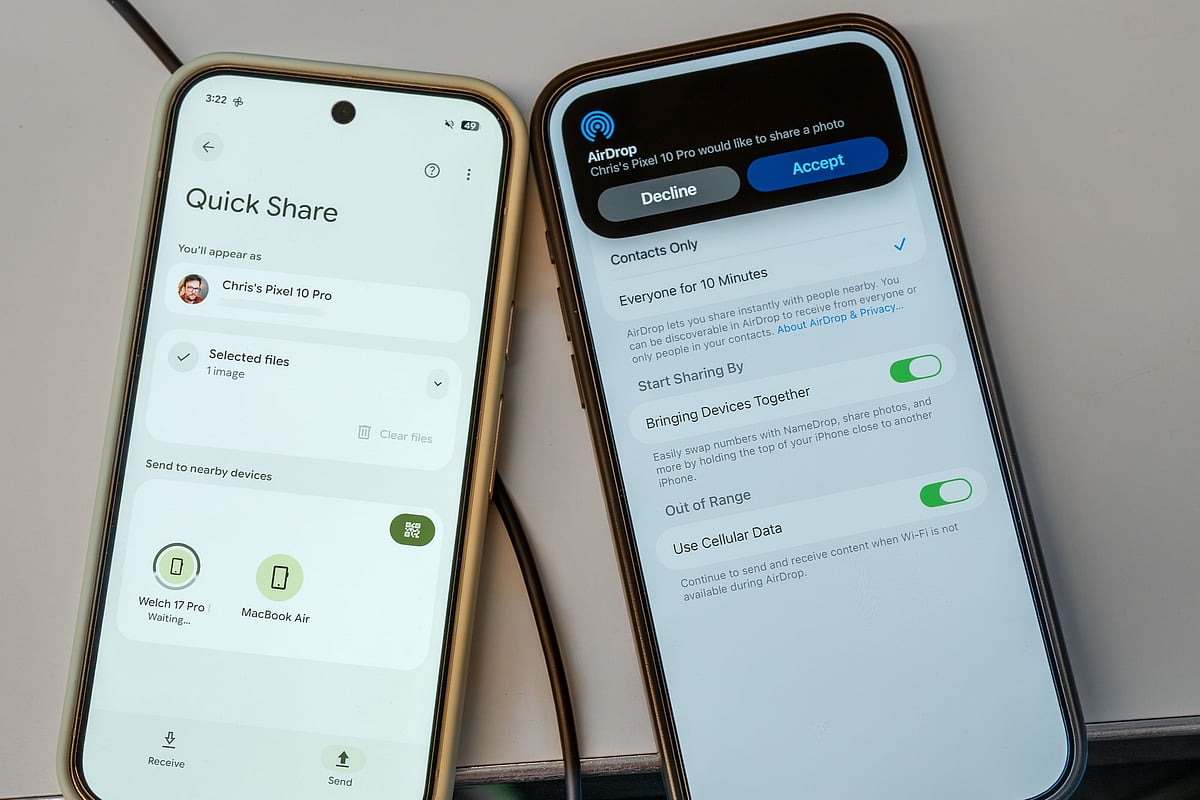
For years, switching between Android and iPhone meant juggling apps, cloud backups, and manual file copies — often resulting in lost photos, chats or settings. That is now starting to change. According to recent reports, Google and Apple are working together to make cross-platform data transfers nearly seamless by building deeper integration directly into device setup.
Under the new system, when users power up a new Android phone or iPhone, they’ll see an option to import data from the other platform — easing the shift between operating systems. The forthcoming update, first spotted in a test build for Google Pixel phones and slated to roll out to iOS soon, aims to move more than just photos and contacts. Emerging feature-tracking suggests the transfer could include Wi-Fi credentials, device settings, call logs, SMS/WhatsApp history, and more.
This level of interoperability also builds on earlier cross-platform improvements: last month, Google expanded compatibility between its file-sharing tool Quick Share (formerly Nearby Share) and Apple’s native AirDrop — a move that allows certain Android devices (like Pixel 10) to share photos, videos, and files directly with iPhones.
The shift matters especially for users who frequently jump between devices or ecosystems. Device migration — once seen as a tedious chore — could now be as simple as ‘set up new phone → import everything → continue where you left off.’ For retailers and smartphone makers, reduced friction could accelerate upgrades and brand-switching.
While the new data-transfer flow remains in testing, analysts expect broad rollout to follow early next year. If successful, the upgrade may redefine what it means to “switch platforms” — making Android-to-iPhone (and vice versa) transitions more fluid than ever.
Network Links
GN StoreDownload our app
© Al Nisr Publishing LLC 2026. All rights reserved.