‘Best way’ to handle mass AI layoffs? Musk proposes universal income
AI disruption reignites clash over universal income, taxes and future of work
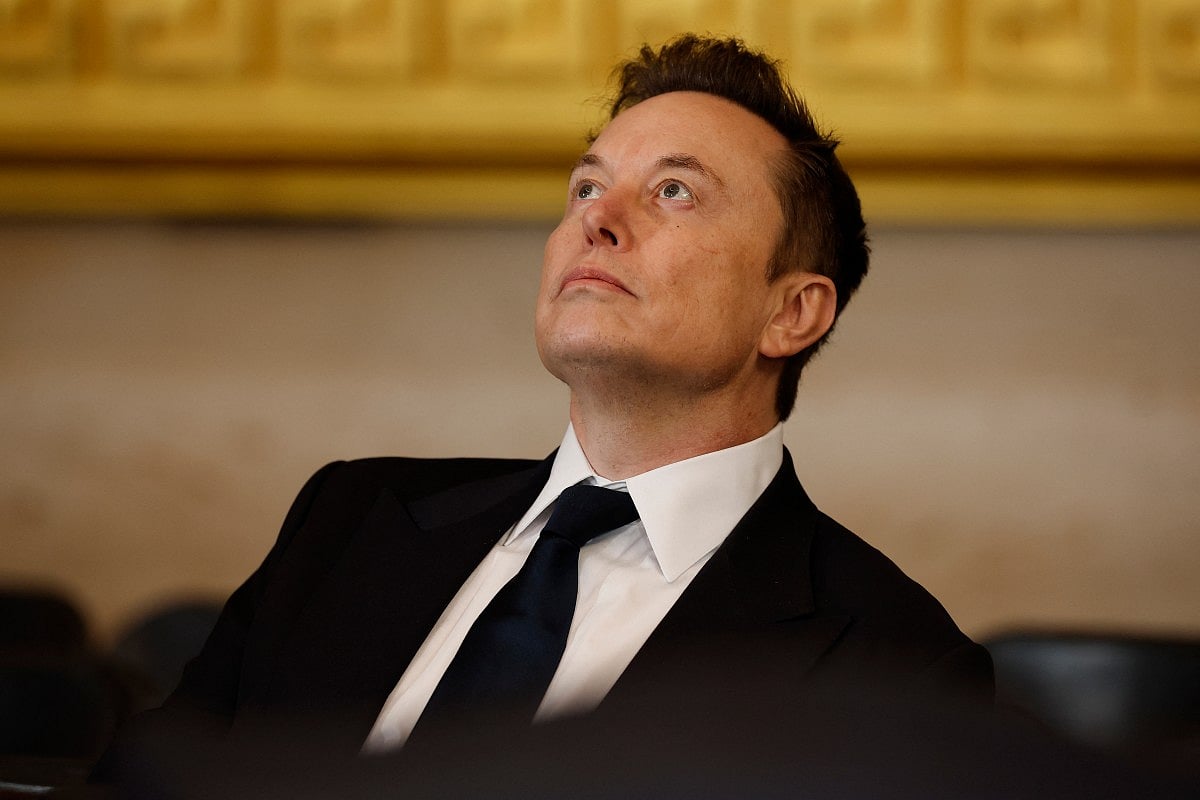
Billionaire Elon Musk has suggested that widespread job displacement from artificial intelligence (AI) could be addressed through a “universal high income”, funded by government-issued payments.
Under his proposal, the federal government would distribute regular cheques to citizens, helping offset unemployment caused by automation and AI-driven productivity gains.
Musk argued that AI and robotics would generate goods and services far beyond the expansion of the money supply, suggesting this would prevent inflationary pressure.
Economist rejects Musk’s proposal
Economist Sanjeev Sanyal strongly rejected Elon Musk’s idea of a “universal high income”, warning that such a system would be economically unsustainable and could potentially bankrupt governments attempting to implement it.
Sanyal acknowledged that artificial intelligence (AI) would lead to short-term labour market disruption, but said history shows that technological change ultimately creates new jobs and economic opportunities over time.
He also dismissed Musk’s argument that AI and robotics would produce goods and services in excess of demand to the extent that inflation would disappear, calling it a misunderstanding of economic dynamics.
‘Classic mistake’ in economic thinking
Sanyal said the assumption of a fixed number of jobs or static consumer demand has repeatedly been proven wrong.
He argued that, by the same logic, modern economies would already have no jobs or inflation if demand and employment were truly finite, adding that such thinking overlooks how economies evolve over time.
Responding to Musk’s proposal, Sanyal said: “By the same token, @elonmusk’s universal high income will bankrupt any government that attempts it.”
‘Fluid economic systems will outperform planning’
Sanyal further said it is not possible to accurately predict the full impact of technologies like AI in advance, comparing it to how the effects of electricity could not be foreseen in the 19th century.
He added that flexible economic systems—including easy insolvency frameworks, adaptable labour markets and active capital markets—tend to outperform centralised planning.
According to him, innovation depends on the ability to take risks and then quickly phase out failed investments, allowing new ideas to emerge and scale.
Debate over AI’s economic impact continues
While Musk has argued that AI-driven productivity could eventually support large-scale income redistribution, Sanyal maintains that such models risk overwhelming public finances and misreading how technological economies evolve.
Mixed views on Musk’s credibility beyond tech
Reactions on social media were sharply divided after Elon Musk proposed a “universal high income” system to address job losses driven by artificial intelligence (AI).
Some users argued that Musk is strong in technology but less reliable when it comes to politics and economics, suggesting his broader policy ideas often overlook real-world consequences.
One post criticised his political influence, linking past decisions and global events to rising economic pressures and costs, while also claiming he has scaled back long-term ambitions such as a Mars colony vision.
Debate over timing vs direction of AI disruption
Others defended Musk’s broader outlook, saying he is often “wrong on timing, not direction” when it comes to technological change.
They argued that AI will likely create new jobs over time, but stressed that the key challenge lies in the transition period, when job displacement could outpace the creation of new roles, creating economic and social strain.
Concerns over taxation and governance
Another strand of reaction focused on the economic feasibility of Musk’s proposal, questioning how a universal income system would be funded.
Critics argued that if AI-driven companies capture most profits, governments may struggle to rely on traditional tax structures, potentially forcing higher taxation on AI firms. Some warned this could trigger resistance from large corporations and create broader governance challenges.
More extreme views speculated about long-term systemic risks, including economic breakdown scenarios, though these remain opinion-based claims circulating online.
Broader philosophical takes on AI future
Some users took a more philosophical view, describing AI as a transformative force capable of reshaping human systems in unpredictable ways.
One post suggested AI narratives resemble a form of collective belief system, comparing its societal impact to ideology or religion, and arguing that its influence could significantly reshape human behaviour and institutions over time.
Debate continues
The discussion reflects a wider global divide over AI’s economic impact—between those who see it as a driver of prosperity and those warning of disruption, inequality and governance challenges during the transition period.
Network Links
GN StoreDownload our app
© Al Nisr Publishing LLC 2026. All rights reserved.