Democratic US Senate candidate Abdul El-Sayed and his wife, Dr. Sarah Jukaku, take the stage after he declares victory during a midterm election night party at The Department at Hudson's in Detroit, Michigan, early on November 4, 2026.
US midterm election defeat: Is Trump now a lameduck president?
Voters deliver sharp rebuke to Trump's policies in pivotal midterm elections
Last updated:
5 MIN READ
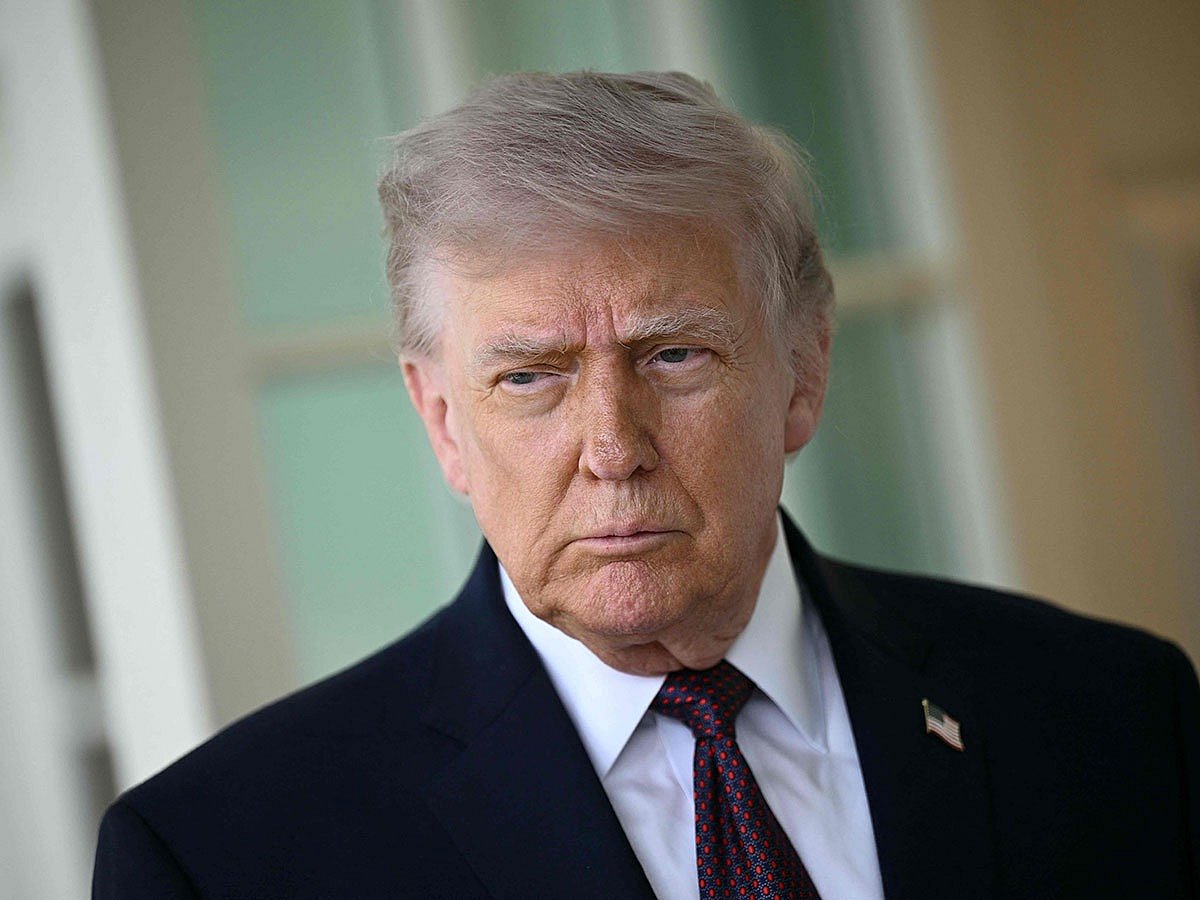
The Democrats’ eventual control of both the House and Senate could set up a potentially difficult final two years for President Donald Trump.
Voters did not misread the moment. They read the receipts.
On November 3, 2026, Democrats captured both the Senate and the House of Representatives. Before that, half of voters told exit pollsters they saw the election as a chance to rebuke President Donald Trump.
Democrats almost didn’t have to do anything during the campaign: Trump effectively campaigned for them by shooting himself in the foot.
Three-quarters of US voters said they were “angry” or dissatisfied with the country’s direction, and 70% wanted Congress to provide more "checks" on him.
The US midterm elections showed what happens when the example of America’s power takes precedence over the power of its example.
Get it: Fast, verified news for FREE ... download the Gulf News app — simply click here
Would Trump now become a 'lameduck'?
It's early days and it's hard to say. Let’s look at some of the basics:
The new Congress will not formally take office until January 3, 2027.
Even with Democrats controlling both chambers, Trump would retain considerable executive authority, particularly as commander-in-chief.
He could resist congressional pressure without necessarily abandoning his military campaign against Iran.
CNN and NBC project Democrats will control both the US Senate and the House: The results challenge claims that voters will indefinitely absorb higher living costs for promised security gains. They also give Democrats congressional leverage, creating opportunities to scrutinize war objectives, spending and presidential decision-making without resolving the underlying international conflict by themselves.
Iran was the hinge
Exit polling showed 74% of voters called the Iran war a “crucial” or “major factor” in their vote, and 62% said using force was the wrong decision.
By mid-September, six months in, diesel hit a record near $6.40 a gallon and gasoline averaged above $4.40.
Trump had promised relief, saying prices would fall like “a rocket ship in reverse.” Voters waited, and the bill kept arriving.
On November 3, Trump himself admitted that Iran was a key factor in the Republicans' poor performance in the midterms.
The 'small adventure' was never small
An operation sold as limited became a standoff over the world’s most important oil chokepoint. Crisis Group notes Brent rose from below $65 before the war to peaks near $130.
The military limits are structural.
One analysis argues that even an extensive air campaign would not stop cruise missile and drone launches from deep inland, while mines (notably limpets) and inexpensive drones can threaten ships and infrastructure.
Air and naval supremacy can destroy targets, but it cannot easily force a strait open. Fox News reported the Pentagon’s cost estimate at over $47 billion.
The costs crossed borders
The Strait of Hormuz carries about a fifth of the world’s oil, so the shock reached importers from Manila to Michigan, through fuel, freight and food.
The war in Ukraine compounded it.
Ukraine’s strikes on Russian energy infrastructure took more than 10% of global seaborne diesel off the water, even as Gulf diesel export losses were larger still.
Two wars were squeezing the same fuel supply, and the people paying were consumers who had no say in either.
How Trump could fight back
Political pundits say there are a number of ways the Republican president could resist the Democrats in both chambers.
(1) Invoke presidential war powers:
Trump could argue that limited military operations are necessary to protect American personnel, shipping and national security, particularly around the Strait of Hormuz.
Presidents have historically asserted authority to conduct limited military operations without first obtaining congressional authorization.
(2) Use targeted military operations:
Rather than launch a full-scale invasion of Iran, Washington could maintain naval deployments, conduct limited airstrikes, intercept Iranian weapons and protect commercial shipping. The administration could characterise these as “defensive” or limited operations.
(3) Veto congressional restrictions:
If Democrats pass legislation cutting military funding or requiring congressional approval for further attacks, Trump could veto it. Congress would need a two-thirds majority in both chambers to override his veto.
(4) Rely on allies and diplomacy:
Trump could maintain pressure through sanctions, intelligence cooperation, regional military partnerships and negotiations, reducing the need for direct American combat operations.
War Powers Resolution
Trump could also challenge Congress over the War Powers Resolution: The 1973 law generally requires notification to Congress within 48 hours and termination of unauthorised hostilities within 60 days, with a possible 30-day withdrawal extension. Trump could dispute when that deadline applies, as his administration previously did during the Iran conflict.
A hypothetical Iran scenario
Suppose Democrats pass a resolution demanding an end to US military operations against Iran. Trump vetoes accompanying legislation restricting military funding and orders American forces to maintain defensive operations around Hormuz.
Democrats respond with hearings. Subpoenas. Funding restrictions. Investigations into the administration's war decisions.
The result could be a prolonged institutional confrontation: Congress attempts to restrict the war, while Trump argues that protecting American forces and international shipping remains his constitutional responsibility.
Still, Democratic control would make escalation politically and financially harder, but would not automatically strip Trump of his commander-in-chief authority.
The decisive question would be whether Congress could assemble enough bipartisan support to turn its opposition into enforceable restrictions.
Why Trump’s “a small price to pay” failed
Trump argued that stopping Iran from getting a nuclear weapon justified higher fuel prices, calling it a very inexpensive price to pay.
The argument has a flaw.
“Small” is a judgment made from the Oval Office, not from a household budget.
The cost is certain, immediate and personal, while the benefit is hypothetical, distant and unverifiable.
The rationale also blurred.
Crisis Group observes that preventing a nuclear Iran, Washington’s stated motive for the February strikes, was apparently at times only goal number two.
When a president asks the public to pay for a security guarantee, the guarantee has to be visible. Voters saw the price and no proof of the protection.
The obvious conclusion
A superpower’s strength has never been just the ability to strike.
It lies in being believed: that its aims are clear, its costs honest and its wars finite.
The US midterm elections showed what happens when the example of America’s power takes precedence over the power of its example.
The reprimand did not come from Tehran or Moscow. It came from gas stations and grocery aisles, where ordinary Americans delivered a verdict no air campaign could appeal.
What’s next
Watch remaining congressional counts, certification and the eventual majority margins. Then follow Democratic oversight plans, US-Iran negotiations and verified shipping conditions.
Durable economic relief depends on actual improvements in energy supply and security. Election results or optimistic declarations alone won't cut it at the pump.
Sign up for the Daily Briefing
Get the latest news and updates straight to your inbox
Network Links
GN StoreAbout Gulf NewsTerms & ConditionsReach by GNSitemapContact usPrivacy PolicyGN FocusHave your sayWork with usAdvertise with usGulf News epaperPrinting Services
Download our app
© Al Nisr Publishing LLC 2026. All rights reserved.