Sara Duterte’s 2028 prospects: Still the frontrunner, but no longer invulnerable
Sara Duterte’s strong polls collide with rising doubts over credibility and control
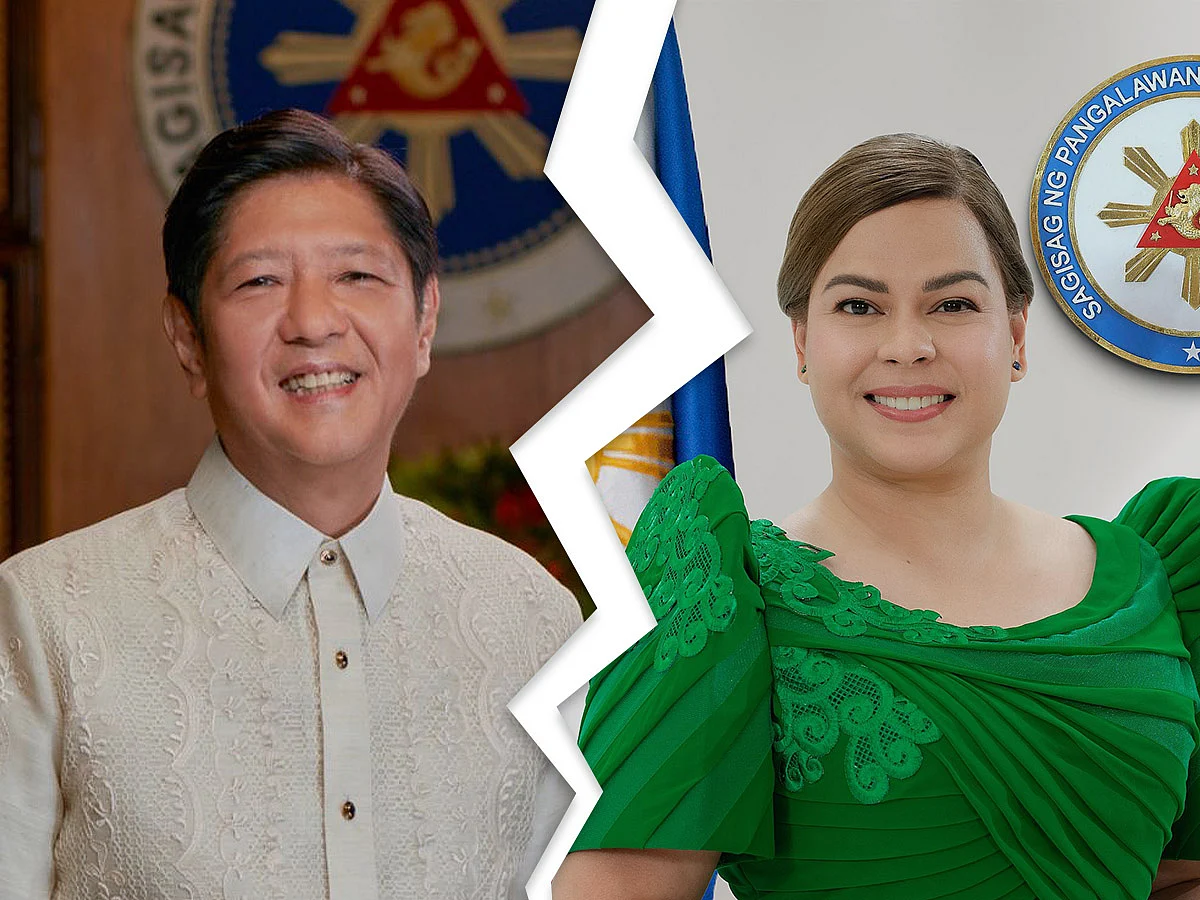
The 2028 presidential race is already taking shape around a paradox: Vice President Sara Duterte remains the strongest early candidate in the polls, yet the impeachment trial that could define her political future is still unfolding.
That combination makes any forecast tentative. Duterte has a powerful electoral base, a recognisable family brand and a proven ability to mobilise voters.
But the Senate proceedings have placed her finances, public conduct and political judgement under sustained national scrutiny.
The Senate trial is still ongoing, and a final judgment has yet to be issued.
Get it: Fast, verified news for FREE ... download the Gulf News app — simply click here
By 2028, the question may not be whether she can inherit the Duterte coalition, but whether she can expand it beyond its loyal core.
The 2022 foundation
Sara Duterte entered the 2022 election with a formidable political inheritance.
As the daughter of then-President Rodrigo Duterte and mayor of Davao City, she already had a strong regional organisation and unusually high name recognition.
She ultimately ran for vice president alongside Ferdinand Marcos Jr. after initially declining to seek the presidency. Their alliance united two of the country’s most powerful political families and produced a landslide victory.
Duterte won 32.2 million votes — the highest total ever recorded by a vice-presidential candidate in the Philippines — while Marcos received 31.6 million votes for president.
The result demonstrated three things that remain relevant to 2028:
Duterte could convert family popularity into a national vote.
Her support extended well beyond Mindanao.
A broad alliance could overcome the country’s traditionally fragmented presidential field.
The 2022 result, however, was not generated by Duterte alone.
It was also the product of the Marcos-Duterte tandem, a formidable team that combined the Philippines' vote-rich north and south, a highly disciplined campaign with a razor-focussed messaging, an effective online political narrative and a fragmented opposition.
Reproducing that coalition in 2028 will be more difficult if Marcos and Duterte remain political rivals.
The impeachment variable
The Senate impeachment trial is now the central uncertainty in Duterte’s political prospects.
The case involves allegations including the misuse and questionable liquidation of ₱612.5 million in confidential funds, as well as other accusations contained in the Articles of Impeachment.
The Senate impeachment court has authorised access to some of Duterte’s bank, tax and Anti-Money Laundering Council records, while prosecutors have begun presenting evidence.
The Supreme Court dismissed challenges seeking to stop the proceedings, ruling that the petitions had become moot after the Articles of Impeachment were transmitted to the Senate.
The trial therefore remains the active constitutional process for determining whether Duterte should be removed and disqualified from public office.
Acquittal vs conviction
An impeachment acquittal would not necessarily erase the political damage caused by the hearings, but it would allow Duterte to campaign as a candidate who survived an effort by the Marcos administration and its allies to block her political future.
A conviction would be far more consequential.
Under the 1987 Constitution, conviction in an impeachment case can include removal from office and disqualification from holding public office.
That could effectively end Duterte’s 2028 presidential bid, depending on the final judgment and its legal interpretation.
Polls show resilience
The trial has not yet destroyed Duterte’s support.
A Pulse Asia survey conducted from June 28 to July 6 found Duterte preferred by 49 percent of respondents from a list of possible 2028 presidential candidates.
Former Vice President Leni Robredo placed second with 26 percent. The survey was conducted amid the buildup to the impeachment proceedings.
In a separate hypothetical one-on-one matchup, Duterte led Robredo by 52 percent to 35 percent.
These figures confirm that Duterte remains the early frontrunner.
But they should not be mistaken for a prediction of the final result.
The 2028 campaign is still far from its decisive phase. Many potential candidates have not declared their intentions, alliances remain fluid and the survey field may change once candidates present concrete programmes rather than names alone.
There is also a difference between being the most recognisable candidate and winning a majority of the national vote.
Duterte’s current advantage may reflect name recall, the durability of the Duterte brand and the absence of a settled alternative.
Three possible paths
1. Acquittal and consolidation
The most favourable scenario for Duterte is an acquittal followed by a rapid consolidation of the Duterte political network.
In that scenario, she would campaign as a survivor of institutional persecution. The trial could reinforce her family’s long-running narrative that Manila-based political elites are trying to dismantle the Duterte movement.
She would probably seek to rebuild alliances with regional politicians, former administration officials and national figures who could broaden her appeal.
A strong running mate from Luzon or the Visayas would be essential to counter the perception that her support is concentrated in Mindanao.
Under this scenario, Duterte would remain the candidate to beat.
2. Acquittal but weakened legitimacy
An acquittal would not automatically restore her standing.
If the proceedings produce damaging testimony, unexplained transactions or evidence that resonates with voters, Duterte could emerge legally cleared but politically diminished.
Opposition candidates would continue to campaign around accountability, transparency and public trust.
Her core supporters might remain loyal, but undecided voters could become more open to a candidate offering competence and stability rather than confrontation.
This is the most plausible danger to her candidacy. It may not be an immediate collapse, but rather a slow-burn attrition of support, and lower ceiling on her ability to grow.
3. Conviction or disqualification
A conviction would transform the 2028 race.
The Duterte camp would probably frame the judgment as political persecution, while the Marcos administration and its allies would present it as a constitutional accountability process.
Either way, the Duterte brand would remain powerful enough to influence the election even if Sara Duterte herself could not run.
A family-backed successor could inherit part of her coalition. Possible strategies would include endorsing a Duterte-aligned senator, a local executive from Mindanao or another national figure capable of presenting Duterte-style "continuity" without carrying the full legal burden of the impeachment case.
But substitution would not be automatic.
Duterte’s personal vote is a major asset, and it is unclear whether another candidate could reproduce her combination of family name, regional machinery and national recognition.
In 2022, Sara Duterte benefited from a united alliance and an electorate seeking continuity after the pandemic. In 2028, she may need to win against the administration that helped carry her to national office.
The Marcos-Duterte split
The 2028 election will also be shaped by the breakdown of the alliance that won in 2022.
Marcos and Duterte were elected on the same ticket, but their political camps have since become open rivals.
The Senate impeachment trial is the institutional expression of that rupture.
For Duterte, the conflict offers a clear campaign narrative: she can portray herself as the opposition to the Marcos administration. That may consolidate her base and turn the election into a referendum on the current government.
The risk is that the feud also divides the broader electorate.
If Marcos-aligned and Duterte-aligned forces each field presidential candidates, they could split the vote and allow a third candidate to win with a plurality.
Because the president and vice president are elected separately, the 2028 presidential result will not necessarily produce a unified administration.
A Duterte-aligned president could face a Senate and House shaped by rival alliances, while a non-Duterte president could inherit a powerful Duterte bloc in Congress and local government.
What Duterte must prove
To win in 2028, Duterte will need more than the 2022 formula.
She must answer questions about governance, transparency and economic policy in concrete terms.
Her campaign will also need to show that she can attract voters who did not support her father, do not identify with the Duterte political style or are uncomfortable with the impeachment allegations.
The most important tests will be:
Whether she can survive the Senate trial without losing undecided voters.
Whether she can broaden her coalition outside Mindanao.
Whether she can present a credible economic and foreign-policy programme.
Whether she can distance herself from the most polarising aspects of the Duterte presidency.
Whether the opposition can unite behind a single competitive candidate.
Whether Marcos-aligned forces remain strong enough to block her in Luzon and the Visayas.
Projection
As of August 2026, Sara Duterte remains the early favourite, but her path to Malacañang is conditional rather than secure.
If she is acquitted, retains her polling lead and builds a broad regional coalition, she could enter the 2028 campaign as the candidate with the clearest national base.
If she is acquitted but badly damaged by the evidence, she may remain popular while struggling to pass the 50-percent threshold needed to avoid a fragmented contest.
If she is convicted and disqualified, the Duterte movement will probably survive, but its ability to win the presidency will depend on whether it can transfer Sara Duterte’s personal popularity to another candidate.
The most reasonable projection is therefore not that Duterte will certainly win or lose. It is that the 2028 presidential election is likely to revolve around her eligibility, her credibility and the fate of the Duterte political brand.
That is the central irony of her political future: the same alliance that created her national presidency may now determine whether she can reach it.
Network Links
GN StoreDownload our app
© Al Nisr Publishing LLC 2026. All rights reserved.