Philippines: Paper trail of VP Sara Duterte's 'unexplained wealth' to be presented during impeachment trial — what you need to know
Day 7: Trial hits turning point as senators decide to subpoena Duterte's financial records
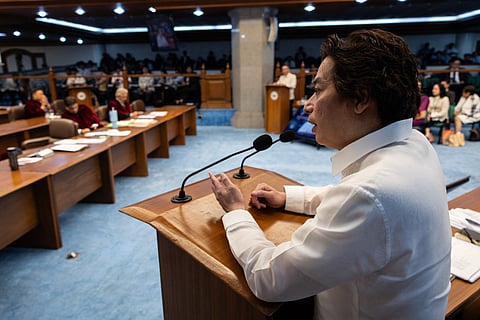
Day 7 showdown: Senate grants subpoena for VP Sara Duterte's bank records in pivotal day of impeachment trial
The House prosecution's request was granted to subpoena VP Sara Duterte's bank records, income tax returns, and other financial documents covering the period 2017 to 2021
Prosecutors have also sought records involving her husband, lawyer Manases Carpio, saying the documents are relevant to tracing the movement of funds cited in the impeachment complaint.
Duterte's defence lawyers argued the request would violate the country's bank secrecy laws
Prosecutors argued the records are essential to establishing whether her declared assets match her financial transactions
Manila: The Philippine Senate, sitting as an impeachment court, decided Monday (July 20, 2026) to subpoena Vice President Sara Duterte's bank and tax records in what is seen as a pivotal ruling.
The ruling could shape one of the most closely-watched political trials since the impeachment and conviction of former Chief Justice Renato Corona more than a decade ago.
What the impeachment court's decision means
The Senate's decision was announced by Senator Francis "Chiz" Escudero (sitting as the presiding officer of the impeachment court) on Monday, Day 7 of Sara Duterte's impeachment trial.
In a nutshell, it allows the prosecutors to compel the production of confidential financial documents as part of the trial.
House prosecutors requested the records as part of their evidence for Article II of the impeachment complaint. They argued that the records are critical to proving allegations of unexplained wealth and misuse of public funds.
They alleged that Sara Duterte, 48, accumulated wealth disproportionate to her lawful income.
The allegations also include improper handling of "confidential and intelligence funds" during her tenure in public office.
Duterte has repeatedly denied wrongdoing.
'Win for the truth'
Monday's decision by the Senate is considered a "win" for th
In granting the House prosecution’s request to subpoena bank, tax, and Anti–Money Laundering Council (AMLC) records of Vice President Sara Duterte, Senate Presiding officer Chiz Escudero said the requested financial documents of Duterte -- covering the records from 2007 to 2021 -- meet the requirements set forth by the court and are prima facie relevant to the allegations under Article II on the alleged unexplained wealth.
What the Prosecutors said: House members, acting as prosecutors, requested the Senate to subpoena bank, tax, and Anti–Money Laundering Council (AMLC) records of Vice President Sara Duterte, as they meet the following requirements: (1.) They are reasonably described; (2.) Readily identifiable; (3.) "Prima Facie" Relevant; (4.) Material to the allegations in Article II.
Why the bank, AMLC records are consequential in VP Duterte's legal battle
The dispute has emerged as one of the trial's most consequential legal battles, pitting the Senate's constitutional powers as an impeachment court against legal protections on bank deposits and taxpayer information.
What Republic Act 1405 prescribes: Presiding Officer Chiz Escudero also mentioned the RA 1405 which recognises impeachment trials as an exception to confidentiality of bank deposits and rights to privacy of depositors. Escudero said the requested financial documents of Duterte, covering the records from 2007 to 2021, meet the requirements set forth by the court and are "prima facie" relevant to the allegations under Article II on the alleged unexplained wealth.
During oral arguments last week, House prosecutor Rep. Chel Diokno argued that the impeachment court possesses broad constitutional authority to compel evidence necessary to determine whether a high-ranking public official committed impeachable offenses.
Defence's argument: Duterte's legal team has vigorously opposed the request. Defence lawyer Michael Poa argued that bank deposits and tax records are protected under existing laws, including the Bank Secrecy Law and the Data Privacy Act, and cannot simply be opened without meeting strict legal requirements. Poa also warned that prosecutors are effectively asking the Senate to authorise a "fishing expedition" — seeking confidential financial information in hopes of uncovering incriminating evidence after the impeachment complaint has already been filed. "The prosecution must prove its case using evidence already available, not search for evidence after filing charges," the defence maintained.
Diokno cited the 2012 impeachment trial of former Chief Justice Renato Corona, in which financial records and undisclosed bank accounts became central to the Senate's decision to convict and remove the country's highest-ranking judge.
"The impeachment court must decide the case based on the whole truth," prosecutors argued, saying the Senate's constitutional mandate overrides ordinary restrictions on access to financial records when adjudicating impeachment cases.
Duterte's legal team urged the court to reject the request, saying prosecutors were attempting a "fishing expedition" -- searching for evidence after filing charges rather than relying on evidence already in their possession.
SUBPOENA RULING: Unlike a verdict on the impeachment complaint — which requires a two-thirds vote of all senator-judges for conviction — the issuance of a subpoena requires only a simple majority of those present. With 21 senator-judges expected participatING, at least 11 votes were needed to authorise the subpoenas.
Bank secrecy law
Defence lawyer Michael Poa argued that the Bank Secrecy Law, tax confidentiality rules and constitutional privacy protections shield Duterte's financial records from disclosure.
He described the prosecution's request as a "fishing expedition," warning that allowing broad subpoenas would erode legal safeguards protecting confidential financial information.
The senator-judges heard arguments from both sides last week but failed to reach a decision after holding a closed-door caucus, postponing the issue until Monday's proceedings.
Unlike a final impeachment verdict — which requires a two-thirds vote of all senator-judges for conviction — the issuance of a subpoena requires only a simple majority of senators present.
The ruling could significantly affect the prosecution's ability to prove one of the central allegations in the impeachment complaint. The Senate subpoenas would throw open VP Sara Duterte's bank records, income tax returns and other financial documents.
Prosecutors believe these could corroborate allegations of unexplained wealth and trace transactions involving confidential government funds.
The paper trail that will be made public in the Senate trial also carries implications beyond Duterte's trial.
SUBPOENA: A subpoena is a formal legal document that orders an individual to testify in a court or provide physical evidence, such as documents or records. Derived from the Latin for "under penalty," failure to comply with a subpoena can lead to serious consequences, including fines or being held in contempt of court.
Public accountability vs financial privacy
The Philippines has impeached only a handful of senior officials since restoring democracy in 1986.
Corona remains the country's only official convicted and removed through impeachment.
Former President Joseph Estrada's impeachment trial collapsed in 2001 after senators voted against opening a second envelope believed to contain potentially incriminating financial evidence.
The decision triggered mass street protests that culminated in Estrada's ouster in what became known as the "EDSA People Power II" uprising.
That historical backdrop has drawn renewed attention to Monday's vote, with legal observers describing it as one of the most significant procedural decisions in Duterte's trial.
What is the impeachment complaint vs VP Sara Duterte
The issue was expected to have been resolved after oral arguments on July 15, but senator-judges emerged from a closed-door caucus without reaching a decision.
Instead, the impeachment court deferred the matter to Day 7, setting up what many legal observers consider one of the most consequential procedural votes since the trial began.
The impeachment complaint against Duterte, approved by the House of Representatives earlier this year, accuses the vice president of culpable violation of the Constitution, betrayal of public trust, graft and corruption, and other high crimes.
She has called the proceedings politically motivated.
Why the ruling matters
The Senate's decision on Day 7 could shape the remainder of the impeachment trial.
With the subpoenas' approval, prosecutors would gain access to financial documents they say could corroborate allegations involving the following:
confidential funds
wealth accumulation,
financial transactions
These are all outlined in the impeachment complaint.
The approval is significant. The records could become among the prosecution's most significant pieces of documentary evidence.
Trial enters decisive stage
The subpoena debate comes as Duterte continues to face multiple articles of impeachment approved by the House of Representatives earlier this year.
The complaint accuses her of culpable violation of the Constitution, betrayal of public trust, graft and corruption, and other high crimes, allegations she has repeatedly denied. Legal analysts say the outcome will not only determine the prosecution's access to potentially critical evidence but could also shape the legal boundaries of impeachment proceedings for future administrations.


