The proposed Pax Silica industrial and tech hub in the Philippines covers an area of 4,000 acres, which is equal to about 1,619 to 1,620 hectaresl. It is planned within New Clark City in Tarlac, 1 hr by car north of Manila, as part of the Luzon Economic. The hub is designed as an AI, semiconductor, critical minerals and advanced manufacturing economic security zone.
Pax Silica: Meet the Filipino who became a billionaire in Silicon Valley
Turning Philippine mineral wealth into jobs, factories, AI-era value is the real challenge
Last updated:
12 MIN READ
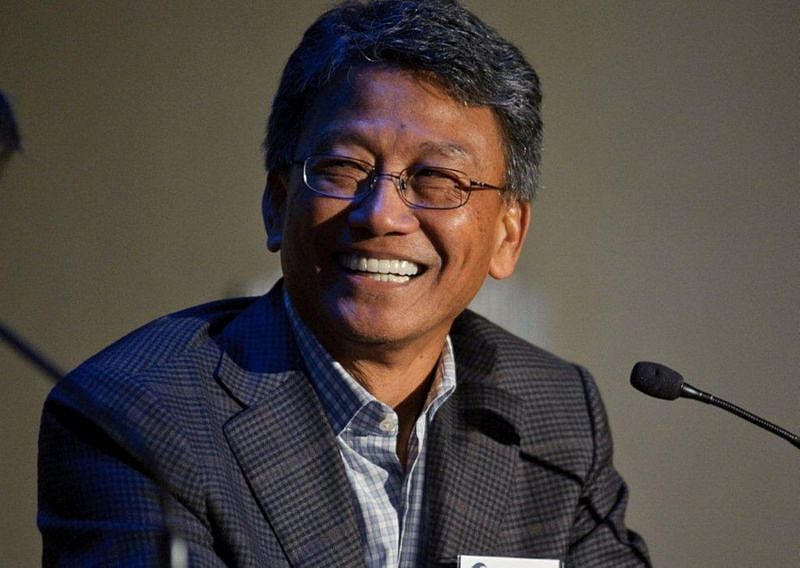
Diosdado “Dado” Banatao, who died on Dec. 25, 2025, at 79, rose from poverty to become a Silicon Valley semiconductor pioneer. The Filipino engineer began school barefoot because his family could not afford shoes. In 1981, he helped develop a 10-Mbit Ethernet CMOS data-link control and transceiver chip. He later pioneered a single-chip graphics accelerator that made personal computers faster and more capable of graphical interfaces. At the time of his death, fis fortune was estimated at up to $2 billion.
There is a peculiar contradiction in the Philippine debate over Pax Silica.
A country that has spent decades complaining about poverty, underemployment, brain drain, weak industrialisation, unreliable infrastructure and the export of raw resources (and manpower — i.e. nurses and nannies, engineers and service sector workers) suddenly finds itself being offered a place in one of the world's most consequential technology supply-chain initiatives.
Now, some of the loudest voices are hijacking the conversation by throwing up expletives and slogans, asking why the country should participate.
To be fair, the question is legitimate.
The reflexive answer — because it is American, therefore it is imperialist — is not.
That distinction matters.
Get it: Fast, verified news for FREE ... download the Gulf News app — simply click here
What is Pax Silica?
Pax Silica is a US-led international initiative launched in December 2025 to build secure and resilient supply chains for the artificial-intelligence era, covering critical minerals, silicon, semiconductors, advanced manufacturing, computing infrastructure and related technologies.
Pax Silica's premise is straightforward: AI may be digital, but it ultimately depends on enormous quantities of physical things — minerals, electricity, chips, factories, logistics (+ good location) and skilled people.
Pax Silica's premise is straightforward: AI may be digital, but it ultimately depends on enormous quantities of physical things — minerals, electricity, chips, factories, logistics (+ good location) and skilled people.
The Philippines joined Pax Silica in April 2026 as its 13th member.
The proposed Philippine component is taking shape in New Clark City, Tarlac, where about 1,620 hectares have been designated for a high-tech industrial ecosystem.
The government's current blueprint is not simply: “build giant AI data centres.”
That is one of the most important facts missing from much of the online debate.
BCDA President and CEO Joshua Bingcang has described the project as a manufacturing-driven ecosystem, with semiconductors, advanced manufacturing, critical-mineral processing and related industries at its core.
Data centres may be invited, but they are not supposed to dominate the site. The government estimates that the development could attract $40 billion to $70 billion in investment and generate more than 130,000 high-quality jobs, with officials saying the figure could eventually reach 130,000 to 190,000.
That is THE blueprint worth debating. Not a caricature of it.
Data centres may be invited, but they are not supposed to dominate the site. The government estimates that the development could attract $40 billion to $70 billion in investment and generate more than 130,000 high-quality jobs, with officials saying the figure could eventually reach 130,000 to 190,000.
The Philippines has the minerals. What it lacks is the value chain
The Philippines possesses extraordinary mineral wealth.
The Philippine Statistics Authority valued the country's Class A gold, copper, nickel and chromite reserves at ₱588.12 billion in 2025, up 17.6% from the previous year. Other estimates place the value at $1 trillion in total mineral deposits.
The US also identifies the Philippines as one of the world's most mineralised countries and a major source of nickel, with significant copper, cobalt and other critical-mineral resources.
Yet possessing minerals is not the same as possessing an industrial economy.
The value is created not merely by digging ore from the ground but by exploring, mining, refining, processing, manufacturing components and ultimately producing sophisticated goods.
That is the enormous gap Pax Silica potentially addresses.
But the Philippines’ mineral story is not only about what lies beneath the ground. It is also about what we can build from those resources — and the country has already shown that it can compete in the high-tech value chain.
The Philippines is not new to the silicon game.
Texas Instruments (TI) opened shop in the country in 1979 and continues to manufacture semiconductors and integrated circuits.
The story also has a homegrown hero.
Diosdado “Dado” Banatao, who died on Dec. 25, 2025, at 79, rose from poverty to become a Silicon Valley semiconductor pioneer.
He began school barefoot because his family could not afford shoes.
In 1981, Banatao helped develop a 10-Mbit Ethernet CMOS data-link control and transceiver chip.
One of the best minds of Silicon Valley is a Filipino-American engineer Diosdado “Dado” Banatao, who grew so poor he went to school barefooted.
He later pioneered a single-chip graphics accelerator that made personal computers faster and more capable of graphical interfaces.
In 1984, he and Francis Siu founded Mostron with $500,000, producing motherboards. Banatao’s semiconductor innovations helped shrink computing hardware while boosting performance.
His fortune was estimated at up to $2 billion at the time of his death.
The Philippines should aspire to have its own Silicon Valley, and not be content in merely becoming a reliable exporter of nickel ore or copper concentrate, most of it to China, which we've been doing for decades.
In 2025, the Philippines exported approximately 39.5 million metric tons of nickel ore to China, generating roughly $994 million in export value, according to an Observatory of Economic Complexity (OEC) report.
China remained the country's primary destination for raw nickel shipments, accounting for the majority of the total 55 million metric tonnes exported globally by the Philippines that year.
Yet, it should not be penalised for aspiring to become a place where those materials are processed, refined, transformed and incorporated into products whose value is many times higher than that of the raw material.
That requires capital. It requires technology. It requires engineers. Yes, it requires power. It requires water. It requires logistics. In all of these, it requires people, and regulators, too.
And, above all, it requires investors willing to put billions of dollars behind the proposition.
Those requirements cannot be wished away with slogans about sovereignty.
Every personal computer (PC) we see today has two things that can be credited to Dado Banato, a Filipino inventor in Silicon Valley: the PC chip set and the graphics accelerator chip. But the man whose intellect has contributed what makes every single PC work started in a humble home in northern Philippines, in a pastoral province known as Cagayan Valley.
The loudest opposition often mistakes suspicion for strategy
Social media has produced a familiar Philippine spectacle.
Some self-described ultra-nationalists and neo-Marxists have responded to Pax Silica with the standard vocabulary of dependency theory: imperialism, exploitation, extraction, American domination, environmental destruction and foreign control.
Some of those concerns deserve serious examination. But there is a difference between asking hard questions and having an answer.
The idea of “resisting America” among the anti-Pax Silica crowd is uncannily similar to the “Death to America” mindset in Iran: opposition to the US becomes an ideology in itself.
The danger is when resisting America matters more than asking a simpler question: What is best for our country?
It is easy to say that foreign capital exploits developing countries.
It is harder to explain how the Philippines should industrialise without foreign capital when domestic capital formation remains inadequate for the scale of investment required.
It is easy to condemn American influence. And it is remarkably easy to overlook the Manila American Cemetery and Memorial, despite it being the largest American military cemetery outside of the US.
While Bonifacio Global City (BGC) hums with high-end shopping, modern skyscrapers, and vibrant nightlife, this 152-acre sanctuary sits right on its border as a silent, stark contrast, a sprawling green space that holds 17,206 graves and the names of 36,286 missing service members from World War II Pacific campaigns.
Protesters carry an effigy of US President Donald Trump during an anti-government/anti-Pax Silica demonstration that coincides with Philippines President Ferdinand Marcos’ State of the Nation Address (SONA) in the House of Representatives, in Quezon City suburban Manila on July 27, 2026.
Those campaigns, at least in part, resulted in the liberation of the Philippines from Imperial Japan, an once-feared nation whose ethos — anchored on emperor worship — now belongs to the dustbin of history.
The past is a tough teacher — but its lessons are worth remembering.
Today, it's harder to explain how Filipino engineers, scientists, manufacturers and entrepreneurs will gain access to the technology, capital and global markets required to compete with China, Taiwan, South Korea, Japan, Singapore and Vietnam.
It is easy to say “our minerals belong to Filipinos.”
The harder question is: What are we going to do with them?
Dig them up and export them raw?
Or build the refineries, processing plants, semiconductor facilities, component factories and research capabilities that turn geological wealth into national wealth?
That is the debate the Philippines needs.
On a side note, Indonesia, which banned exports of raw minerals like nickel in 2014 (resulting in the so-called "nickle boom" in the Asean member), is a good example of industrial policy.
The past is a tough teacher—but its lessons are worth remembering. Today, it's harder to explain how Filipino engineers, scientists, manufacturers and entrepreneurs will gain access to the technology, capital and global markets required to compete with China, Taiwan, South Korea, Japan, Singapore and Vietnam.
'Human dignity' cannot become an excuse for economic paralysis
The Catholic Church, too, deserves a voice in this debate. Human dignity, workers' rights, environmental stewardship and the protection of vulnerable communities are legitimate and necessary concerns.
The Manila American Cemetery is located in Fort Andres Bonifacio, Taguig, Metro Manila, within the boundaries of what used to be Fort William McKinley. Spanning 152 acres, it’s home to 17,206 gravesites, including 16,859 American dead from WWII. War dead from other Allied countries were also laid to rest here, as were the bodies of over 3,000 "unknowns".
But moral questioning cannot be the endpoint of economic policy.
A country does not escape poverty merely by correctly identifying poverty's injustices. It escapes poverty through policy and action — by creating productivity, investment, enterprises, jobs, infrastructure, education and opportunity.
The Philippine Catholic Church also participates in the very economic system it sometimes vociferously criticises.
The Roman Catholic Archbishop of Manila is currently the fifth-largest shareholder of BPI, holding about 6.76% of the bank's shares as of the end of 2025.
A country does not escape poverty merely by correctly identifying poverty's injustices. It escapes poverty through policy and action -- by creating productivity, investment, enterprises, jobs, infrastructure, education and opportunity.
That is not an accusation of hypocrisy. It is a reminder of reality. Capital, finance, investment and enterprise are not inherently immoral.
The Church itself uses and participates in institutions of capital.
Sure, an important correction is necessary: the Church should not be described as one of SMC's biggest shareholders.
Pax Silica is an ambitious tech, manufacturing and critical minerals hub set to be located next to Clark International Airport about 100km north of Manila. The Philippines is a major producer of natural but critical minerals like nickel, most of it is exported to China where it's processed and re-exported as finished products (EV batteries, stainless steel).
The Diocese of Imus is list among its top 100 common shareholders, but with only 153,331 shares, or 0.0064% of outstanding shares.
A report released on June 4, 2025 by Living Laudato Si’ Philippines [LLS] and Caritas Philippines found that nine archdioceses and 20 dioceses are still listed as shareholders in several Philippine corporations.
More than 140 Catholic congregations, missionary groups, schools, seminaries, and research institutions also appear on stockholder records.
The Archdiocese of Manila, in particular, maintained its equity holdings in six companies — including the BPI, SMC, PXP Energy Corp, and Oriental Petroleum and Minerals Corp — amounting to ₱43.6 billion [US$783.6 million] as of December 2024.
The point is not to score a debating point against the Church.
The point is to recognise that capitalism is not a moral abstraction. It is an instrument, not the enemy.
The question is how society regulates it, distributes its gains and prevents abuse.
Every job is a family story
There is something profoundly abstract about arguing against “foreign investment.”
A job is not abstract. For one Filipino family, it may mean tuition paid on time.
For another, it may mean a child who no longer has to leave for Dubai, Singapore or California.
For another, it may mean a researcher who chooses to remain in the Philippines.
For a small business, it may mean a new customer.
For an engineer, it may mean the first opportunity to work on a world-class manufacturing process.
For a university graduate, it may mean not having to become an overseas worker simply because the domestic economy cannot offer comparable work.
BCDA estimates that Pax Silica could generate more than 130,000 high-quality jobs and attract as much as $70 billion in investment. These are projections, not guarantees. But dismissing the opportunity before the contracts are even finalized trivializes what such numbers could mean if even a substantial portion materialises.
If the Philippines says no, where will those factories go? Vietnam? Malaysia? Indonesia? India? Mexico? Or China? Capital is mobile. Engineers are mobile. Supply chains are mobile. The world does not owe the Philippines a second chance.
A development project should therefore be judged not only by its environmental footprint but also by the opportunity cost of rejecting it.
If the Philippines says no, where will those factories go? Vietnam? Malaysia? Indonesia? India? Mexico? Or China? Capital is mobile. Engineers are mobile. Supply chains are mobile. The world does not owe the Philippines a second chance.
Yes, data centres have real problems
The critics are right about one thing: technology does not make environmental problems disappear.
AI infrastructure can consume enormous quantities of electricity and, depending on cooling systems and location, substantial quantities of water.
The Philippines already faces power constraints, grid bottlenecks and water-security challenges. Adding large industrial loads without expanding generation, transmission and water infrastructure would be irresponsible.
But that is an argument for better engineering and regulation, not for intellectual surrender.
Require renewable power. Require additional generation. Require transparent water accounting. Require recycling and closed-loop cooling where feasible. Require environmental-impact assessments. Require disaster resilience. Require community consultation. Require indigenous peoples' rights to be protected. Require transparent land leases and tax arrangements. Require technology-transfer commitments. Require Filipino training and management pipelines. Require the government to publish what it is giving and what the country is receiving.
Then, for Christ's sake, build.
The government itself says feasibility studies are ongoing and that the project must comply with Philippine and international laws. Construction could begin around 2028 if negotiations and planning proceed as currently envisioned.
That is how serious countries approach difficult infrastructure.
They do not pretend the risks don't exist. They engineer around them.
The China question cannot be wished away
There is also a geopolitical reality.
China dominates significant portions of the world's critical-mineral processing and advanced industrial supply chains. The International Energy Agency (IEA) has repeatedly warned about the concentration of critical-mineral refining and processing capacity.
Pax Silica is explicitly designed to diversify these supply chains.
That does not make China an enemy.
It means that dependence on any single country for strategically important materials creates vulnerability.
The Philippines should understand this better than most.
The rational response is not to replace dependence on China with dependence on America.
It is to create options. Work with America. Work with Japan. Work with South Korea. Work with Australia. Work with Europe.
Work with India. Work with ASEAN.
And, where economically and legally advantageous, work with China.
The Philippine national interest should be the objective. Partners are instruments.
Pax Silica is not a declaration of war against China
The most useful way to understand Pax Silica is not as an invitation to choose Washington over Beijing.
It is an invitation to participate in a new industrial architecture.
The world is entering an era in which semiconductors, critical minerals, AI computing, advanced manufacturing and electricity are becoming as strategically important as oil once was.
The Philippines has assets that matter in this new economy:
minerals
geography
a large English-speaking workforce, engineers, technicians
a young population
an established electronics industry (already exporting $50 billion worth of electronics annually) and proximity to major Asian markets.
What it has historically lacked is the combination of capital, infrastructure, industrial policy and technological depth needed to convert those assets into a larger share of global value.
Pax Silica could help fill that gap.
But only if the Philippines negotiates intelligently.
The poverty of ideas
The real danger is not Pax Silica.
The real danger is a Philippines that has learned to oppose almost everything -- without learning how to build anything at scale. We are tied to the "sari-sari" (mom-and-pop store), "tingi" and "Tiangge" culture.
For decades, ideological fundamentalists of both the far left and far right have offered Filipinos simplified explanations for complicated problems.
Capitalism is the problem. America is the problem. China is the problem. Corporations are the problem. Foreign investment is the problem. Mining is the problem. Industrialization is the problem. Infrastructure is the problem.
Sooner or later, a country has to ask:
What is the solution?
Corruption requires institutions, and an established whistleblower protection rule.
Corruption is an institutional problem.
The Philippines should adopt Singapore's comprehensive legal framework shielding employees from general retaliation, focused on preserving the confidentiality of an informant's identity in specific criminal or regulatory contexts.
Poverty is an engineering problem.
Solving poverty requires productivity. But this won't happen when our best engineers use their talent to steal from the people through "ghost" projects, and phoney flood control/highways.
Unemployment requires investment. Brain drain requires better opportunities. Infrastructure requires capital.
Industrialisation requires technology. Energy security requires generation and transmission. Water security requires infrastructure and management.
Mineral wealth requires processing.
And AI requires all of the above. There is no ideological shortcut.
The Philippine choice
The Philippines should neither surrender its sovereignty nor surrender its future.
It should negotiate. Hard. Demand the best terms. Protect communities.
Protect the environment. Protect national security. Demand Filipino jobs.
Demand technology transfer. Develop local supply chains. Demand transparent contracts. Drive competition among investors.
And then seize the opportunity.
That is what a confident democracy does.
Pax Silica should not be treated as a loyalty test between the United States and China.
It should be treated as a development test for the Philippines.
Can we turn our minerals into products? Can we turn our engineers into innovators?
Can we turn our universities into research engines? Can we turn foreign investment into Filipino capabilities?
Can we build enough power and water to support industrialisation? Can we regulate corporations without scaring away capital?
Can we fight corruption and drive smart decision-making? Can we participate in the silicon revolution without sacrificing our people or environment?
Those are difficult questions.
But they are much more useful than shouting “imperialism” at the first foreign investor who arrives.
The Philippines does not need less scrutiny. It needs better scrutiny.
It does not need less nationalism. It needs a nationalism confident enough to build.
And it does not need a poverty of ideas disguised as ideological purity.
It needs the courage to turn opportunity into national capability.
Network Links
GN StoreAbout Gulf NewsTerms & ConditionsReach by GNSitemapContact usPrivacy PolicyGN FocusHave your sayWork with usAdvertise with usGulf News epaperPrinting Services
Download our app
© Al Nisr Publishing LLC 2026. All rights reserved.