Pakistan’s long counterterrorism struggle: Clarity, cost and the hard choices ahead
Despite hurdles, Pakistan’s approach demonstrates growing sophistication and coherence
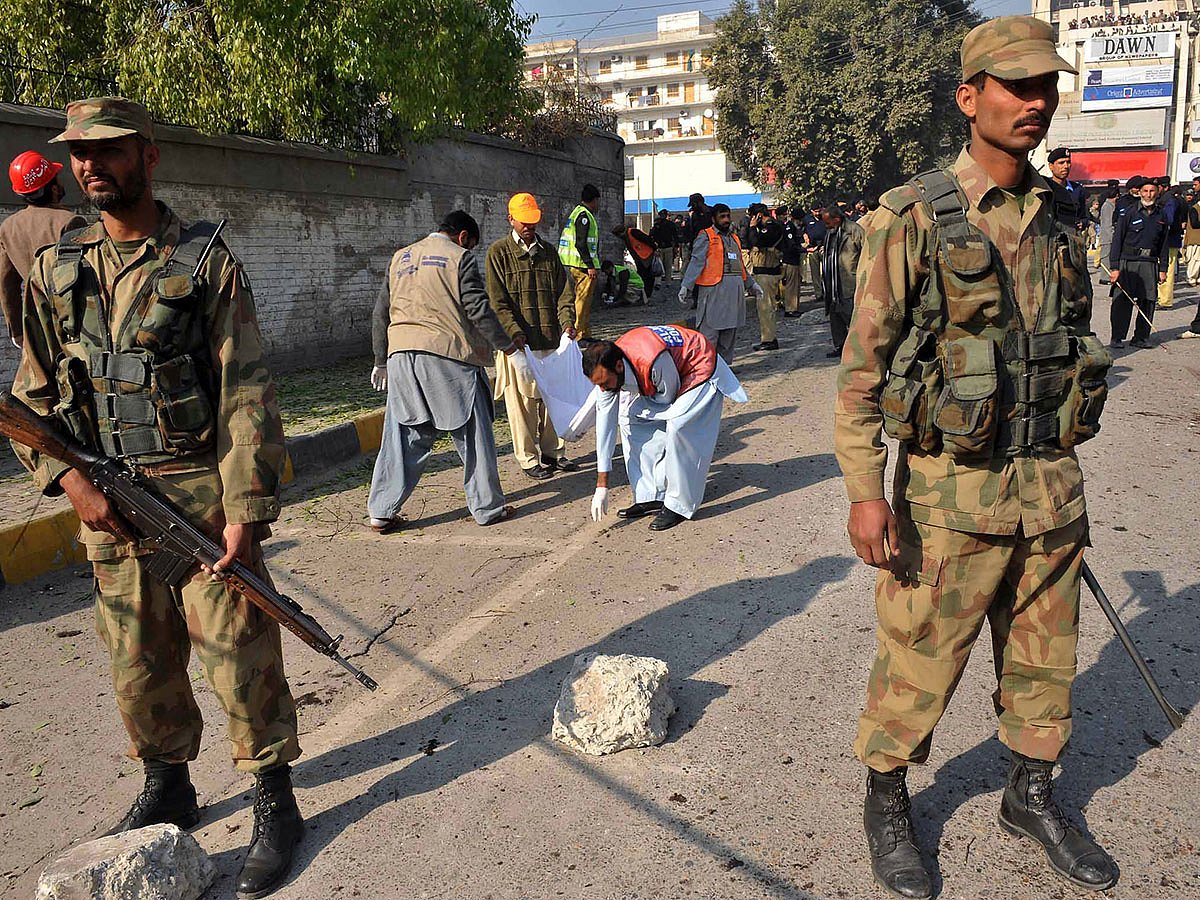
For Pakistan, terrorism is not an abstract threat; it is a lived reality that has shaped the nation’s security, governance, and social fabric for over two decades.
The recent press briefing by Lieutenant General Ahmed Sharif Chaudhry, Director General of Inter-Services Public Relations (DG ISPR), underscored this reality, presenting 2025 as a “landmark and consequential year” in the country’s ongoing fight against militancy. The briefing revealed not only the scale of Pakistan’s efforts but also the complexities and sacrifices inherent in counterterrorism.
The figures alone are sobering. In 2025, Pakistan’s security and intelligence agencies conducted over 75,000 intelligence-based operations, averaging more than 200 per day. These operations neutralised nearly 2,600 terrorists, while tragically, over 1,200 civilians and law enforcement personnel lost their lives. More than 5,300 terror incidents occurred nationwide, with the majority concentrated in Khyber Pakhtunkhwa (KP) and Balochistan, areas that have long borne the brunt of militancy.
Dual reality
These statistics highlight the dual reality of Pakistan’s counterterrorism efforts. On one hand, operational effectiveness is improving. In 2021, for every terrorist killed, three security personnel were martyred. By 2025, this ratio had reversed to roughly two militants for every casualty, a grim yet telling sign that Pakistan is beginning to regain control over its security environment. On the other hand, the numbers reflect the extraordinary cost of sustained combat, both in human lives and in societal strain.
What makes Pakistan’s counterterrorism challenge particularly complex is its multifaceted nature. The DG ISPR emphasised that terrorist groups operating within Pakistan have no ideological, religious, or national legitimacy. They are an existential threat, exploiting ungoverned spaces, political vacuums, and social vulnerabilities to regroup and attack. External factors have exacerbated this challenge, with Afghanistan reportedly serving as a base for non-state actors who threaten Pakistan’s security. These groups have leveraged abandoned military equipment, cross-border mobility, and access to financial resources to sustain operations, complicating the state’s ability to neutralise them entirely.
Internal dynamics
Yet internal dynamics cannot be ignored. The political divisions, governance gaps, and the politicisation of law enforcement have historically created opportunities for militants to flourish, particularly in KP. Low conviction rates, pending terrorism cases, and bureaucratic inefficiencies have at times hindered the implementation of the National Action Plan (NAP), Pakistan’s comprehensive counterterrorism blueprint. While the army and intelligence agencies have largely fulfilled their mandate under NAP, civilian and provincial institutions have lagged, revealing a structural challenge that goes beyond the battlefield.
Operational strategy
Despite these hurdles, Pakistan’s approach in 2025 demonstrated a growing sophistication and coherence. The military has emphasised intelligence-driven operations, technical surveillance, and precise border engagements. Efforts like Azm-i-Istehkam, a counterterrorism initiative launched in 2024, have aligned operational strategy with the reinvigorated NAP, ensuring that kinetic action is complemented by legal, administrative, and social measures. Balochistan, for instance, has seen the establishment of district-level coordination committees, community engagement programmes, and targeted policing initiatives, models that, if replicated elsewhere, could strengthen Pakistan’s resilience against militancy at the grassroots level.
Modern warfare
Technology and modern warfare have added a further layer of complexity. Militants now employ armed drones, encrypted communications, and urban concealment to evade detection. Security forces have responded with a careful balance of surveillance, intelligence fusion, and operational restraint, ensuring civilian safety while targeting perpetrators. The DG ISPR framed this not just as a matter of tactical necessity but as part of a broader battle of narratives, where public trust and clarity of purpose are as critical as boots on the ground.
Perhaps the most striking aspect of Pakistan’s counterterrorism journey is the emphasis on national unity and societal participation. Terrorism is not solely a military problem; it is a societal challenge that requires public awareness, political consensus, and institutional cooperation. The briefing repeatedly stressed that the fight against militancy belongs to all Pakistanis including civilians, law enforcement, and military personnel alike. This collective understanding has crystallised in recent years, giving the state and society the clarity necessary to confront a threat that previously exploited ambiguity.
Challenges
Yet even with these gains, Pakistan’s path remains difficult. Militants are adaptive, resourceful, and patient, exploiting political vacuums and social fractures to regroup. Border security challenges, regional instability, and evolving tactics mean that every tactical victory must be reinforced by long-term governance, judicial efficiency, and economic and social development. The stakes are not merely operational; they are existential. Pakistan’s resilience against terrorism over the coming decade will depend on its ability to sustain momentum across multiple fronts: military, legal, political, and social.
Pakistan’s fight against terrorism is far from over, but the direction is clear. Precision, intelligence, social engagement, and political coordination define its current strategy. The country has demonstrated resilience, operational adaptability, and clarity of purpose in the face of persistent threats. Yet the effort must continue, strengthened by governance reforms, judicial efficiency, and societal consensus.
Pakistan’s experience underscores a vital lesson for the region: defeating terrorism is not merely a matter of force; it requires unity, institutional coherence, and an unambiguous commitment to protecting the state and its citizens.
In 2025, Pakistan did not declare victory, but it did assert resolve, a reminder that while terrorism can destabilise states, determined nations can prevail when clarity, purpose, and persistence align. For Pakistan, the path ahead will demand all three, along with continued sacrifice and sustained political and societal will.
Sign up for the Daily Briefing
Get the latest news and updates straight to your inbox
Network Links
GN StoreDownload our app
© Al Nisr Publishing LLC 2026. All rights reserved.