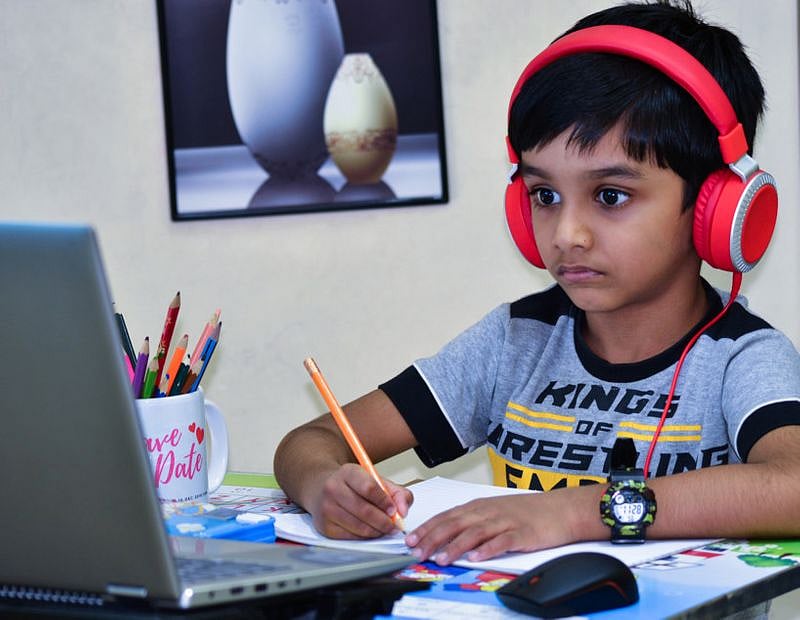
Distance learning has, in recent times, become an essential means of ensuring continuity in education. While it can never fully replicate the richness of face-to-face classroom experiences, it has demonstrated that meaningful learning can continue even in challenging circumstances when schools, students, and families work together with commitment and discipline.
The effectiveness of distance learning depends not only on technology, but on how seriously it is approached at home. One of the most important factors is routine. Children learn best when their day has structure - waking up on time, getting ready for school, attending lessons punctually, and following a timetable with consistency. A disciplined routine helps children view online learning with the seriousness it deserves.
Fixed learning space
It is equally important to assign a fixed learning space for the child at home. This need not be elaborate, but it should be a designated area that is used consistently and with discipline during school hours. Uncertainty about where to sit and study each day can create anxiety and reduce a child’s sense of focus and seriousness. A fixed learning space sends a clear message that school time, even at home, remains school time.
The ideal situation, of course, is for children to remain under the supervision of an adult during lessons to ensure focus and participation. If that is not always possible, it is helpful to share clear expectations with children so they understand how to conduct themselves responsibly during online sessions. For younger children, particularly in Kindergarten and Primary, parental support becomes even more important. Going over the learning resources shared by the school at a convenient pace during the week can help reinforce concepts and ensure that the child does not suffer learning loss.
Use of devices
Another major challenge in distance learning is the use of devices. The same technology that enables learning can also become a significant distraction through games, social media, notifications, and unrelated browsing. Parents therefore have an important role to play in monitoring device use and helping children develop healthy digital habits. Technology must remain a tool for learning, not a barrier to it.
Wellbeing must remain at the heart of all learning. Long hours on screen can be tiring, both physically and mentally. Children should therefore be encouraged to stretch and move around at intervals, keep themselves hydrated, and follow healthy eating and sleeping routines. Once the school day is over, it is equally important to ensure minimal further use of screens, including television, so that children get a genuine break from digital exposure. With the weather still pleasant, families can spend a little time outdoors in and around their residence, enjoy fresh air, and reconnect through simple activities such as storytelling, conversation, or board games.
Partnership between home and school
Distance learning also highlights the importance of strong partnership between home and school. When parents provide structure and encouragement, and teachers continue to guide with care and commitment, children are far more likely to stay motivated and engaged. Encouragement from parents, in particular, can go a long way in helping children stay positive and put forth their best effort.
Ultimately, getting the best out of distance learning is not about creating perfect conditions. It is about creating purposeful routines, maintaining balance, and working together in the best interest of the child. When approached with discipline, supervision, and care, distance learning can become not just an alternative mode of education, but an opportunity for resilience, growth, and meaningful learning.
Dr Sheeba Jojo is an educator living in the UAE
Sign up for the Daily Briefing
Get the latest news and updates straight to your inbox
Network Links
GN StoreDownload our app
© Al Nisr Publishing LLC 2026. All rights reserved.