From minerals to corridors: Why Africa matters to China, the Gulf and the West
Once viewed through the lens of aid, Africa is now seen as a partner in growth
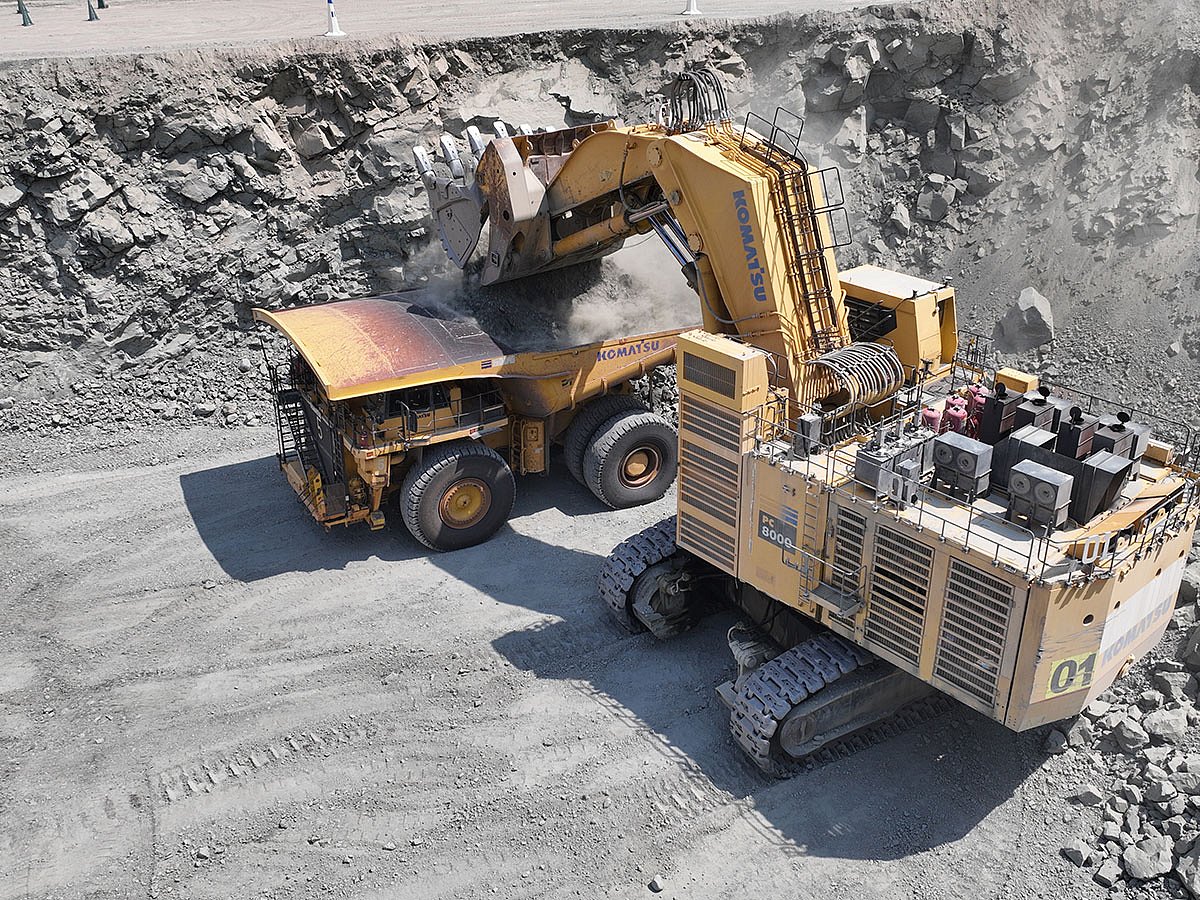
Minerals, trade routes and demographics are pushing the African continent to the centre of the global economy, and countries that recognised this wealth early on and invested in it are now benefiting from the strategic advantage of that foresight.
Africa, a region that was once seen as the fragile edge of the world economy, shaped by political instability, debt crises and reliance on foreign aid, sits today at the crossroads of unprecedented economic potential, emerging as a frontier and a significant hub for international investment. China, the Gulf states and the West have all discovered power and resources in Africa – something that the rest of the world was often too preoccupied to notice.
It is a continent rich in minerals powering the green economy, alive with the energy of the world’s youngest population, and open to trade routes and partnerships that serve mutual futures. Each nation has come to Africa with its own priorities but with the same belief that the opportunity the region presents for investment, for partnership, and for shared growth is one that no serious power in the 21st century can afford to overlook.
Africa’s rich resources
Home to 30 per cent of the world’s mineral reserves, 8 per cent of the world’s natural gas, and 12 per cent of the world’s oil reserves, the region sits on foundations that the rest of the world is only now beginning to fully reckon with. The Democratic Republic of Congo holds roughly 70 percent of global cobalt reserves, which are used in all electric vehicle batteries manufactured today. Lithium, which is essential for every clean energy grid being built, is found in Zimbabwe and Mali. Scattered across the continent are also the rare earths, which are critical to technologies that the world has determined it cannot live without anymore. These resources were never created by the world’s green energy transition; it utilised what was already lying beneath African soil and made it indispensable to every economy on earth.
But Africa’s growing importance cannot be explained by minerals alone. Geography, agriculture and demographics are all significantly reshaping the continent’s strategic relevance. Some of the world’s most vital trade routes run alongside African coastlines, connecting the Gulf, Europe and Asia through increasingly contested maritime corridors. Its farmland is becoming more valuable in a century likely to be shaped by climate stress and food insecurity, while its rapidly growing and youthful population offers the labour force and consumer markets that many ageing economies increasingly lack. Taken together, these shifts are forcing a broader geopolitical recalibration. Africa is no longer being viewed simply as a source of raw materials but as a continent increasingly central to the future architecture of global trade, production and economic power.
Early start by China
China was among the first to recognise the economic potential of the African continent. Since the early 2000s, it has built its presence in Africa brick by brick, port by port, railway by railway, at a time when most of the world was looking elsewhere. Through its Belt and Road initiative, Beijing gave formal shape and global ambition to what had already begun, investing annually around $30 billion into African infrastructure, energy and mining sectors. Today, China ranks as Africa’s largest trading partner, funding and building projects at a scale unmatched by any other external power. It has maintained its position for 17 consecutive years, and this was initially Beijing’s move: to embed influence into the physical architecture of Africa’s future economy.
But the question is not only: what has China accomplished in Africa? It is: what does Africa give China in return?
China’s interest in Africa is largely resource-driven. Much of what China’s manufacturing economy depends on today is scattered across the African continent. From minerals and oil to agricultural products and raw materials, Africa plays a crucial role in fueling China’s economic growth. It also offers China the markets for its goods at a time when Western economies are closing their doors to Chinese products. The maritime corridors also reduce its dependence on sea routes controlled by rivals, and the diplomatic backing of 54 African nations in international forums where China’s presence is increasingly under pressure.
Africa for China was never a single opportunity. Beijing was the first to recognise that it was a solution to multiple strategic problems and acted on it more decisively than anyone else in the room.
Investments by the Gulf
For the Gulf states, Africa has never been a distant concern. From 2012 to 2022, the GCC countries together invested over $100 billion in Africa. The UAE alone announced investing approximately $110 billion in Africa between 2019 and 2023. This is a staggering figure, which, when taken into account, is comparable to Kenya’s GDP. Altogether, these numbers signal something significant: that for the Gulf, Africa is not a peripheral interest; rather, it is a strategic priority, vital to security, the economy, and global connectivity. In 2022, as China’s lending commitments slowed to around $1 billion, the GCC’s investment in Africa increased to $8.3 billion, which reflects not a passing trend but a deliberate and deepening strategic commitment.
But again, the scale of investment only tells half the story. The more revealing question is what drives this scale.
For the Gulf, Africa matters for reasons that are deeply practical and increasingly urgent. Gulf states recognised early on that food security would become one of the defining challenges of the 21st century. As a result, they saw the African agriculture corridors as well as their supply chains as a gateway that offers the kind of long-term partnership that would turn shared vulnerability into shared resilience. The continent also offers the Gulf access to markets, which serves its broader economic diversification ambitions. And, as the Gulf countries work to position themselves as global logistics hubs and trade connectors between Asia, Europe, and Africa, the continent becomes a cornerstone of that vision.
Late entry by the West
The West, on the other hand, made this strategic recalculation a bit late. For much of the post-Cold War period, Western engagement with Africa was framed primarily through development assistance, governance reform, and humanitarian priorities. While these policies carried important institutional benefits, they often failed to produce the kind of embedded economic and infrastructural presence and relationship that China and the Gulf states steadily built over decades. It was only when the maps of the supply chains revealed that the minerals needed for Western green economies were concentrated in countries where Chinese relationships already ran deep that Western countries took a strategic turn, responding with greater seriousness, pivoting from a traditional aid-based relationship with Africa to an investment-driven partnership.
Through initiatives such as the EU’s Global Gateway and the United States’ Partnership for Global Infrastructure and Investment, they are trying to strengthen their economic and political ties with African nations. Because for the West, Africa is no longer a development challenge; it is a critical partner in securing the minerals, supply chains and diplomatic relationships that its own economic and geopolitical future depends on. The West needs Africa as much as Africa needs what the West has to offer, but the main challenge they face is consistency.
From hopelessness to hopefulness
Africa is no longer a continent waiting to be written into the global story. It is becoming one of its most consequential authors. According to the American economist and public policy analyst Jeffrey Sachs, Africa’s growth prospects for the next 40 years are extremely strong; it could achieve essentially what China achieved between 1980 and 2020. Those who understood the economic potential of Africa the earliest are holding the strongest hand today, reaping the strategic advantage of their foresight.
Shamma Ahmed AlQutbah is a Research Assistant at Trends Research & Advisory
Sign up for the Daily Briefing
Get the latest news and updates straight to your inbox
Network Links
GN StoreDownload our app
© Al Nisr Publishing LLC 2026. All rights reserved.