Catastrophic miscalculation: How Iran widened its own war
Targeting Gulf states exposed a reckless strategy that deepened Iran’s isolation
It is well known that Iran’s exposure to US-Israeli attacks did not come as a surprise to anyone — neither to the Iranian regime itself nor to observers and experts. Indeed, it can be argued that this war was preceded by signs and indicators that all but revealed its timing, trajectory, and objectives with remarkable precision. These included extensive on-the-ground military movements and massive American deployments that went far beyond the framework of “maximum pressure” during negotiations with the US delegation — efforts aimed at extracting concessions that the Trump administration viewed as essential to signing a new settlement agreement with Iran.
The outbreak of war and its objectives, therefore, were not unexpected. The real surprise lies in the Iranian reaction to a major strategic event that had been entirely foreseeable. The Iranian regime rushed to target neighbouring Gulf states — states it has long invoked in repetitive rhetoric about “good neighbourliness” and “regional cooperation.” So persistent was this discourse that some Gulf Cooperation Council (GCC) countries engaged with the regime’s stated intentions in good faith, overlooking both recent and more distant historical experience, which reflects nothing but ill intent harboured by successive Iranian leaders toward their Gulf neighbours, regardless of personalities or policy shifts.
Premeditated intentions
In reality, the intense, concentrated, and varied targeting of GCC territories — regardless of the limited damage inflicted and the demonstrated ability of these countries’ armed forces and air defenses to effectively and efficiently repel the criminal Iranian attacks — reveals premeditated intentions to scramble the deck and a deep-seated desire to expand the war to encompass the entire region, rather than merely respond to the severe blows the regime itself suffered in the early hours of the conflict, including strikes that reportedly reached the highest levels of leadership.
What transpired — namely, Iran’s targeting of neighbouring states — elicits both pity and dismay at such a catastrophic strategic error. The fundamentals of strategic planning dictate that in times of war, a country requires regional and international sympathy and support. Iran, in particular, urgently needed diplomatic backing from its neighbours to help halt the war, prevent further destruction of its infrastructure, and mitigate the unprecedented economic and societal impact of US-Israeli strikes. Instead, decision-makers in Tehran gambled on undermining GCC states and targeting their economic and security stability in an attempt to pressure major powers into restraining the US-Israeli offensive.
This failed strategy achieved none of its objectives — nor could it reasonably have been expected to — because it reflects reckless, irrational thinking and exposes a destructive mindset concerned only with chaos and sabotage, devoid of regard for values, principles, or even Iran’s own national interests. These interests cannot possibly align with harming its regional neighbours — neighbours that have long acted as a buffer against scenarios involving war against Iran, in pursuit of regional security and stability, a strategic priority of paramount importance for GCC states and their economies, which fundamentally depend on stability to advance development, modernisation, and global competitiveness.
Deeper dilemma
This war has laid bare a deeper dilemma: the Iranian regime appears to thrive on the sound of bombs, missiles, and fighter jets. It disregarded neighbourly relations and the so-called “Islamic umbrella” it frequently invokes as a foundation for cooperation with the Arab and Islamic worlds. Nor did it account for the vast network of shared interests with GCC states, let alone the people-to-people ties and the immediate and long-term damage these devastating attacks may inflict on relations across both shores of the Gulf.
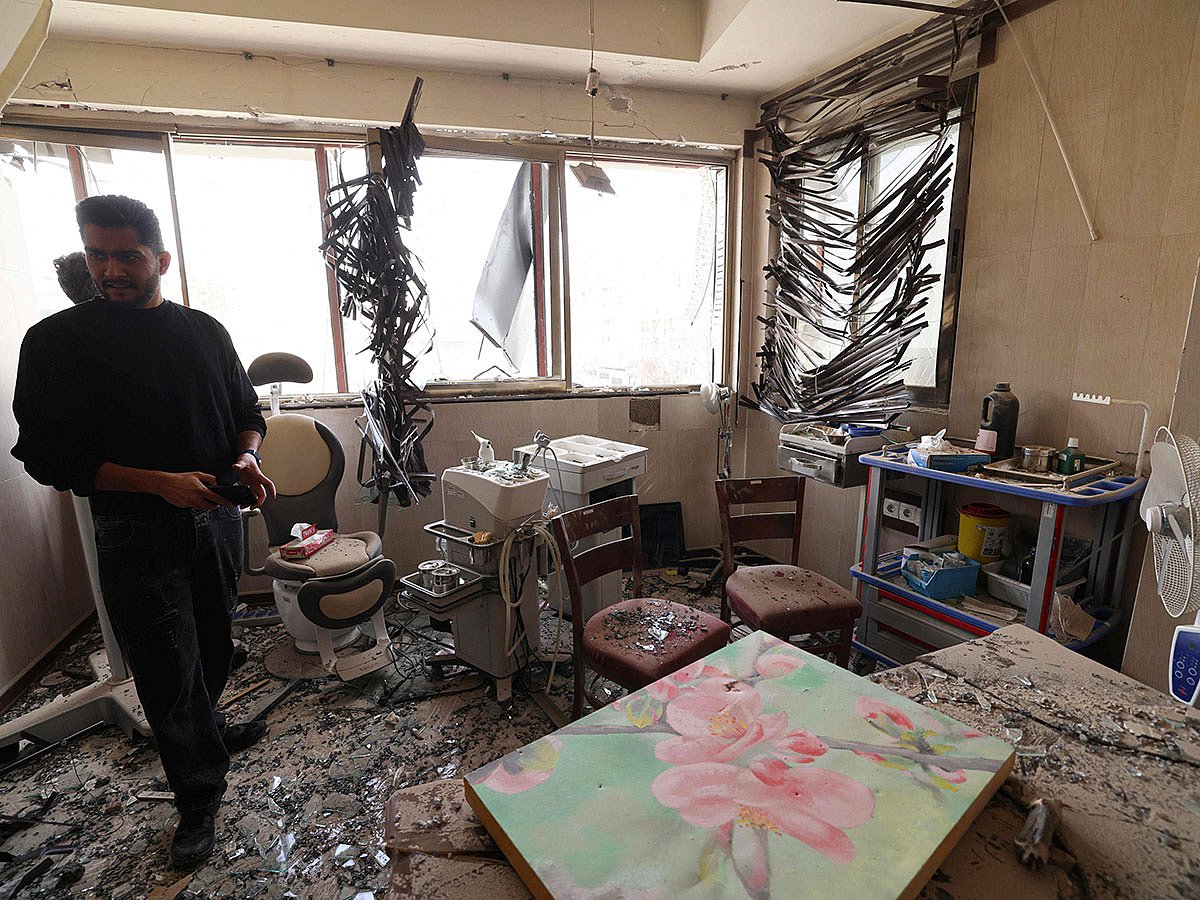
The targeting did not stop at US bases — as Tehran had previously threatened — despite the illegality of such actions under international law, which would constitute violations of sovereignty and territorial integrity. Rather, the strikes extended to vital civilian and economic facilities, including ports, airports, residential buildings, and hotels. It thus became evident that the objective was not retaliation against an adversary, but rather the exploitation of a crisis to spread chaos, destabilise the region and the world, muddle the strategic landscape, and drag GCC states into a war in which they have neither stake nor responsibility.
Attacks condemned
Iran’s targeting of GCC states has been widely condemned, especially as its attacks struck civilian infrastructure and residential buildings. It is evident that the regime is betting on a prolonged war of attrition that would expand to engulf the entire region — potentially evolving into a global conflict that threatens oil flows and imposes heavy costs on the international community. Such a scenario would also disrupt the steady economic growth of neighbouring states — growth that has long posed a challenge to Iranian leadership, which appears more focused on diverting national resources toward spreading instability, funding militias, and waging proxy wars across a region already burdened by extremist ideology.
By its actions, the regime has rendered its oft-repeated ambition of expelling US forces from the Gulf an increasingly distant dream, given its reckless capacity to deepen fears rather than build trust and promote security. If Iran’s leaders have succeeded in any respect during this war, it is only in uniting the region and much of the world against them, constructing a vast wall of isolation between their regime and the international community. They have unmistakably made clear the extent of the threat they pose to international peace and security. In doing so, they have left no room for humanitarian or political sympathy, nor for serious discourse about international law. They have silenced advocates of peace at a moment when global public opinion witnesses deliberate attacks on innocent civilians in Gulf cities — people whose only “crime” is being Iran’s neighbours.
Political folly
Observers of Iranian leadership behaviour are not surprised by reckless statements, threats, and actions that undermine even the regime’s own interests. Yet launching such wide-scale attacks against neighbouring states represents more than a lapse in strategic thinking — it reveals a profound level of political folly. It demonstrates that the Iranian problem extends beyond its nuclear and missile programmes to the very structure of the regime’s ideology — an impulsive, exclusionary worldview incapable of grasping the consequences of its actions, honouring its commitments, or building trust with its regional neighbours. Instead, it deepens and entrenches the crisis of confidence, making mistrust the defining feature of relations across both shores of the Gulf for the foreseeable future.
A regime built on spreading chaos and destruction cannot be a good neighbour to nations and peoples committed to construction and development. Stability and regional peace cannot be achieved with a reckless regime preoccupied with igniting wars, killing innocents, and suppressing reason.
The greatest tragedy of the Iranian regime’s crime in targeting GCC states is that it has rendered any meaningful discussion of rebuilding trust across the Gulf a distant aspiration — so long as this regime remains in power in Tehran.
Dr Mohammad Al Ali is the CEO and Founder of the new TRENDS Research & Advisory
Sign up for the Daily Briefing
Get the latest news and updates straight to your inbox
Network Links
GN StoreDownload our app
© Al Nisr Publishing LLC 2026. All rights reserved.