UAE's new 2027 traffic rules: When overtaking is allowed and prohibited
From fast-lane discipline to overtaking restrictions, here's what motorists should know
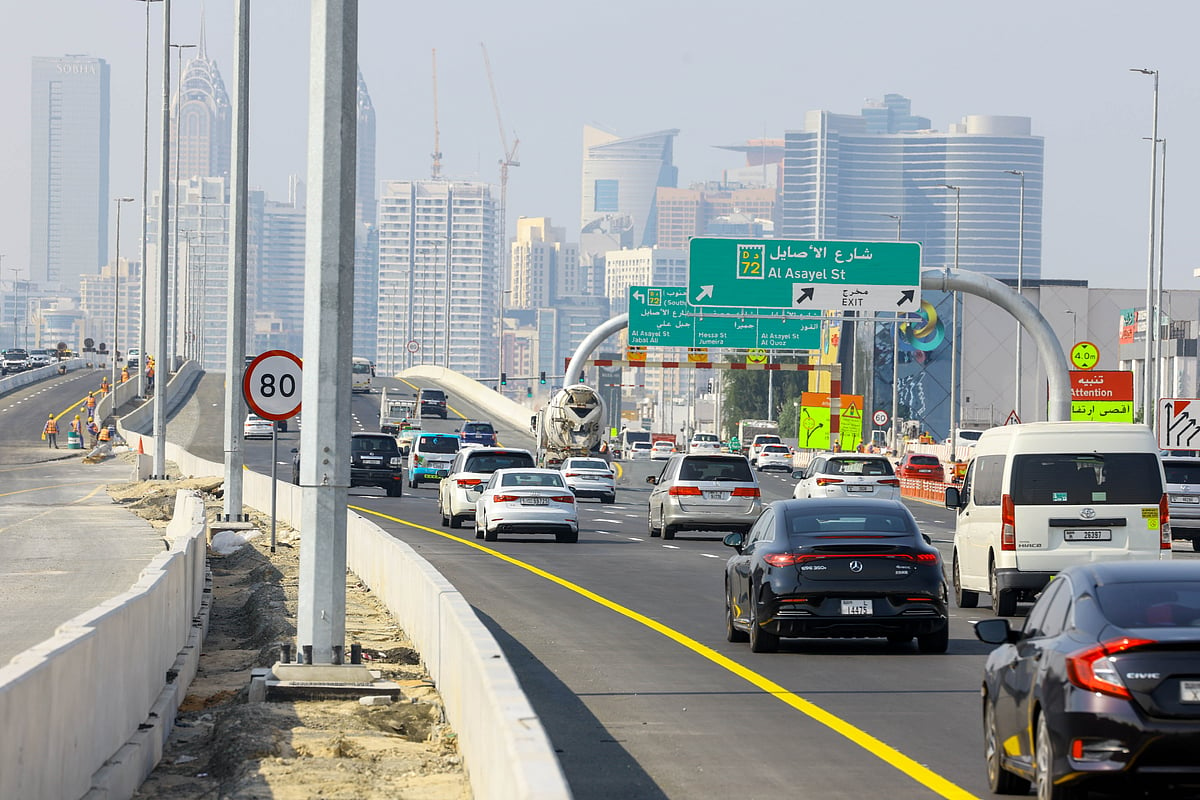
Dubai: Can you overtake another vehicle from the right? Are you allowed to remain in the fast lane after overtaking? And where is overtaking prohibited altogether?
These are among the driving situations addressed in the UAE's newly issued executive traffic regulations, which will take effect on January 1, 2027.
Under Cabinet Decision No. 174 of 2026, Articles 20 and 21 outline motorists' obligations before overtaking, when returning to their lane and in locations where overtaking is prohibited.
While these are not entirely new driving rules, the updated regulations provide a clearer explanation of the circumstances in which motorists can overtake, when they must give way and when overtaking is not permitted.
Get updated faster and for FREE: Download the Gulf News app now - simply click here.
Can motorists overtake on the right in the UAE?
Under Article 20, overtaking must generally be carried out from the left side of the vehicle ahead.
However, the regulation specifies an exception where a vehicle ahead has moved towards the left to turn into another road.
In such circumstances, overtaking from the right is permitted only if:
The driver ahead has moved left to turn into another road.
The driver has given the necessary turn signal.
There is sufficient space to overtake without creating any danger.
This is a specific exception and does not mean motorists can routinely overtake from the right.
When must drivers return to the right lane?
Article 20 also addresses lane discipline after overtaking.
Once a driver has completed an overtaking manoeuvre, they must return to the right without obstructing or disturbing the vehicle they have passed.
However, motorists may remain in the overtaking lane if they intend to overtake another vehicle, provided they do not obstruct or disturb drivers approaching from behind.
This means remaining in the overtaking lane is permitted under certain conditions, rather than indefinitely.
Where is overtaking prohibited in the UAE?
Article 21 identifies six circumstances and locations where motorists must not overtake another vehicle:
Poor visibility: When visibility ahead or around the vehicle is insufficient or unclear.
Oncoming traffic: When vehicles travelling in the opposite direction prevent the manoeuvre from being completed safely.
Intersections and roundabouts: At intersections, roundabouts and traffic squares.
Stopped traffic: When a group of vehicles has stopped because of a traffic obstruction or a stop signal.
Dangerous road conditions: On curves, inclines, slopes and slippery roads, near pedestrian crossings or on lanes marked with continuous longitudinal lines.
No-overtaking zones: Wherever traffic signs, signals or instructions prohibit overtaking.
These restrictions apply regardless of whether a driver believes there is enough space to pass another vehicle.
What must drivers check before overtaking?
Article 20 sets out several checks motorists must make before attempting to overtake.
Drivers must ensure:
Clear visibility: The road ahead and the intended overtaking path are clearly visible.
No approaching danger: There are no obstacles or hazards from opposing traffic.
A clear lane: No vehicle is approaching in the lane they intend to enter.
No conflicting signals: The vehicle ahead has not signalled a warning or indicated an intention to overtake.
Safe speed difference: The difference between their speed and that of the vehicle being overtaken is taken into account.
Sufficient distance: Adequate distance is maintained from the vehicle being overtaken.
What should drivers do when overtaking another vehicle?
Article 20 further requires motorists to alert the drivers of vehicles they intend to overtake and ensure that those drivers have responded to the alert.
The driver must also maintain sufficient distance and complete the manoeuvre without causing danger or disturbance to other road users.
After overtaking, the driver must return to the right, unless continuing to overtake another vehicle without obstructing traffic approaching from behind.
The regulations form part of the UAE's updated traffic framework, which comes into effect on January 1, 2027.
Network Links
GN StoreDownload our app
© Al Nisr Publishing LLC 2026. All rights reserved.