852 Bakery inside Jun's
Dubai Restaurant Week: Chef Kelvin Cheung of Jun’s talks food and roots
From family kitchen to fine dining, Kelvin Cheung on food and homegrown restaurants
Last updated:
3 MIN READ
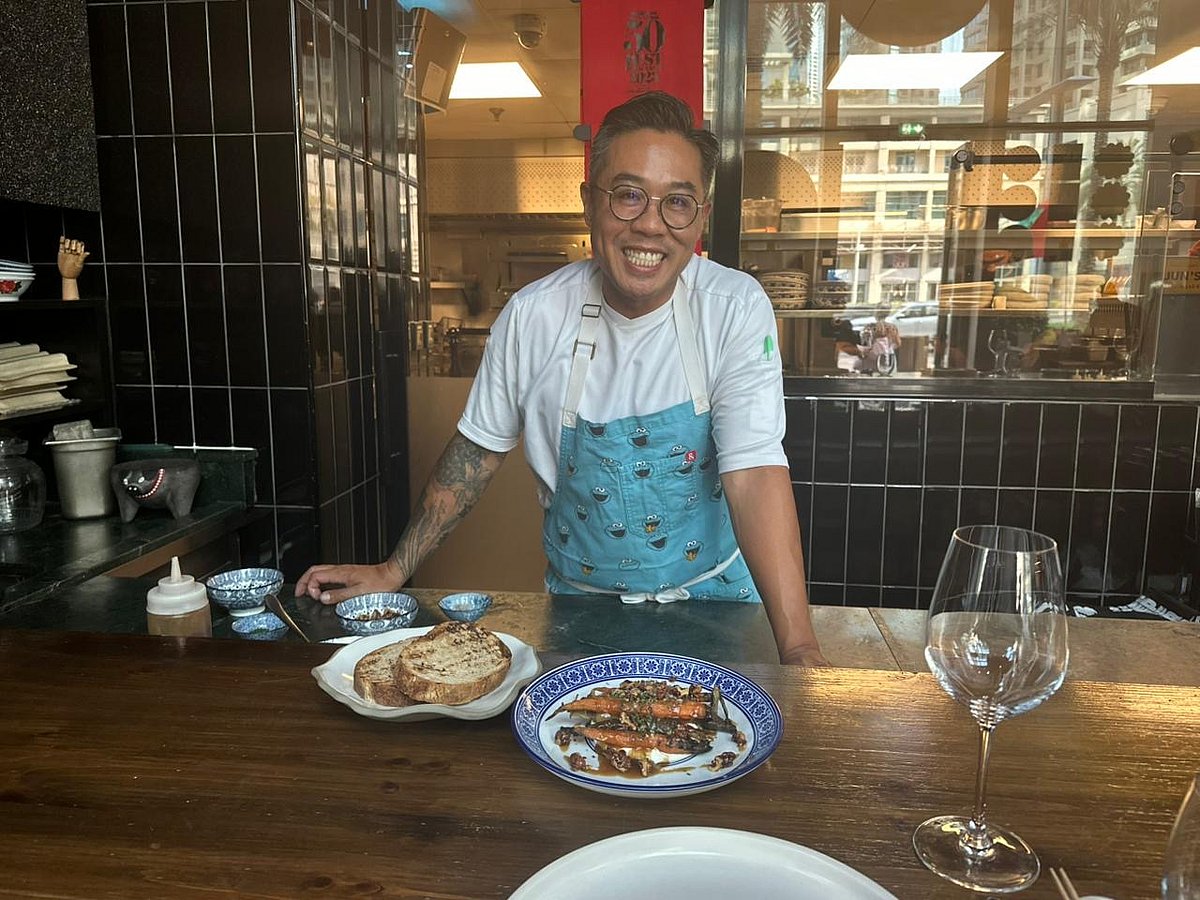
Chef Kelvin Cheung on broth, potstickers, and Dubai’s changing dining scene
Gulf News
Dubai: Ahead of Dubai Restaurant Week, Gulf News sat down with Chef Kelvin Cheung at Jun’s Dubai.
The chef and partner welcomed us in a playful Cookie Monster apron that subtly broke the formality of the setting, before settling into a conversation that moved between memory, craft and the evolving rhythm of Dubai’s dining scene.
Get updated faster and for FREE: Download the Gulf News app now - simply click here.
Rooted in routine
For Chef Kelvin, food starts with habit and memory. Growing up in a Chinese household, meals followed a consistent structure: vegetables, protein, rice and always a broth.
“It was an integral part of our daily meals,” he says. “With every dinner, we’d have vegetables, a protein, rice, and then this broth.”
He links it back to traditional Chinese medicine and its focus on nourishment and balance. That practice continues today. “Even now, every day at home we have a pot of bone broth going,” he adds. “There’s a certain meditative art when you make a proper soup… it takes a lot of time and care.”
If he had to choose one cuisine to eat every day, he says Japanese food would be an easy option, but he still finds himself drawn back to classic Chinese dishes.
A dish that stayed
When asked about a favourite, he lands on potstickers.
“It would have to be the potstickers… this could change depending on my mood,” he says. “But they’re a core memory for me.”
He recalls making hot and sour soup for his mother before dinner service, when she would stop by the kitchen for a quick snack. At Jun’s, that memory has evolved into a dish that combines potstickers with a hot and sour broth made from fish bones that are aged and dried over charcoal.
“It’s something that ties my family together,” he says. “It’s something I used to do at my father’s restaurant.”
What’s next in the kitchen
Right now, his focus is on fermentation. Several elements that were started over a year ago are being prepared for upcoming menus, including work with koji and long-term preferments.
“It’s really interesting what we can do with things that are usually unwanted,” he says.
There is also an emphasis on reducing waste. One of the projects in development is a vegetable-based miso made from kitchen scraps, which is expected to feature on the next tasting menu.
Early lessons
Raised in an immigrant household, weekends meant one thing: everyone worked. At his father’s restaurant, the entire extended family pitched in from siblings to cousins to aunts and uncles.
Mornings began early, often being pulled out of bed and dropped straight into the bakery. There, under the watch of his father’s pastry chef of over 50 years, he and his brother would shape batches of dough into almond cookies and fortune cookies for guests.
“It was like daycare,” he laughs, but one that quietly built the foundation of his career.
The dining inside Jun's
The rise of the homegrown diner
Dubai’s dining scene has changed and diners are changing with it.
“I love that there’s been a shift,” Kelvin notes. Where once big international names dominated attention, there’s now growing appreciation for homegrown concepts and chefs.
That shift has given restaurants like Jun’s the freedom to experiment, take risks, and create more personal, playful menus.
“It gives us the opportunity to cook more fun food,” he says.
What comes next for UAE dining?
Looking ahead, Kelvin sees resilience and community as the driving forces shaping the industry.
In the wake of global uncertainty, diners are becoming more intentional. They’re seeking connection, nostalgia, and value. Whether it’s a full tasting menu or just a quick coffee, every visit matters.
“This is the time people come out and support their favourite restaurants,” he says. “Even if it’s just for a sandwich.”
When things fully settle, he’s confident of what comes next. “It’s not just going to come back,” he says. “It’s going to come back stronger than ever.”
Sign up for the Daily Briefing
Get the latest news and updates straight to your inbox
Network Links
GN StoreAbout Gulf NewsTerms & ConditionsReach by GNSitemapContact usPrivacy PolicyGN FocusHave your sayWork with usAdvertise with usGulf News epaperPrinting Services
Download our app
© Al Nisr Publishing LLC 2026. All rights reserved.