Morris believes you can’t write for children if you’re disconnected from the books they’re currently reading
10 secrets to writing children’s books that sell — tips for UAE writers from Eve Wersocki Morris
The author is also a speaker at the Emirates Litfest 2026
Last updated:
4 MIN READ
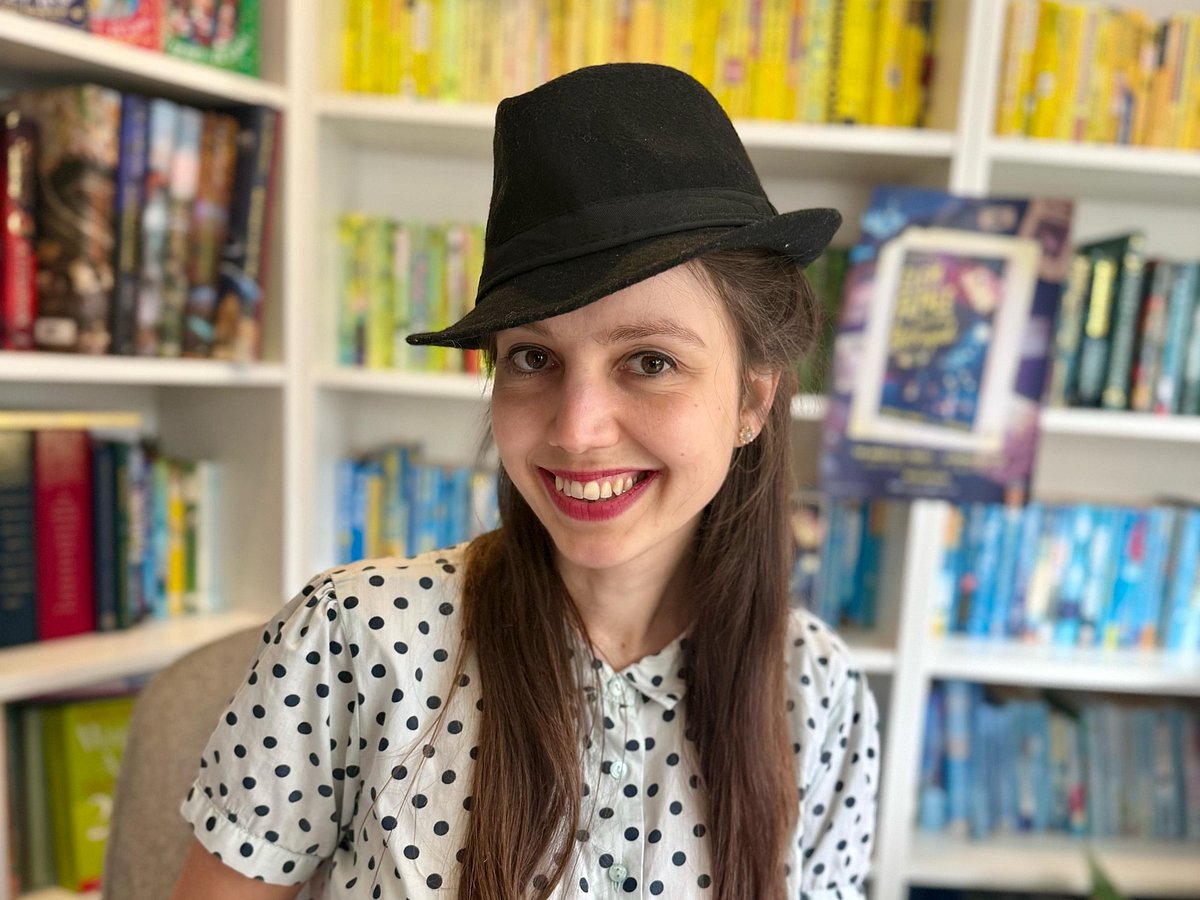
Eve Wersocki Morris is the author of several books, include The Bird Singers, Clem Fatale Has Been Betrayed and more.
In childhood, there was a series named Goosebumps, a children's horror franchise by RL Stine. It wasn't remotely scary, but it was so readable and addictive that you would finish it in one go. The end of each chapter, would end on a cliffhanger, possibly something like, "And I felt icy hands wrapped around my neck."
Cut to the next chapter, where it would probably be the characters friend, playing a prank.
But, the story kept you going.
And that's difficult, in a world where your attention is pulled in so many directions. Writing for children might seem like the hardest, and least practical, thing a writer can choose to do. Author Eve Wersocki Morris disagrees.
For her, children’s literature isn’t a stepping stone or a side category. It’s the foundation of publishing itself
Before she heads for her session at the Emirates Litfest 2026, she shares key lessons for anyone who wants to write children’s books that truly last.
Start by reading what children read now
Before inspiration or ambition comes immersion. “Read modern children’s books. Read what’s out there in the market, so you understand what people are buying, the kind of topics people are interested in, and how other children’s writers structure their stories and create their characters.”
Morris believes you can’t write for children if you’re disconnected from the books they’re currently reading. Understanding today’s landscape isn’t about copying trends. It’s about listening before you speak.
Don’t overthink it: Write a good story
Children’s writing is often dismissed as either too difficult or not serious enough. Morris pushes back against both ideas. “The second piece of advice I’d give is just write a good story.”
For her, quality always comes first, before marketability, before gimmicks, before labels.
A good story is one that keeps children reading
When Morris talks about storytelling, she’s focused on keeping their attention focused. “A good story is something that keeps kids reading.”
Especially in chapter books, pacing is everything. “You’ve got to end on a bit of a cliffhanger. You’ve got to end on a question. You’ve got to keep the action going," she says.
Children need a reason to turn the page, and another reason after that.
When the story slows, surprise yourself
Ironically, the best twists come when the writer feels stuck. “I think I sometimes get very bored when I’m writing. So I’ll be halfway through a chapter and then add in an exciting twist — a monster appears, or the main character loses their best friend and has to find them.”
Those spontaneous turns often become the most memorable moments for young readers. A little small shock here and there. And a lot of curiosity.
Curious, and curiouser, like Lewis Carroll would agree.
Humour hasn’t changed as much as you think
Comedy, Morris says, is still built on the same foundation. “Comedy is based on surprise. People laugh when something happens which is surprising.”
Even classic humour still works. “With slapstick comedy, someone’s walking along and suddenly falls over. We laugh because it looks funny, but also because it’s a surprise.” What has changed is context—and that means writers need to stay observant. “It’s a question of reading and watching kids’ TV, trying to work out the kind of humour kids understand, and putting that into your writing.”
Children’s books are profitable—just competitive
One of the biggest myths around children’s publishing is that it doesn’t pay. “In the UK, a huge portion of publishing profits are based in children’s and young adult books.” But success has a downside.
“It’s also very busy. There are so many children’s books being published, so it can be hard for a new author to get their voice heard," she notes.
Standing out takes persistence, not shortcuts.
Children’s authors have opportunities others don’t
Unlike adult fiction, children’s publishing extends far beyond bookshops. “School events, paid school events, paid creative writing workshops, that’s actually quite a significant part of a children’s author’s income," explains Morris.
There’s an immediacy to writing for young readers. “You can go into a school and find 100 kids, and they can all buy a copy of your book. As an adult author, you can’t really do that.”
Children’s publishing is for all, interactive and alive.
Writing is difficult in every genre
Despite the differences between writing for children and adults, Morris says the challenge at the core is the same. “Writing a book is definitely difficult in every genre, every age.” Ultimately, it comes down to one question:
“At the end of the day, it’s about how do you hold on to your reader?”
That task has only grown harder. “There are so many distractions nowadays, phones, TV, just doing other things. Reading is becoming less of a priority," adds Morris.
Engagement doesn’t mean nonstop action
Morris resists the idea that books must constantly be loud or fast to be compelling. “It doesn’t have to be constant action. Some writers can describe someone doing the washing up, and you’re still completely hooked.”
What matters how you write it. Sometimes its just a description of washed dishes that stay with you. For instance, LM Montgomery would write an entire page of two lovers walking through the woods, and yet it felt visceral: From the imagery of the moon, to the crisp air, and a darkness, that was yet so comforting.
Always read your book aloud
One of the most overlooked pieces of advice for children’s writers is also one of the most important. “Read aloud your book.” Sound and rhythm matter, even without rhyme. “Even if it doesn’t rhyme, it needs to have a rhythm. It needs to be satisfying to read.”
Especially because parents are often the first readers. “Particularly with picture books, parents will read that book, so it has to work aloud.”
Let children tell you what works
Morris doesn’t write for children from a distance.
Through school visits and workshops, she stays in constant conversation with readers aged eight to twelve, watching where they laugh, drift, or lean in. Being around children, she believes, is the only real way to understand them.
Network Links
GN StoreAbout Gulf NewsTerms & ConditionsReach by GNSitemapContact usPrivacy PolicyGN FocusHave your sayWork with usAdvertise with usGulf News epaperPrinting Services
Download our app
© Al Nisr Publishing LLC 2026. All rights reserved.