How British author Louise Candlish turns everyday homes into gripping crime scenes
The balance between the ordinary and the unsettling is what makes her work linger
There is something quietly unsettling about the idea that the most dangerous places are the ones we trust the most. At the Emirates Literature Festival, that thought settled in slowly as I found myself in conversation with crime writers who spend their lives dissecting human behaviour with unnerving precision. I went in as a devoted reader who treats crime fiction as both comfort and obsession.
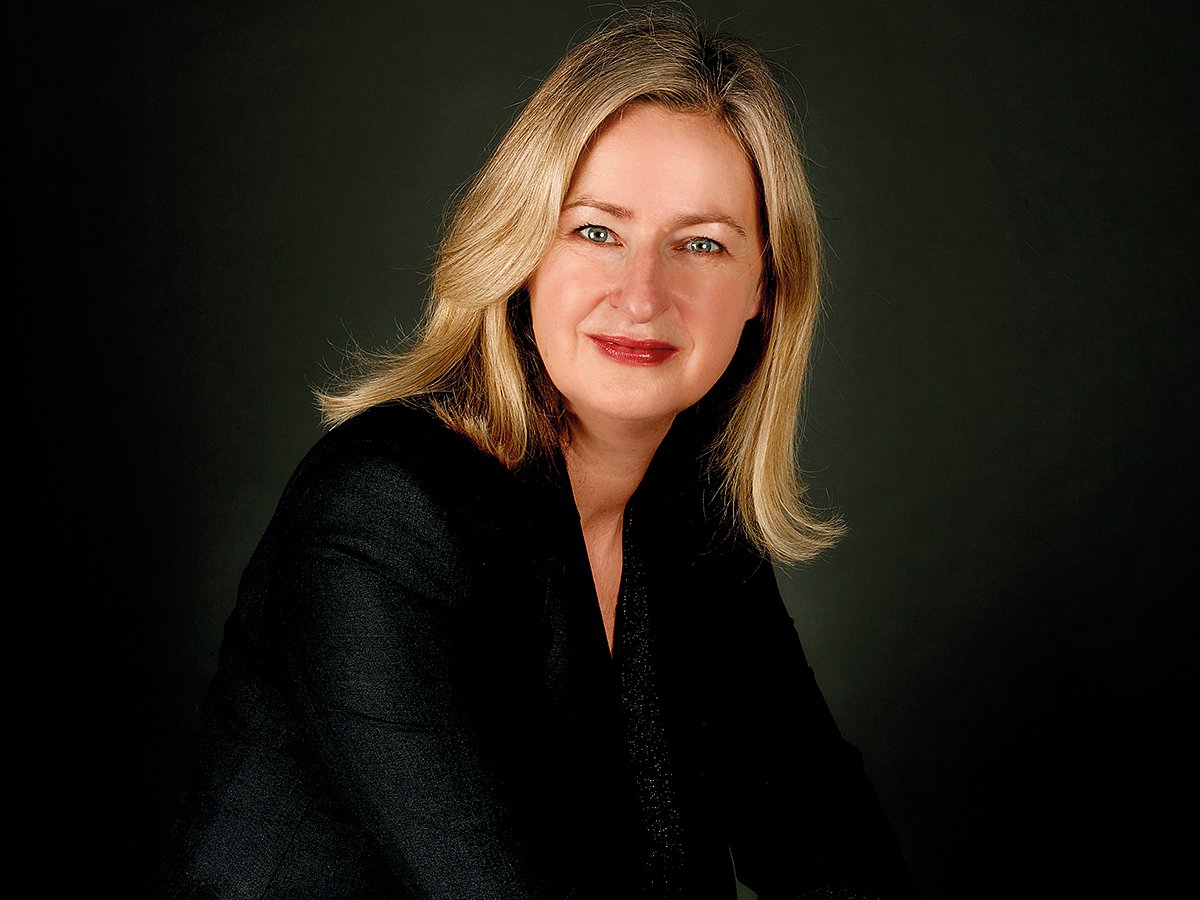
I left with four interviews, a stack of books that tested my grip strength, and the creeping realisation that ordinary life is far less predictable than it looks. This series has followed those conversations across three issues of Friday, and in this one, the focus shifts to British bestselling author Louise Candlish, whose work turns familiar neighbourhoods into sites of quiet menace.
Candlish’s fiction rarely relies on dramatic settings. Her stories unfold in homes, on streets, among neighbours who look entirely unremarkable. That is exactly the point. The everyday, she believes, is where tension thrives, a direction explored with much success by fellow British author Ruth Rendell and Belgian writer Georges Simenon. Candish, however also describes crime fiction as a kind of emotional rehearsal, where readers experience fear and danger at a safe distance. “You experience terrible things through a fictional character and feel all the emotions they feel,” she says. “You go on that journey with them, but at the end of the day, you close the book or switch off your Kindle and walk away.”
Safe danger
What she is describing is less escapism and more controlled exposure. The body reacts as if something real is at stake. The pulse quickens. The mind races. Yet the reader remains untouched. Candlish calls it “a vicarious crime experience,” adding that it works almost like therapy. “Your heart rate increases, you feel all the biological effects of danger and jeopardy, but you remain safe throughout. I think that’s really the appeal.”
Her own relationship with the genre began early, though not in the way one might expect. Like many British readers, she started with the likes of Enid Blyton, before a summer of enforced isolation changed everything. At 12, after what she describes as “juvenile mischief,” she was grounded for six weeks and confined to the library. There, she read the complete works of Agatha Christie.
“I felt like a prisoner,” she says, recalling the experience. The library became both escape and education. Christie’s worlds opened up places she had never seen and people she had never encountered. “I had never left Great Britain… and suddenly I was on the Nile, on tropical islands, in the Caribbean.” That immersion shaped her instincts as a writer, later reinforced by authors like Patricia Highsmith and Ruth Rendell, whose psychological depth continues to echo in her works.
Domestic faultlines
Candlish’s novels carry that same attention to human behaviour, often anchored in domestic spaces. Her bestselling book Our House explores the violation of something deeply personal: the idea that one’s home is secure. The premise, she explains, emerged from a reality she initially struggled to believe. “The thought that someone’s house could be sold without their consent seemed impossible,” she says. “But it is possible.”
Researching the book changed her own habits. She signed up for property alerts, looked into insurance, and developed a sharper awareness of risk. The shift was not entirely new. She describes herself as naturally cautious, someone who scans for exits and imagines worst-case scenarios. Crime writing, in that sense, is less invention and more extension. “I no longer think, ‘No one would ever do that.’ I think anyone could be a victim.”
That instinct feeds into how her ideas take shape. There is no rigid routine, no forced plotting sessions. Instead, her mind remains open to possibility. She reads widely, paying attention to small tensions that often go unnoticed. “Feuds, family disputes, inheritance issues,” she says. “Those domestic tensions are where crime often begins.” Ideas arrive in motion, during walks, while driving, sometimes through music. “When I’m relaxed, ideas flow. I’ve learned to trust that. I’ve never had writer’s block because I don’t force it.”
It is a process built on observation rather than control, which perhaps explains why her stories feel plausible. She has little interest in spectacle. The escalation in her books comes from ordinary decisions that slowly spiral. “One bad decision leads to another,” she says. “That’s something readers can relate to. It feels possible.”
What’s withheld
That sense of possibility is sharpened by her use of perspective. Many of her novels rely on narrators whose version of events feels incomplete. She is careful about how far that ambiguity goes. “I don’t allow narrators to lie directly to the reader,” she explains. “What they can do is withhold information.” The tension lies in what is missing rather than what is false. The reader senses that another truth exists just beneath the surface.
It also explains why her characters, particularly women, resist easy categorisation. Candlish is not interested in making them likeable. She recalls being asked early in her career to soften a character, only to find the result unconvincing. “After that, I gave myself permission to write real characters,” she says. “Not likeable, not unlikeable, just real.” That realism allows for contradiction, for vulnerability, for the quiet complexities that shape behaviour. Her recent novel The Only Suspect, which won major international awards, allowed her to explore a different dimension: time. Set partly in the 1990s, it draws on a pre-digital world where misunderstandings could linger and secrets could survive. “Many of the misunderstandings in the story would be resolved instantly with smartphones,” she says. Setting it in that earlier period created space for tension while also capturing a sense of nostalgia. “It felt like a youth movement, full of energy and music.”
Across her work, what remains constant is a commitment to restraint. The threat rarely announces itself loudly. It builds quietly, often within relationships that appear stable on the surface. That approach resonates across cultures, she believes, because the underlying questions are universal. “People are drawn to questions of right and wrong, especially in uncertain times,” she says. Crime fiction offers resolution, even when it is not strictly legal. It provides a form of emotional clarity.
As a reader, I recognise that pull. Sitting across from Candlish at the festival, I found myself less interested in the mechanics of her plots and more drawn to the way she thinks. Crime writers observe the world with a level of attention that borders on forensic. They notice the small behavioural fractures, which makes for excellent fiction. It also makes for slightly unsettling company.
Candlish herself embraces that role with a certain calm. Writers, she says, are observers first. “We are daydreamers, but we’re not necessarily creating lives we want to live.” In crime fiction, the distance matters. The situations are compelling precisely because they are not one’s own.
She is pragmatic about the profession itself. After 18 novels and two decades in publishing, there is little fear left in the writing. The uncertainty lies elsewhere. “You’re only as good as your last book,” she says. The perspective that comes with experience tempers that anxiety. Success and failure both fade into the background over time. What remains is the work and the readers who continue to discover it.
Even her approach to emerging tools like AI reflects that grounded view. It has its uses, she acknowledges, particularly in efficiency. The creative core, however, remains distinctly human. “It can’t replicate an individual voice. Not yet, anyway.”
Away from the page, her life is far less dramatic than her plots might suggest. She reads, walks, spends time by the sea, and enjoys the routines of home. It is a quiet existence that sits in contrast with the tension she writes about. “It’s a lovely life,” she says simply.
That balance between the ordinary and the unsettling is what makes her work linger. It also explains why, after that weekend at the literature festival, I found myself looking at familiar spaces with a little more suspicion. The lift, the street, the neighbour who smiles too easily. Crime fiction has a way of rearranging perspective. Once you see the possibilities, you cannot entirely unsee them.
Sign up for the Daily Briefing
Get the latest news and updates straight to your inbox
Network Links
GN StoreDownload our app
© Al Nisr Publishing LLC 2026. All rights reserved.