At an HBO press conference for A Knight of the Seven Kingdoms, the upcoming Game of Thrones prequel.
Why A Knight of the Seven Kingdoms skips dragons: Showrunner Ira Parker reveals all
The HBO prequel ditches the grand spectacles to stay inside Duncan the Tall's POV
Last updated:
3 MIN READ
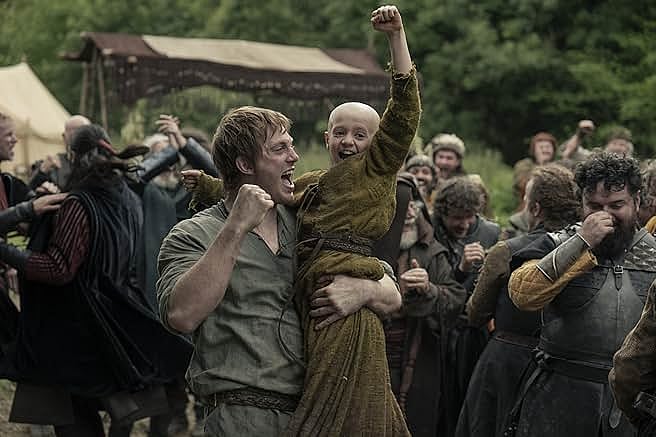
Dexter Sol Ansell and Peter Claffey in A Knight of the Seven Kingdoms (2026)
IMDB
Dubai: At first glance, A Knight of the Seven Kingdoms may look like another return to the sprawling world of Westeros, but creator, showrunner, and executive producer Ira Parker insists it's something far more intimate.
Adapted from George R.R. Martin's beloved Tales of Dunk and Egg novellas, the upcoming HBO series steps away from dragons, dynasties and doomsday prophecies, and instead leans into something quieter: perspective.
For Parker, the adaptation began with a simple rule: everything must be seen through Duncan the Tall's eyes. "All of it comes back to Duncan, his POV(point of view)," he explained at a recent HBO press conference.
Unlike Game of Thrones or House of the Dragon, there's no roving epic scale here. No jumping between powerful families, no sweeping aerial shots, no looming end-of-the-world stakes. Just one man, a few horses, muddy boots, and the road ahead.
That creative choice shaped every part of the show's visual language. Parker deliberately avoided drone shots, not because they aren't cinematic, but because Dunk wouldn't see the world that way.
When Dunk is face-down in the mud, the audience is meant to feel the grit under his fingernails.
When he's sealed inside his helmet, you're meant to sense the weight of the metal, the tightness of his breath, the pounding of his heart.
Even quiet, awkward moments like his conversations in the market with Tanselle are designed to feel slightly uncomfortable, mirroring Dunk's own social unease.
This grounding, almost tactile approach stays remarkably faithful to the novellas, where much of the story unfolds inside Dunk's head.
Translating that inner monologue to screen, however, required more than careful camera work.
Parker credits lead actor Peter Claffey for bringing Dunk's inner life to the surface.
"If it wasn't for Peter Claffey just coming in every day and communicating so much with his body language and his eyes and his own sense of humour, you know, we never would have been able to get out Dunks, inner monologue, which is, of course, so important to this series, and it's so important to this novella," he said.
The off-screen dynamic between Claffey and Dexter Sol Ansell, who plays Egg, had such a great chemistry that it felt so authentic.
The off-screen dynamic between Claffey and Dexter Sol Ansell, who plays Egg, only strengthens that authenticity.
Much like their characters, the pair developed a natural rhythm, even bonding over a shared obsession with arcade games, that mirrored the unlikely partnership which is at the heart of the story.
That ease carried into their performances, making the relationship feel lived-in rather than staged.
Parker describes the production process as refreshingly straightforward. Aside from enduring Belfast's unpredictable rain, the focus remained firmly on tone and character. Once the cast was in place, the team "just kept rolling," trusting the material and the performances to do the heavy lifting.
While, adapting Tales of Dunk and Egg, Ira Parker hasn't tried to outdo Westeros' grandest moments. Instead, he's chosen restraint, by favouring closeness over spectacle, mud over magic, and humanity over heroics. The result is a series that feels earthy, intimate and quietly confident, proving that sometimes the most powerful stories are the ones told from ground level.
Network Links
GN StoreAbout Gulf NewsTerms & ConditionsReach by GNSitemapContact usPrivacy PolicyGN FocusHave your sayWork with usAdvertise with usGulf News epaperPrinting Services
Download our app
© Al Nisr Publishing LLC 2026. All rights reserved.