'We were wrong on that first day': YouTube co-founder on the numbers that built a platform
YouTube's co-founder told Abu Dhabi what scale, metrics and failure taught him
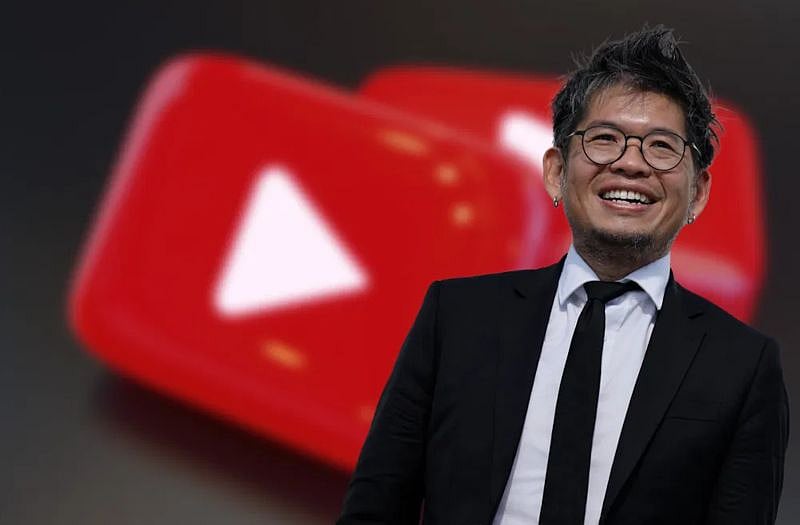
Dubai: Twenty years after YouTube went live, its co-founder Steve Chen still talks about the early years in terms of two things: infrastructure that had to work from day one, and a willingness to be wrong about what the company was measuring.
Chen was speaking at "The city that thinks", a panel at LIVEX 2026 at ADNEC Centre Abu Dhabi, moderated by Dr Ayesha Khanna, CEO of Addo AI. The session looked at what happens when cities build technology around people rather than around the technology itself, and Chen was asked what that scale of platform building demands of leaders.
Twenty years, and a company of 56
He opened with where he is now, which is not California.
"I did spend a you know 20 years there from 1999 to 2019 in Silicon Valley, but right before COVID started, I actually moved over to Taiwan," he said. "One, not expecting COVID to happen, and two, not expecting the trend with AI and semiconductors."
He now divides his time between Taiwan and Silicon Valley, working on links between the AI sector's demand for chips and the companies that make them.
Asked about leadership, Chen put on what he called the hat of an entrepreneur "with a company with 56 people when it was acquired by Google". YouTube recently marked its 20th anniversary, and he measures the distance travelled in domestic terms.
"I can tell like my own kids turn off your iPad, turn off your iPhone, stop watching Daddy's product and go to sleep," he said. "I never thought that this was going to be the case 20 years later."
Infrastructure before anything else
The first lesson from those early years, he said, was to build the foundations immediately.
"It's important to build out that infrastructure from day one."
That was harder than it sounds in the mid-2000s. Broadband penetration, he noted, "was just getting over 50 per cent", and the first iPhone was still a couple of years away. Uploads, storage, backups, streaming and bandwidth costs all had to be handled without modern cloud services. "All this without the cloud in place was a lot of hard work."
Permission to fail
The second lesson came from culture, and it is the one Chen says he recognises among founders in Taiwan.
"This audacity for failure, to be able to be okay with failing to try new things," is how he described it. At YouTube, that meant ideas were not routed by job title.
"Anybody in the company can have an idea because they use the product, and if they have an idea, come to us."
The test was the market. "The only way that we're going to be able to really test if this product works is getting it out there."
Three metrics, one query
Later in the session, Khanna asked Chen what mistakes people make when designing algorithms that track behaviour. His answer started with the need for something objective, and ended with the need for humility.
"You also need to have the modesty to know that you potentially made the wrong decisions from that first day."
At launch, YouTube tracked three numbers: videos viewed, videos created and users created. Every feature was judged against them, and the team decided on that basis whether to pull a feature or invest more in it. There was a practical reason for the choice, too.
"It was one select query, one count query in the database to be able to check," Chen said. They were the easiest numbers to get.
The harder questions came later. It was years after the Google acquisition, he said, that the company began interpreting engagement in more complicated ways, needing far more data before reaching a conclusion. Working out what it meant for something to be good for a viewer, or good for a creator, "took years and years of continuing to evolve".
His closing point was the one he returned to twice.
"It's also just as important to be able to say we were wrong on that first day."
A second voice on measurement
Tom Gruber, founder of Siri and Humanistic AI, picked up Chen's point from the other end of the panel, and framed it as the defining choice for anyone building at scale.
"What you measure makes all the difference in what you end up with," he said. When the only thing that mattered was engagement, because the business ran on advertising, the result followed. "We got what we got."
Measuring human flourishing instead is much harder than counting clicks, Gruber acknowledged. But he argued the tools now exist to ask whether an interaction is actually improving someone's wellbeing.
Network Links
GN StoreDownload our app
© Al Nisr Publishing LLC 2026. All rights reserved.