Resident Evil films: From 36% to 96% on Rotten Tomatoes, how the panned billion-dollar franchise finally won
Inside the billion-dollar ‘bad’ franchise that critics loathed and audiences loved
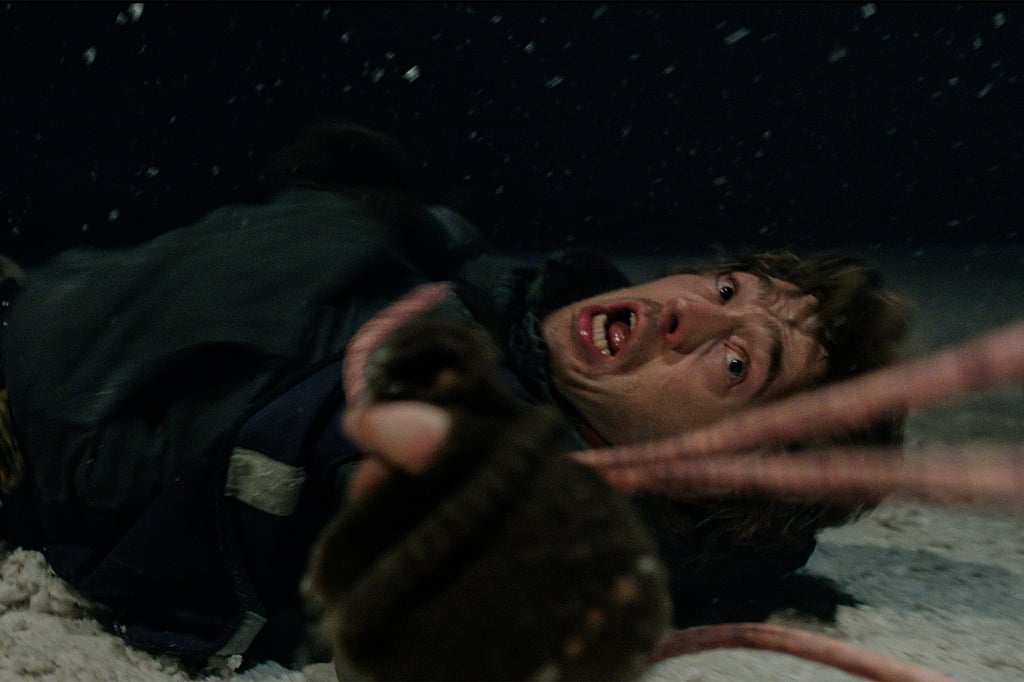
Here's the Resident Evil paradox in one sentence: Critics have spent two decades calling this franchise borderline unwatchable, and it just kept making more money than most 'respectable' movies dream of. The recent film has done the unthinkable: It has 96 per cent on Rotten Tomatoes.
Zach Cregger, the man behind Barbarian and last year's Oscar-winning smash Weapons (a $270 million global hit off a $38 million budget), took the reins, and for once, the reviews are glowing.
Early reaction has warm, with outlets calling it sharper, scarier, and more purposeful than any of its predecessors, one review going so far as to declare it flatly better than the rest of the franchise combined. The film centres on Bryan (played by Cregger's Weapons collaborator Austin Abrams), a medical courier whose routine delivery run spirals into a single, chaotic night of survival horror in Raccoon City, a tighter, more contained premise than the globe-trotting, increasingly bloated later entries in the Jovovich saga.
So in this spirit, here's looking back at the previous films, and how, they continued minting money despite being panned.
The original sin (2002)
Paul W.S. Anderson's Resident Evil landed with a 36% Tomatometer score — critics called it 'loud, violent, formulaic, and cheesy' the classic video-game-adaptation curse. Audiences didn't care.
On a reported $33 million budget, it pulled in $102.98 million worldwide. A hit was born, and Hollywood learned the lesson it would repeat six more times: nobody needs a good movie, they need Milla Jovovich in a red dress shooting zombies.
The sequels, ranked from bad to 'well, at least it's got style'
Apocalypse (2004): the franchise's critical nadir — a 19% critic score, though fans were kinder, giving it a 60% audience score. Box office: $129.34 million.
Extinction (2007): 22% on the Tomatometer, dismissed by critics as "more of the same," with a few decent action beats unable to save a pedestrian plot. It still made roughly $147.7 million on a budget around $45 million.
Afterlife (2010): a 23% score, called "dim-witted and lifeless" — and yet it was, for a while, the highest-grossing film in the franchise domestically, with a worldwide total north of $295 million.
Retribution (2012): critics kept the pile-on going, calling it "predictable... more cynical and lazy with each film", while the film quietly banked $240.1 million — a chunk of it from Japan, its single biggest overseas market at the time.
The Final Chapter (2016): the 'best' reviewed entry of the entire live-action run, at 38% fresh on Rotten Tomatoes — and also the biggest earner, closing out the saga with around $312 million worldwide on just a $40 million budget. Fun fact: it bombed domestically (less than $27 million in North America) but China alone delivered a $94 million opening weekend, a record for an English-language import there.
The reboot nobody asked for, but that still made money
Welcome to Raccoon City (2021) tried to go back to survival-horror basics with a younger cast. Critics shrugged again — a 30% Rotten Tomatoes score — but it still turned a profit, grossing around $41 million against a $25 million budget.
So how does a franchise this 'bad' hit a billion dollars?
Add it all up and the six Anderson-era films alone crossed $1.24 billion globally on combined budgets of about $317 million — and with the reboot folded in, the whole live-action series sits around $1.28 billion. That's not an accident, it's a business model:
Budgets stayed tiny. Most entries cost $40–65 million — B-movie money for what plays like a blockbuster on screen. Even a 'modest' $130–150 million gross is a smash when the movie cost less than most Marvel craft-services budgets.
International audiences carried it. These films consistently over-performed overseas — Japan, Germany, and later China turned into reliable cash engines, often outgrossing the US by a wide margin.
Zombies + Milla Jovovich + a recognisable name = a built-in audience. You didn't need reviews when you had brand recognition and a release calendar slot nobody else wanted.
Critics and paying customers were never the same crowd. Nobody bought a ticket to Resident Evil: Retribution expecting a Palme d'Or contender — they wanted zombies exploding in 3D, and that's exactly what they got.
Network Links
GN StoreDownload our app
© Al Nisr Publishing LLC 2026. All rights reserved.