Mahira Khan and Fawad Khan at the press event for the launch of their new film Neelofar, at Reel Cinemas, Dubai Mall.
Neelofar movie review from UAE: Fawad Khan and Mahira Khan's reunion falls flat despite their incredible spark
Pakistan's superstars have amazing chemistry in this tender love story, but little else
Last updated:
3 MIN READ
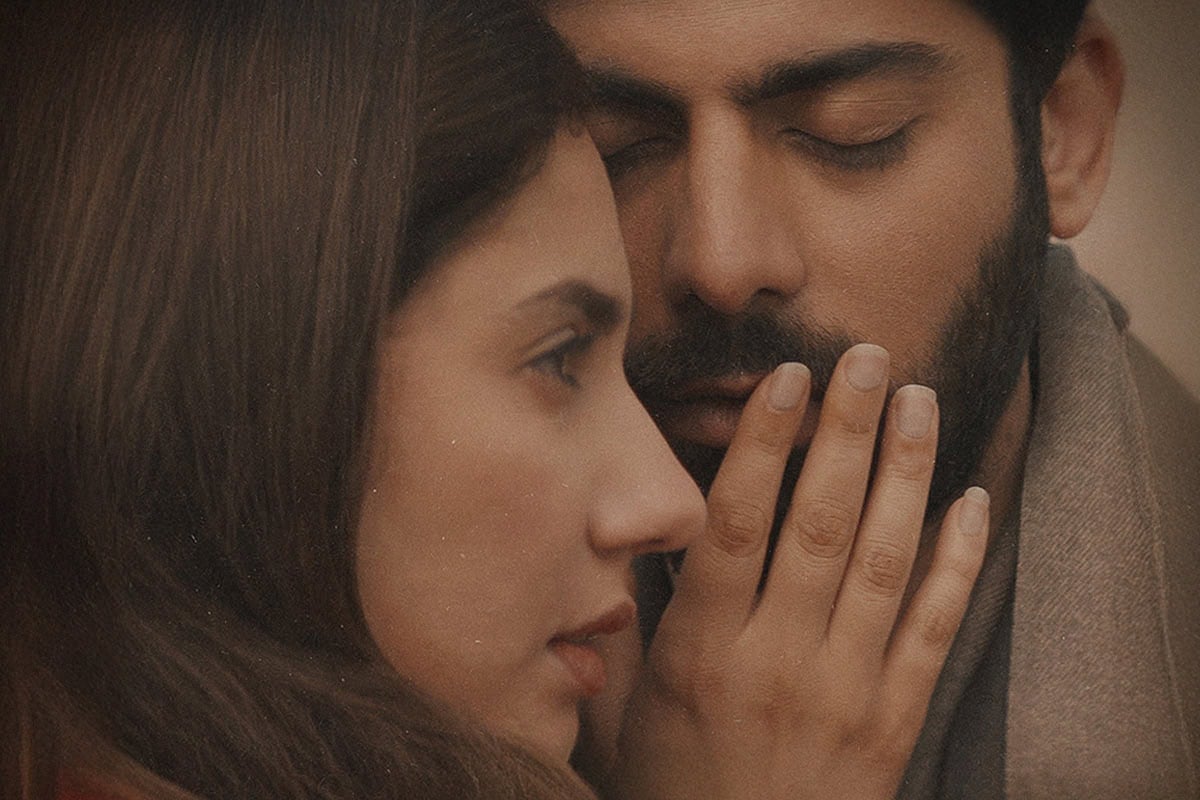
Fawad Khan and Mahira Khan in 'Neelofar.'
Supplied
Neelofar bets big on Fawad Khan and Mahira Khan's chemistryDirector: Ammar RasoolCast: Mahira Khan, Fawad Khan, Madiha Imam, Samiya Mumtaz, Faisal Qureshi
Dubai: Pakistan’s UAE National Day holiday release Neelofar leans heavily—almost entirely—on the much-loved pairing of Fawad Khan and Mahira Khan. Their chemistry is the film’s emotional currency, its marketing hook, and frankly its main safety net. But even the most photogenic duo can’t rescue a story that feels staccato, undercooked, and oddly misplaced in today’s cinematic landscape.
On paper, Neelofar positions itself as an old-world romance: soft gazes, lingering silences, poetic Urdu, and sepia-toned nostalgia that tries very hard to seduce you. In execution, the film plays like a relic—something you faintly miss but don’t truly need back. It belongs to a different era, one where beauty and longing did all the heavy lifting. Today? There’s only so far good looks can take you.
Mahira plays a visually impaired woman in the titular role, and this should have added texture, tension, and emotional gravity. Instead, the film treats her blindness as a poetic accessory—almost decorative. Where are her frustrations? The fatigue of being dependent? The anger? The tiny, humiliating compromises that come with navigating a world built for the sighted? The narrative refuses to explore any of it. Disability becomes symbolism rather than lived experience.
There’s a fascinating story waiting to be told when a man as dishy and romanticized as poet-author Mansoor Ali Khan (Fawad) falls for someone whose worldview fundamentally challenges his own. But Neelofar never goes there. It reduces her to a gentle, virginal embodiment of tehzeeb—stripping away the complexities of disability in favor of soft-focus purity. Conflict, grit, vulnerability, rawness—each time the film approaches any of these, it steps back, choosing aesthetics over honesty.
The one subplot that briefly hints at actual emotional stakes is the assistant manager who quietly falls in love with Mansoor. For a moment, Neelofar threatens to get interesting—jealousy, unspoken desire, workplace tension. But that too is handled weakly. Instead of leaning into the discomfort and awkwardness of loving someone who doesn’t love you back, the film shrugs it off, like a decorative flourish nobody knows what to do with.
The supporting cast suffers from the same flattening. Neelofar’s grandmother and her impossibly protective uncle sit firmly in the cardboard category—stock guardians who exist only to preserve her innocence. There is no psychology, no evolution, no motivation beyond “keep her safe.” Characters who could have added cultural depth or emotional friction become furniture—pretty, immovable, hollow.
Fawad’s character, meanwhile, feels like he’s been plucked straight out of another generation. The old-world charm works for a while… until the narrative around him collapses into slow pacing, abrupt scene transitions, and a conflict so minimal it barely qualifies as one. And when stakes finally appear, they feel arbitrary—even nonsensical.
What truly lands? Yes, Fawad is impossibly easy on the eyes. Yes, Mahira glows. But after a point, you do want something more than two beautiful people staring at each other through soft lighting and romantic pauses.
Neelofar is visually pretty and nostalgically sweet, but ultimately hollow. It’s a romance from another time—one that simply doesn’t survive in ours.
Network Links
GN StoreAbout Gulf NewsTerms & ConditionsReach by GNSitemapContact usPrivacy PolicyGN FocusHave your sayWork with usAdvertise with usGulf News epaperPrinting Services
Download our app
© Al Nisr Publishing LLC 2026. All rights reserved.