Indian actor Nana Patekar
Nana Patekar and when I met him in Dubai: Bollywood enigma who defied stardom's glamour for simplicity
While Anil Kapoor was gracious during Welcome Back shoot in UAE, Nana chat was different
Last updated:
6 MIN READ
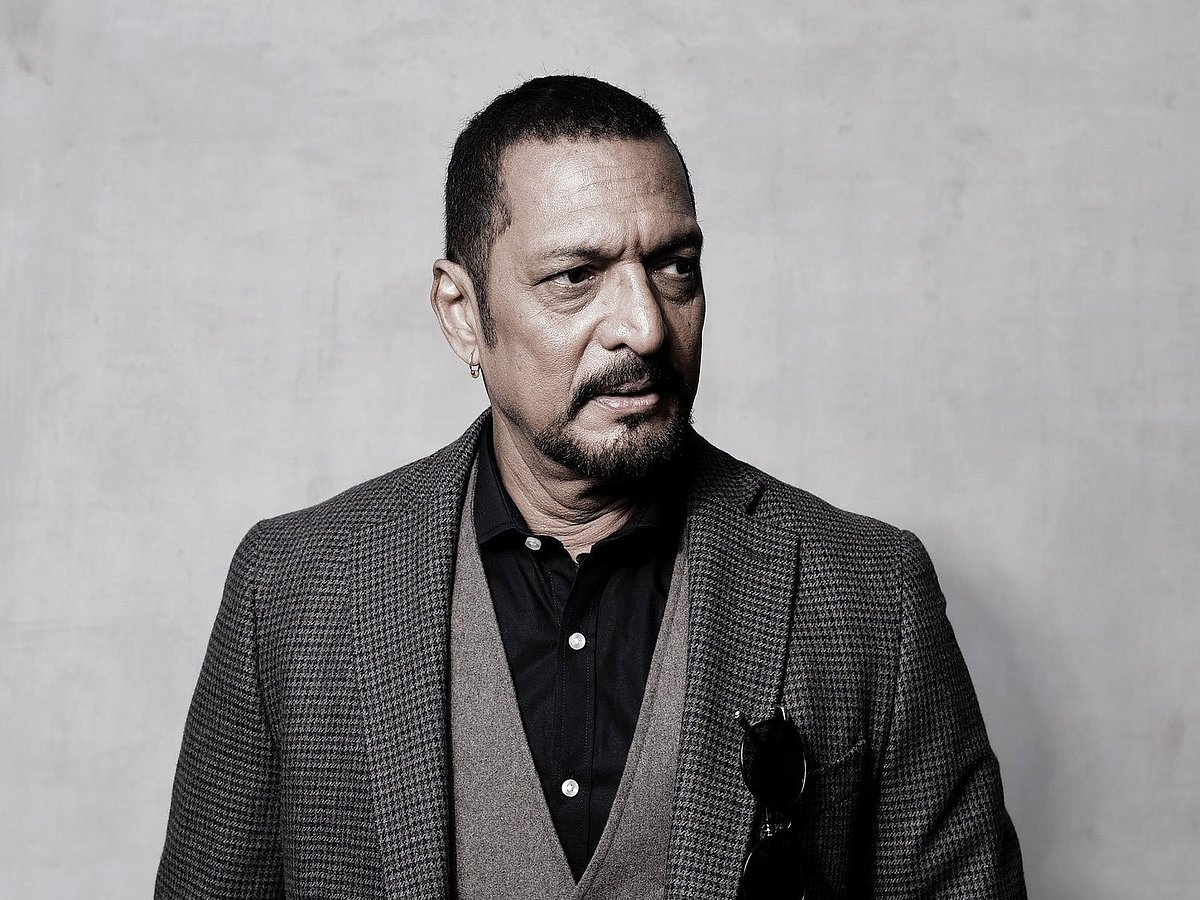
Nana Patekar
Dubai: There was sand flying everywhere. Open your mouth and you risked tasting it in all its glorious grittiness. Helicopters were hovering, Hummers and Land Cruisers were lined up in the desert, and Bollywood director Anees Bazmee was losing his patience over an open vehicle door.
“Who's that paagal [mad guy] who has kept the door of that Hummer door open?” he hollered in Hindi.
Three helicopters were ready to take off, but the pilots were waiting for the door to be shut. The actors, including John Abraham, Anil Kapoor, Dimple Kapadia and Nana Patekar, were caught in the middle of an elaborate action sequence for Welcome Back, the comedy being filmed across the UAE back in mid-2000.
The actors had to look suitably defeated as Naseeruddin Shah's villain and his armed henchmen closed in on them. Their biggest challenge, however, seemed to be keeping their eyes open as the desert sand whipped around them.
Giant water tankers were on standby to wet the ground and contain the dust. It was Bollywood extravagance at its most gloriously chaotic.
Over several weeks, I met the Welcome Back cast one by one as they filmed in Dubai. Each encounter offered a different glimpse into the personalities behind the larger-than-life characters.
John Abraham was gracious and remarkably good-humoured, despite nursing a muscle tear sustained during an action sequence. He spoke candidly about working through the pain, even as doctors had advised him to avoid action scenes for two weeks.
Anil Kapoor was equally affable. Between takes, he was answering work emails and talking about the importance of patience on a film set. He had a yoga trainer accompanying him, but even the trainer had apparently had enough of the physically demanding shoot.
Kapoor, however, remained cheerful and philosophical about the whole experience.
Both actors were courteous, approachable and generous with their time. There was none of that exhausting starry attitude that can make an interview feel like an endurance test.
And then came Nana Patekar.
My interview slot with him was at a plush hotel, overlooking Dubai's sprawling green racecourse. It was a far cry from the dusty desert set, a glamorous backdrop for a conversation with a man who seemed anything but interested in glamour.
He was wearing a suit and glasses, in keeping with his role as gangster Uday Shetty in the film.
Randeep Hooda to late Nana Patekar: When I first saw him in Parinda, didn’t think I was watching an actor
But while his on-screen character was flamboyant and frequently hilarious, the man sitting across from me wasn't particularly interested in being entertaining.
I've interviewed enough Bollywood stars to know that not everyone is going to be charming. Some are guarded, some are distracted, and others are so relentlessly media-trained that they could deliver the same answer in their sleep.
Patekar was none of those things.
He was mercurial and not particularly interested in making my job easier. There was no charm offensive, no carefully rehearsed attempt to appear relatable and certainly no sense that he needed the approval of the journalist sitting opposite him.
And yet, here's the strange thing. I found him fascinating.
Unlike the polished Bollywood personalities who seemed comfortable with the rituals of stardom, Patekar appeared almost defiantly uninterested in them.
I remember him telling me that this wasn't his natural setting. The sharp suit, the glamorous hotel and the extravagant world of Bollywood filmmaking seemed a long way from the life he preferred.
He spoke about being happier at his farmhouse, away from the noise, the attention and the endless performance that celebrity often demands.
The contrast was almost comical. Here was a man dressed as a gangster for a big-budget Bollywood comedy, sitting in a luxurious Dubai hotel, speaking about his preference for a simpler existence.
But it was his attitude towards privilege that stayed with me.
I remember him talking about how he hadn't come from a film family. He didn't have influential godfathers opening doors for him, nor did he possess the polished English or fancy accent that some people associate with sophistication. He had made his way in an industry where connections and surnames can be formidable currency.
And he seemed fiercely proud of it.
There was something unapologetic about his attitude. He didn't appear interested in pretending to be someone he wasn't.
In other published interviews, Patekar has spoken about his discomfort with English and the insecurities he experienced during his younger years. It was an intriguing admission from an actor whose screen presence could be so intimidating.
Perhaps that was one of the contradictions that made him compelling.
The man who could seem supremely self-assured, even combative, had also experienced financial hardship and the humiliation that can accompany a lack of privilege. His beginnings were hardly glamorous. Before becoming a successful actor, he worked painting film posters for a modest wage.
He built his reputation not through conventional leading-man glamour but through sheer intensity.
Patekar wasn't your typical Bollywood hero. He didn't need a perfectly styled hairstyle, slick dance moves or an immaculate English accent to command attention.
John Abraham, Nana Patekar, and Arjun Iyer, asssociate producer of Welcome Back, in Dubai
His greatest asset was his ability to make even an ordinary exchange feel charged with tension.
In films such as Parinda, Krantiveer and Ab Tak Chhappan, he brought an unsettling unpredictability to his performances. He could make silence feel threatening and dialogue sound like a warning. And then there was his gift for comedy.
As Uday Shetty in Welcome and Welcome Back, he proved that the same actor who could terrify audiences could also make them laugh.
But admiring an actor's talent doesn't mean you have to romanticise his personality.
I found Patekar difficult. At times, exasperatingly so.
And I don't believe every uncomfortable celebrity encounter needs to be repackaged as evidence of artistic genius. Sometimes, a difficult interviewee is simply a difficult interviewee.
Patekar was also a controversial public figure. In 2018, actress Tanushree Dutta publicly accused him of sexual harassment in connection with the filming of Horn 'Ok' Pleassss. Patekar denied the allegations.
Those allegations and his responses deserve careful, independent consideration. My own uncomfortable encounter with him neither proves nor disproves anything about them.
But it is possible to admire an actor's body of work without pretending that every aspect of his public persona was admirable.
Looking back, I find myself returning to the contrasts that defined those weeks on the Welcome Back sets.
There was John Abraham, working through physical pain but still willing to talk about the experience with good humour. There was Anil Kapoor, navigating the chaos with patience, professionalism and an easy smile.
And then there was Patekar.
The man in the sharp suit and glasses, sitting across from me , talking about his farmhouse, his imperfect English and his journey through Bollywood without powerful godfathers.
He wasn't trying to win me over.
And he didn't.
But years later, while many perfectly pleasant celebrity interviews have faded from memory, that conversation remains vivid.
Perhaps because Patekar didn't offer the sanitised, carefully packaged version of himself that journalists are so often served. Or perhaps because he was simply a difficult man to interview.
Either way, I didn't leave the interview feeling particularly charmed.
I left with a story. And sometimes, those are the interviews you remember the longest.
Network Links
GN StoreAbout Gulf NewsTerms & ConditionsReach by GNSitemapContact usPrivacy PolicyGN FocusHave your sayWork with usAdvertise with usGulf News epaperPrinting Services
Download our app
© Al Nisr Publishing LLC 2026. All rights reserved.