Mehreen Jabbar subverts the typical daughter-in-law trope in new show Dr Bahu
Jabbar talks about her upcoming show that challenges norms and patriarchal mindsets
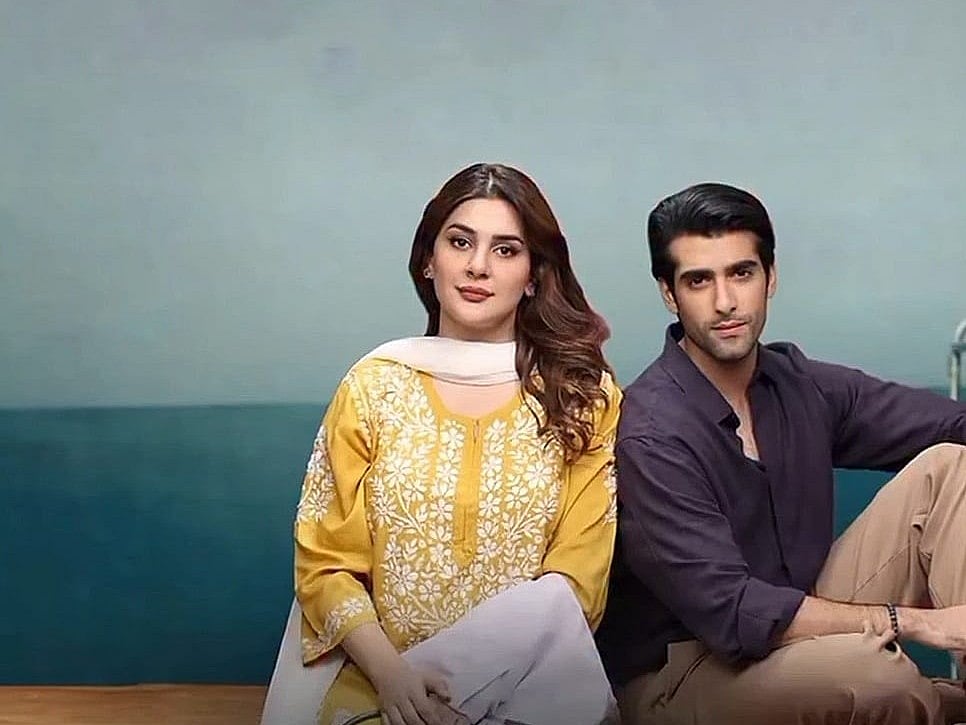
Mehreen Jabbar’s name is associated with authentic stories and an indie-film aesthetic. From her repertoire, it is evident that she doesn’t care for the frothy, tear-soaked saas-bahu stories that dominate the airwaves.
No wonder when the award-winning auteur announced her new TV project, Dr Bahu, the industry did a double-take. Has the queen of realism finally surrendered to the soap opera machine? Not quite.
“It’s not a saas-bahu story, despite the title,” Jabbar tells Gulf News, ahead of the show’s launch episode premiere on ARY. “And it’s definitely not a melodrama.”
Dr Bahu features Kubra Khan in the title role. She is paired opposite Shuja Asad, Pakistan drama industry’s breakout star. A stellar supporting cast includes Hajra Yamin, Adeel Hussain, Muhammad Ahmad, Saba Hameed, and Marina Khan.
Jabbar says that the story was pitched to her three years ago by Humayun Saeed and Nadeem Baig. Initially, she was wary. As someone who thrives in the world of short narratives and limited series, the prospect of a 30-episode marathon felt, in her words, “intimidating.”
But once she read the script it was instant love. “What appealed to me [about Dr Bahu] was a couple of things — chiefly, the strong women characters. They really spoke to me. In fact, all characters in the play are layered and have interesting backgrounds and arcs.”
A ‘cultural phenomenon’
Jabbar describes Dr Bahu as focusing on “a new marriage in a family dynamic. It’s also about challenging the norms and patriarchal mindsets that may exist in some families.”
Crucially, the play is expected to make a comment on a regressive cultural ‘phenomenon’ in Pakistan where a female medical professional is considered a coveted match because she can then serve as a live-in, unpaid healthcare provider.
Not a trend chaser
In today’s media landscape, where the measure of what is ‘good’ is generally ‘what sells’ or what becomes viral, Jabbar refuses to chase trends. Yet she isn't stuck in the past. After 30 years in the game — starting with the PTV classic Ab Tum Ja Saktay Ho — she is still evolving. Lately, she’s been exploring the thriller genre with miniseries Jurm and Hashtag.
Interestingly, these dark, edgy plays were aired during Eid — a slot usually reserved for comedy shows. When asked how she convinced the channel to look beyond TRPs, Jabbar credits 7th Sky Productions for being “open to experimentation.”
In the future, she says she’d “like to explore psychological thrillers. Besides, my favourite movies in the last couple of years have been horror. So, if I get a chance to do horror, I’m in.”
Pet format
Despite her foray into long-form, Jabbar’s heart belongs to the short-form format. She is vocal about her distaste for the “endless” shooting schedules and the way stories are often stretched thin just to satisfy ratings.
“I can tell the best story in [short] format,” she explains.
Jabbar believes that Pakistan drama producers are still alien to the concept of seasons. “Internationally, if you’re doing a 30-episode serial you’d spread it over two or more seasons. I hope we get to it soon.”
The fate of Farar
Jabbar also talks about Farar, her other show which is now streaming on a local OTT platform. Originally a Zee5 collaboration led by Sarwat Gilani, Maha Hasan and Mariam Saleem, the show was caught in the crossfire of India-Pakistan tensions. After a glamorous festival run in London in 2024, its OTT release was indefinitely delayed. “The good news,” she beams, “is that [Farar] is finally out!”
Jabbar is working on a Hum TV serial, which she starts filming next month.
The big screen beckons
It has been a decade since Dobara Phir Se (2016), Jabbar’s second feature (her first was the Nandita Das starrer Ramchand Pakistan; 2007), but the hiatus might be ending.
“I think it’s time. I am working on a couple of ideas and looking for the final piece of the funding puzzle. I intend to make a feature this year.”
Network Links
GN StoreDownload our app
© Al Nisr Publishing LLC 2026. All rights reserved.