Lena Dunham reveals intense clashes with Adam Driver on Girls set: ‘He threw a chair, punched a hole in the wall…’
In her new memoir, Lena Dunham recalls the difficulties of working wit Adam Driver
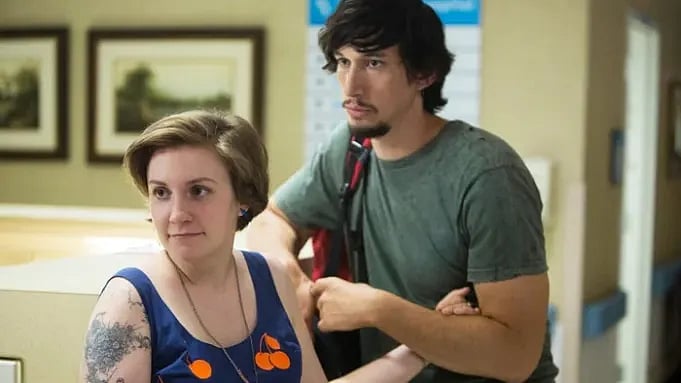
Lena Dunham revisited the emotional and creative turbulence behind Girls in her new memoir Famesick, offering a look at her experience as both the show’s creator and lead actor, and her complicated dynamic with co-star Adam Driver.
The HBO series, which aired from 2012 to 2017, followed Dunham’s Hannah Horvath and Driver’s Adam Sackler in a relationship that was often volatile on screen. In her memoir, Dunham suggests that the intensity sometimes blurred the lines off screen as well.
Early tension on set
Dunham recalls that their working relationship shifted quickly during the show’s first season, particularly while filming intimate scenes.
Things got off to a rocky start during the filming of the first season, with Dunham claiming her 'careful blocking went out the window and he hurled me this way and that' during their first intimate scene. “Stunned, I couldn’t speak for a moment, unsure of what had happened had I lost directorial authority, allowed the scene to go off the rails, not given proper instructions? Would I be removed from my command post immediately?” she writes.
She also describes a moment after showing him the pilot episode, when Driver abruptly left.
She also writes that Driver walked out of the room after she showed him the pilot episode and “didn’t answer any of my calls for the next three weeks.” When he finally called, Dunham was sure he was going to quit the show, but instead he admitted that he rushed out because he hates watching himself.
As Girls gained momentum, Dunham writes that the pressures of running a successful show at a young age began to affect her emotional well-being.
After Girls was picked up, Dunham says her anxiety grew as she navigated the demands of leading a television series at just 24. When it came time to film the final episode, she reveals she experienced periods of emotional detachment as a way of coping with stress.
“At work, I found it was hard to act or direct when I wasn’t, in fact, a person. I wondered if everyone on set could tell that an alien had replaced me,” Dunham writes. “I wondered if my scene partners could feel how barely human I was.”
She also recalls a tense rehearsal with Adam Driver that, according to her account, escalated into a moment of confrontation.
“I remember doing a fight scene with Adam and how scary it was to meet someone so totally present with such absence,” she writes. “Late one night, as we practiced lines in my trailer, I found that mine were suddenly gone. I knew I’d written them. I’d known them only minutes before. But when I opened my mouth, all that came out was a stammer — until finally, Adam shouted, ‘SAY SOMETHING’ and struck a chair against the wall next to me. ‘WAKE UP,’ he told me. ‘I’m tired of watching you just stare.’”
Despite the tension, Dunham writes that their connection remained complex and unpredictable throughout the early seasons.
“I reasoned that the intensity of his anger at me, anger that could make him lose control and throw things, was proportionate to the intensity of our creative connection,” Dunham writes in Famesick. “One day in his dressing room, as I apologised for a perceived slight I couldn’t remember committing, he got close to my face and said, ‘Never forget that I know you. I really know you.’ ‘What do you know?’ I yelped. ‘You don’t go to parties. You love animals. And you hate being whispered about.’ And he was right.”
She adds that she often found herself uncertain about their dynamic.
“He could be short-tempered and verbally aggressive, condescending and physically imposing. He could also be protective, even caring,” Dunham writes. Later in the book, she even claims that he once “punched a hole in his trailer wall” because he “hated his new haircut.”
Dunham also reflects on moments of care between them, even amid the strain.
During a difficult period with anxiety, she writes that Driver would sometimes come over to her apartment to keep her company. On one occasion, he told her, “I’m warning you, if I come up, I’m not leaving this time.” But she did not let him in.
“I crouched at the window, watching him park his bike, pull out his phone, and dial. But I didn’t answer. It felt as simple as ignoring your doorbell, as pretending to be asleep, as impossible as stopping your blood from flowing,” she writes. “But some part of me knew — some wise part of me, some bold part of me —that if we crossed whatever boundary we were threatening to cross, the return to work would be tinged with humiliation, that I’d be minimizing any authority I still had, and that, however it went, my heart bruised but improbably not yet broken — would crack.”
She later says the two drifted without ever addressing that moment.
She says the two “never spoke about it again,” but when Driver told her he was engaged, she felt “heartbroken.”
“It was absurd to be heartbroken, to have thought I meant anything, that I occupied any role beyond distraction,” she writes. “I was his scene partner, sure — and so when we were in a scene, his attention was piercing, his presence all-consuming. But in life? It would never be me who kept him in line. I didn’t have the chops. Even at work, I couldn’t do it, in the one place I was meant to make the rules.”
Dunham also revisits filming their final scenes together in the last season, when their characters’ relationship came to an end.
“It felt, for just a moment, like he was saying sorry,” Dunham says. “Maybe I was, too — for never knowing how to manage him, what he needed, how to avoid making his face contort with frustration and rage.”
When filming wrapped, she recalls a brief goodbye.
When filming wrapped, Dunham says Driver told her “I hope you know I’ll always love you” before saying goodbye.
“Who knows , maybe I would write him new parts. We would tell new stories. We would laugh at the way things had been, and smile at the way they were now,” Dunham writes. “But I never heard from him again.”
Network Links
GN StoreDownload our app
© Al Nisr Publishing LLC 2026. All rights reserved.