Katrina Kaif's bounce back is nobody's business but hers
When actresses become images, not women allowed to change
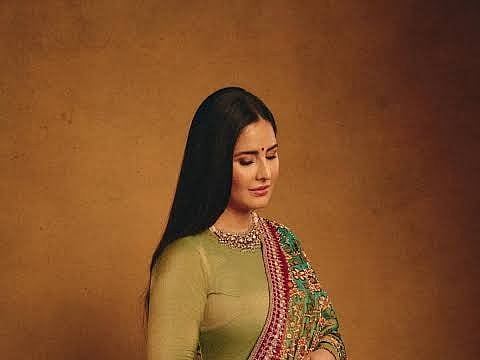
Katrina Kaif arrived for Ganesh Chaturthi celebrations at the Ambani residence recently, roughly around ten months after giving birth to her son. Within hours, commentary online had settled on a familiar verdict: she had not "bounced back quick enough".
The phrase itself deserves scrutiny. It treats childbirth as a transaction with a return window, nine months to build a human being, then an implicit deadline to erase the evidence. Recovery, in this framing, is not a biological process but a performance failure. A woman is expected to disappear the visible cost of motherhood as quickly and quietly as possible.
What is actually being adjudicated here is not Kaif's body but a persistent, contradictory expectation placed on women in public life: embody motherhood, then immediately conceal it. Be present as a mother in private, unchanged as a public figure. The two are not meant to overlap in view.
Public visibility invites scrutiny of a person's work, but it does not entitle strangers to weigh in on a postpartum body. Somewhere in the celebrity economy, actresses stopped being treated as people and started being treated as fixed images, assets to be maintained rather than individuals permitted to change.
Kaif is hardly alone in this. Aishwarya Rai faced comparable criticism after her own pregnancy, for weight that fell well within normal medical ranges. Swara Bhaskar has absorbed similar commentary for years, simply for existing outside an unchanging silhouette. The industry continues to ask its most visible women to be relatable, maternal, and photographable in equal measure — as though none of it comes at any physical cost.
There is also a deeper irony here. Kaif built her stardom on films that have long packaged her as spectacle: her body choreographed for the camera, her dance numbers built around how she moves rather than what she thinks. Yet she is also the founder of Kay Beauty, a cosmetics label she built and runs as a business, not a side hustle lent her name. She is, in other words, more than the sum of the body parts the industry has spent two decades filming. It is worth asking why the commentary never seems to catch up to that fact.
Tellingly, one of the sharpest rebukes came from an unlikely corner. On a recent episode of Bigg Boss, Salman Khan (her former partner and longtime co-star) used his platform to call out the trolling directly, without needing to name her at all. Everyone already knew who he meant.
It is not ideal that it took a man's voice to move the needle on a conversation about a woman's body; that itself says something about whose words still carry weight. But better a belated intervention than none at all.
She built a life. The least anyone owes her in return is the room to live it.
Network Links
GN StoreDownload our app
© Al Nisr Publishing LLC 2026. All rights reserved.