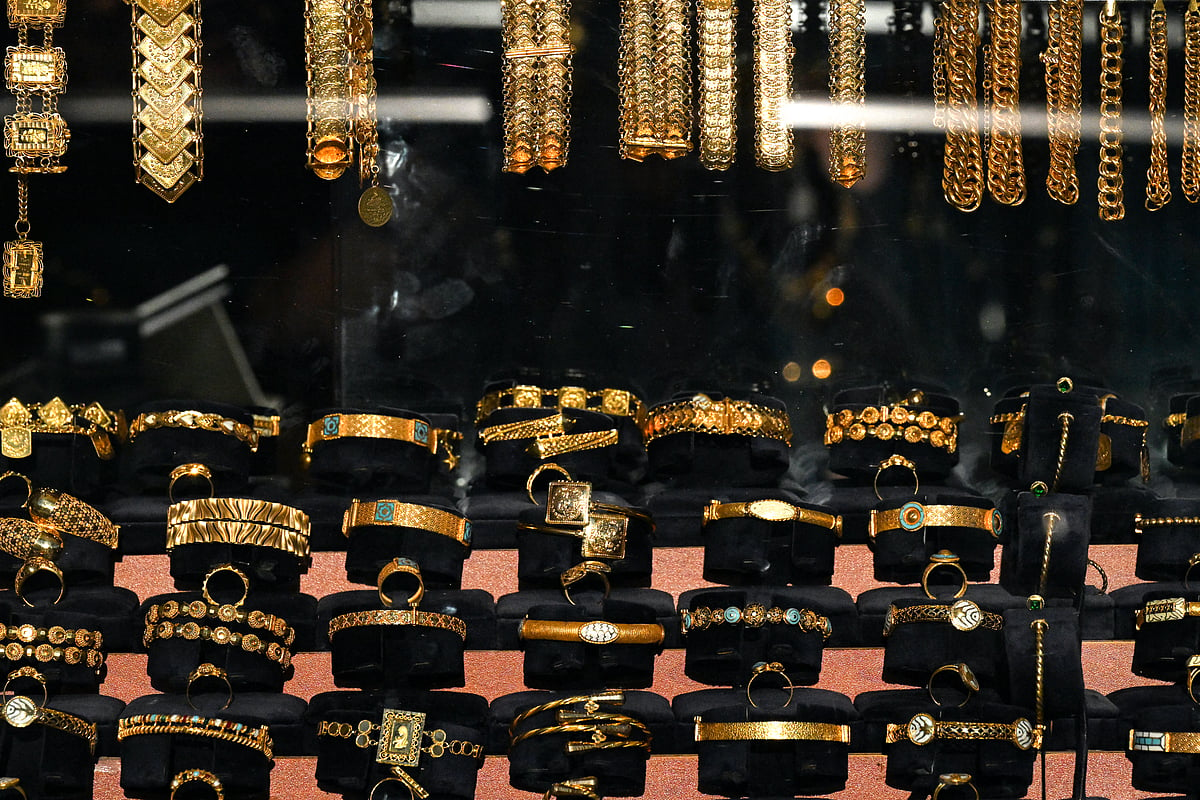
Dubai: Dubai gold prices resumed their upward march on Friday morning, adding fresh pressure on shoppers and investors already navigating one of the strongest bullion rallies in decades.
At 8.30 am, the price of 24-karat gold rose to Dh626 per gram, up from Dh622.25 on Thursday, while 22-karat climbed to Dh579.50 from Dh576.25 a day earlier. The move keeps local prices hovering near historic highs and reinforces a clear trend that has defined February’s market. (Check latest UAE gold prices here, alongside prices in Saudi Arabia, Oman, Qatar, Bahrain, Kuwait, and India.)
February snapshot shows steady climb
This month’s price movement reflects a broad upward trajectory despite intermittent pullbacks. At the start of February, 24-karat gold was trading around Dh589.50 per gram before slipping sharply to Dh564.25 on the second day of the month. From that point onward, prices moved steadily higher, crossing Dh600 by mid-February and continuing to strengthen through the final week.
By February 19, 24-karat gold had already reached Dh601.75 before advancing further to Dh615 levels later in the month. Prices then pushed past Dh620 in the final stretch, culminating in the current Dh626 level seen on Friday. The pattern in 22-karat gold closely mirrored this trajectory, rising from around Dh545 at the beginning of the month to nearly Dh580 by the final week.
The overall picture suggests a strong upward bias, with brief corrections failing to disrupt the broader rally.
Geopolitics keeps global prices elevated
International markets continue to provide the primary driver behind local price movements. Gold held near $5,190 an ounce globally after gaining in the previous session, supported by ongoing geopolitical uncertainty tied to US–Iran nuclear negotiations and a significant American military build-up in the Middle East.
Negotiators reported progress during the latest round of talks in Geneva, yet uncertainty remains high, keeping safe-haven demand intact. That geopolitical backdrop has helped gold record roughly a 20% gain so far this year and positioned the metal for what could become its longest monthly rally streak since the early 1970s.
Linh Tran, Market Analyst at XS.com, said the market is currently stabilising at elevated levels rather than entering a fresh surge phase.
“Gold is currently trading just below the $5,200 per ounce level, reflecting a balance between safe-haven demand and expectations of easing geopolitical tensions,” she said. “The latest rounds of talks have not produced a clear outcome, leaving geopolitical risks present but not escalating.”
Institutional flows continue to reinforce that resilience. Tran pointed to a notable accumulation trend, saying, “A notable signal comes from SPDR Gold Trust, which purchased nearly 19 tons over three consecutive sessions. The swift return of institutional inflows suggests that hedging demand remains intact.”
Such activity indicates that investors remain cautious about global risks even while markets await clearer policy signals.
Interest rates remain the key constraint
Despite strong demand, analysts believe interest rate dynamics remain the main factor limiting a sharper rally.
Tran said US inflation still sits above the Federal Reserve’s target, complicating the outlook for near-term monetary easing. “Gold may struggle to stage a strong breakout in the short term, even though safe-haven demand persists,” she noted.
Market participants are closely watching US economic data and central bank guidance for signals on potential rate cuts, which could significantly influence gold’s next move.
Looking ahead, analysts expect gold to remain sensitive to geopolitical developments and monetary policy shifts.
Tran said the most likely near-term scenario is consolidation rather than a decisive surge. “In my view, the more probable short-term scenario is that gold continues to consolidate below the $5,200 per ounce area rather than forming a decisive upward trend,” she said.
Even so, institutional demand suggests any short-term declines would likely represent repositioning rather than a reversal of the broader upward trend.
- With inputs from Bloomberg.

Sign up for the Daily Briefing
Get the latest news and updates straight to your inbox
Network Links
GN StoreDownload our app
© Al Nisr Publishing LLC 2026. All rights reserved.